Skip to content

Not ready to buy a robot? Rent one.

Short-term units with engineering support included, so you can test an idea against reality before committing capital.

What people rent them for

  • Education

    Teaching platforms for universities and vocational training, available per semester.

  • Events

    Trade shows, open days and press events, delivered and operated by our team.

  • Process trials

    Run a real task on a real platform before writing the business case.

  • Innovation projects

    Give an internal R&D team a working platform without a capital request.

What a rented unit arrives able to do

A rented humanoid does not arrive knowing your task, and the single biggest reason a trial disappoints is that somebody expected it to.

What arrives is the platform with the manufacturer capabilities working: it walks or drives, balances, maps a space, recognises and grips objects it has been shown, responds to voice and to a handheld remote, and can be teleoperated by a person wearing a headset. On top of that sits whatever we program for the one task you and we agreed before delivery. That task is the trial. It is deliberately one task, because a fortnight spent on one produces a number you can put in a business case, and a fortnight spent on five produces an anecdote.

Engineering time inside the rental is real but finite, and it is the part worth negotiating rather than the daily rate. A two-day event needs almost none: the unit greets people and the stock behaviour is the product. A process trial needs several days of application work before any measurement starts, and if those days are not in the agreement the trial ends in the week it should have begun. Teaching is different again: the platform ships with a published SDK and ROS 2, and the point is that your students write the code, not us.

What a trial will not settle is reliability over months. Two weeks tells you whether a task is technically achievable, what the cycle time looks like and how the people around it react. Mean time between failures, wear on a gripper and the cost of a year of spares are not observable in that window, and anyone offering to prove them inside it is selling something.


Available for rental

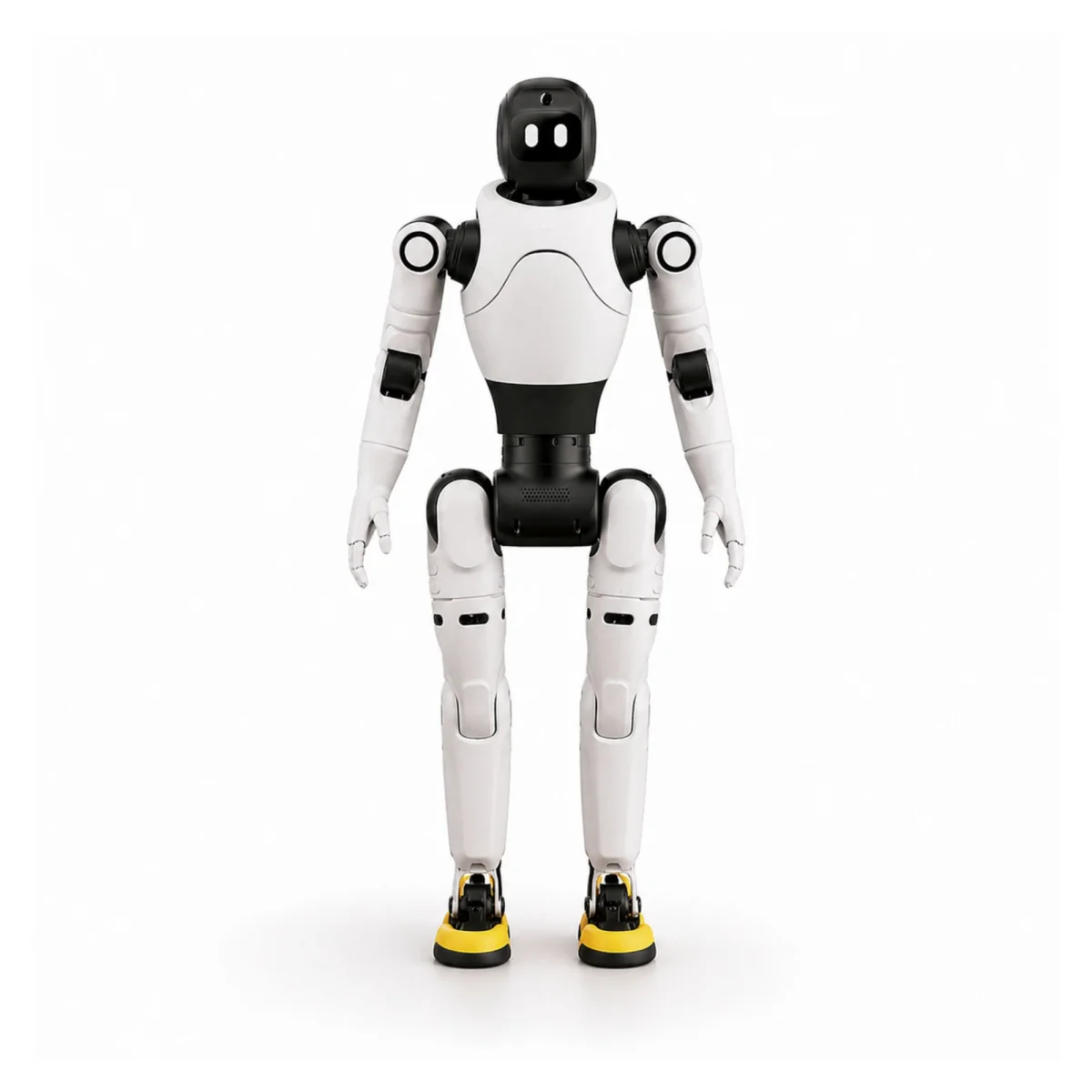
AGIBOT X2 Basic

AGIBOT X2 Basic

AGIBOT

Compact 131 cm humanoid at 33 kg with 25 active DoF, speech, gesture and touch interaction, and the AimDK_X2 SDK in Python and C++ for your own work.

View details
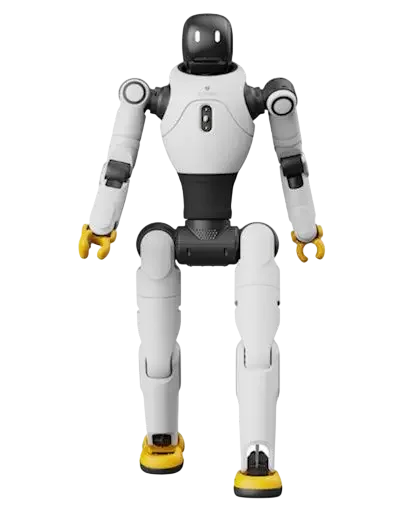
AGIBOT X2 Ultra

AGIBOT X2 Ultra

AGIBOT

The sensor-complete X2: 30 active DoF, 558 mm arm reach, 3D LiDAR and RGB-D vision, and a docking station for autonomous charging between shifts.

View details
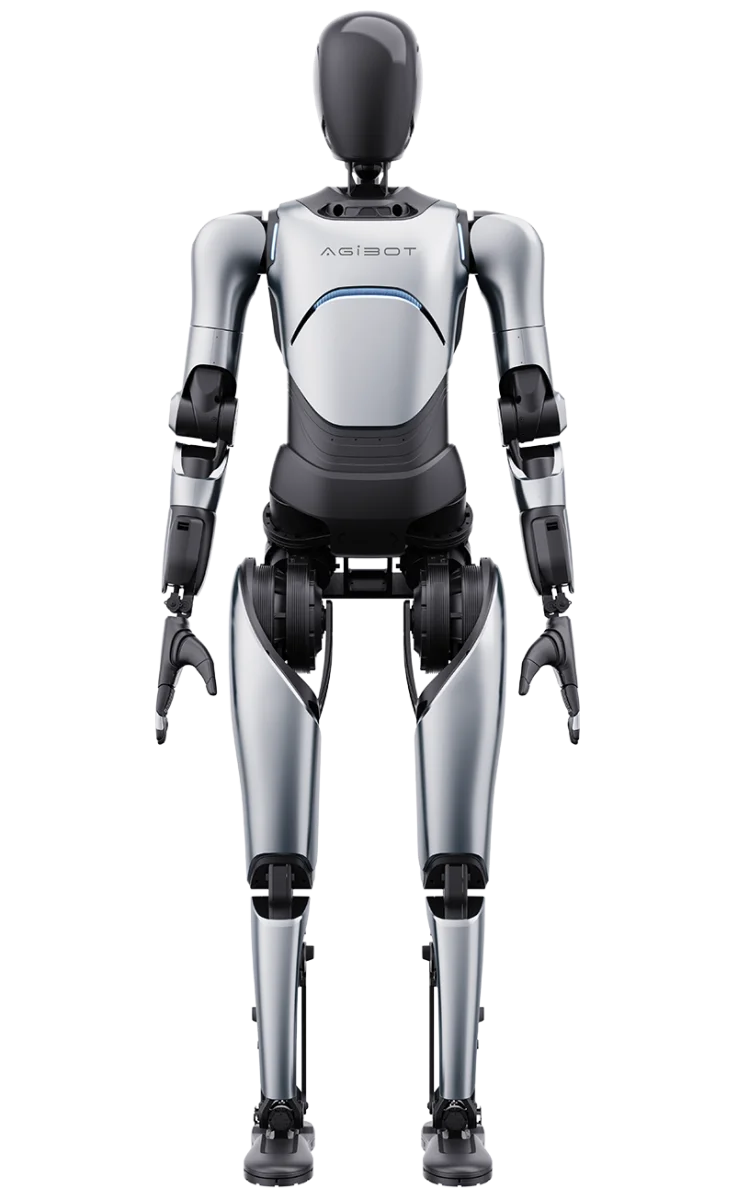
AGIBOT A2 Ultra

AGIBOT A2 Ultra

AGIBOT

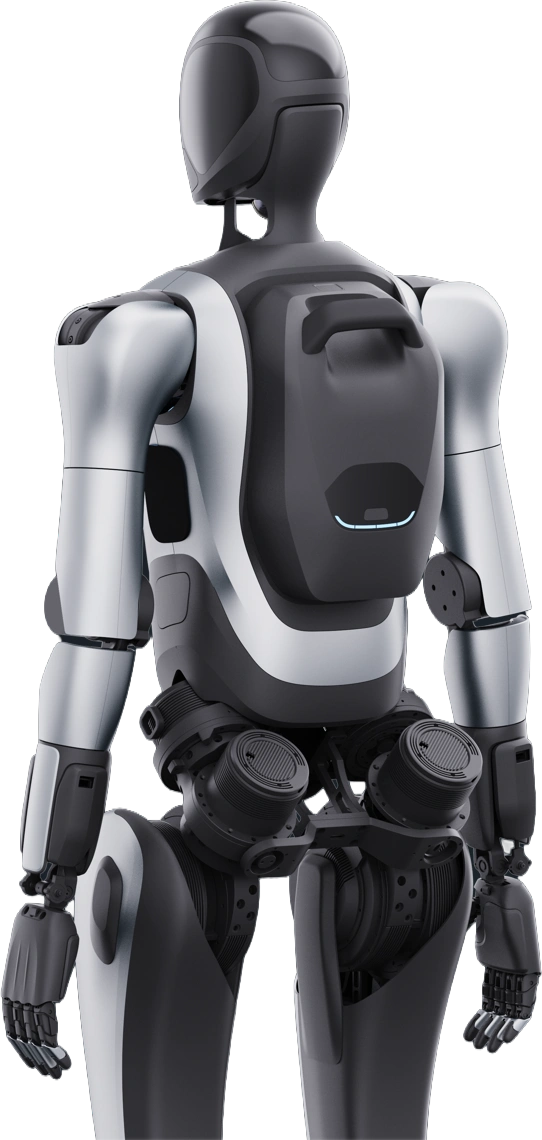
Full-size AGIBOT humanoid: 169 cm, 69 kg, 40+ active DoF and 200 TOPS on board, with hot-swap packs giving about two hours of work per battery.

View details
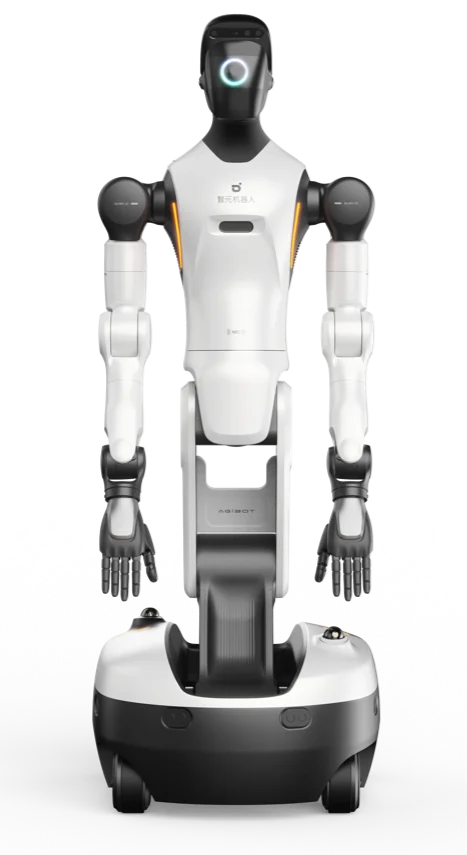
AGIBOT G2

AGIBOT G2

AGIBOT

Wheeled AGIBOT humanoid, 185 kg with 26 force-controlled DoF and IP42 protection, running NVIDIA Jetson Thor compute on dual hot-swap batteries.

View details
See the rental fleet

How renting works

  1. Tell us the task

    A short call to establish what you want the unit to do and for how long.

  2. We propose a unit

    Platform recommendation with availability and what is included.

  3. Delivery and setup

    We deliver, commission and brief your team on site.

  4. Support throughout

    An engineer stays reachable for the whole rental period.

What your site needs before it arrives

Rentals fail on logistics more often than on robotics, so this is the checklist we walk through before agreeing a date.

Space and floor.
A full-size platform like the A2 Ultra stands 169 cm tall and weighs 69 kg, and it needs a clear working area with a flat, continuous surface and no gap it can put a foot into. Grating, cable runs, floor drains and the threshold at a doorway all matter more than they sound. For a wheeled platform, every route it will take has to be step-free from end to end.
Power.
An ordinary single-phase supply is enough. The A2 Ultra charges from 110–220 V in about two hours, and the X2 Ultra brings its own docking station. No three-phase feed, no dedicated circuit, no compressed air. What you do need is a socket somewhere a 69 kg machine can sensibly stand while it charges.
Network.
The unit uses Wi-Fi, or 4G and 5G where site policy prevents it. If your wireless network requires certificate enrolment or a device registration process, start that before the delivery date rather than on it. It is the delay we see most often, and it is always avoidable.
People and sign-off.
One named person on your side who can open doors, arrange access and make decisions during the trial. A safety walk-through with whoever is responsible for the area, agreed before the unit is on site, covering the working envelope, who may enter it and how the unit is stopped. For an event, add the venue rules: some halls treat a walking robot as a moving exhibit and want the arrangement in writing.
Storage.
Somewhere lockable to leave the unit overnight, near that socket. Straightforward to arrange in advance and awkward to solve on a Friday afternoon.

Frequently asked questions

Ask us directly