
Rent or buy a robot: weekly rates and lead times
- The job renting actually does.
- A rental is not a cheaper way to buy. It is how a business tests an idea against its own floor before committing capital to it. The decisive contrast with a purchase is not only price, it is time and risk: an idea that turns out wrong on a rented unit costs a week, and an idea that turns out wrong on a purchased one costs a machine you now have to place somewhere else in the business.
That contrast is sharpest at the delivery date. An in-stock rental unit is with you inside 48 hours of a confirmed booking. A purchase order runs 12 to 16 weeks of lead time before the machine exists in your building at all. If the question you are trying to answer is "does this work on our floor", a purchase order cannot answer it in time to be useful; by the time the machine lands you have already had to make the decision the trial was supposed to inform.
- What is actually rentable, and at what rate.
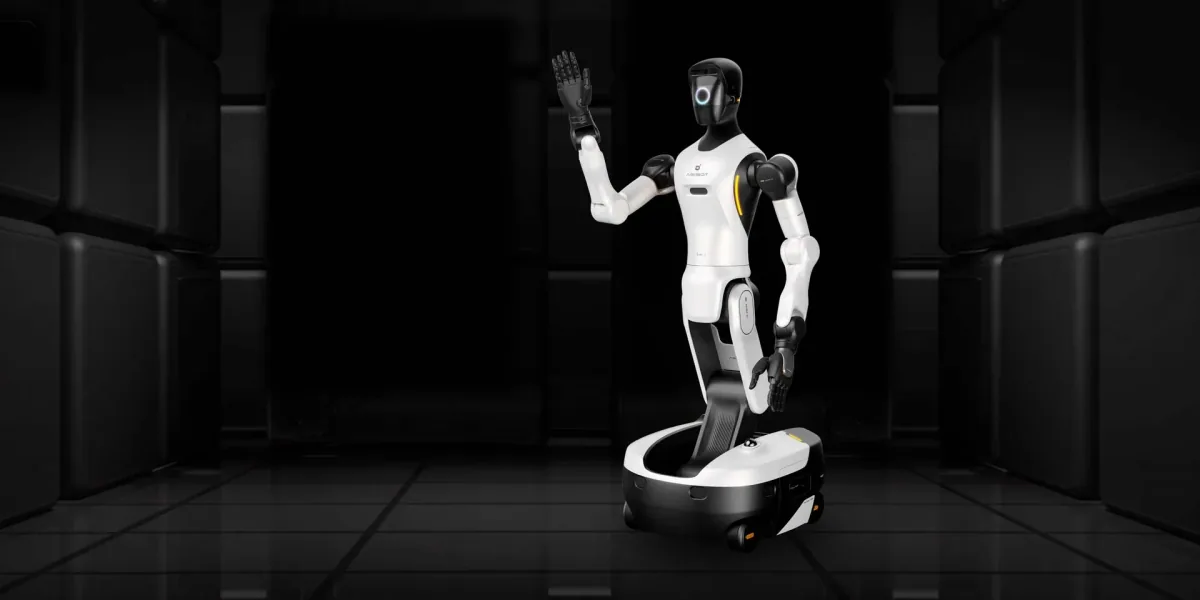
- Four humanoid platforms are on the price list by the week: the X2 Basic at 1500 EUR, the X2 Ultra at 2500 EUR, the A2 Ultra at 6500 EUR and the G2 at 7500 EUR. The gap between the X2 and A2/G2 tiers is real and tracks the same gap in capability and specification you would see on a purchase, so a rental is a fair way to compare tiers before committing to one. The robot dogs and the cleaning robots sit outside the published weekly rates and are available on request, because the right configuration for a park circuit or a cleaning contract varies enough that a fixed number would mislead more than it would help.
- Budget for the engineering day, not just the weekly rate.
- A day of engineering time is 825 EUR, and it is quoted the same way whether the unit is rented or bought. That matters for a trial specifically: the machine will not walk onto your floor already knowing your task, and the day rate is what turns a delivered robot into a working test of your idea rather than an idle one. Budgeting for that day alongside the weekly rate is what separates a trial that produces an answer from one that produces a video of a robot standing still.
- The honest caveat.
- A rented unit arrives at your dock the same way a purchased one does: general-purpose, not pre-loaded with your task. If your floor needs a custom grip, a specific pick sequence or a route learned around your layout, that is engineering time against the day rate, on either a rental or a purchase. Renting removes the capital commitment and the lead time from the decision. It does not remove the integration work, and no honest quote will tell you otherwise.
- Weighing the two.
- A purchase makes sense once you already know the task works and you are deciding how many units to run for years. A rental makes sense while that is still the open question, because it lets you spend a week and a known day rate finding out, instead of committing to 12 to 16 weeks of lead time on an answer you do not have yet. If the honest answer is "we do not know if this works here", that is the case a rental was built for.
Weekly rates, availability and booking are on the /rent-it page.