

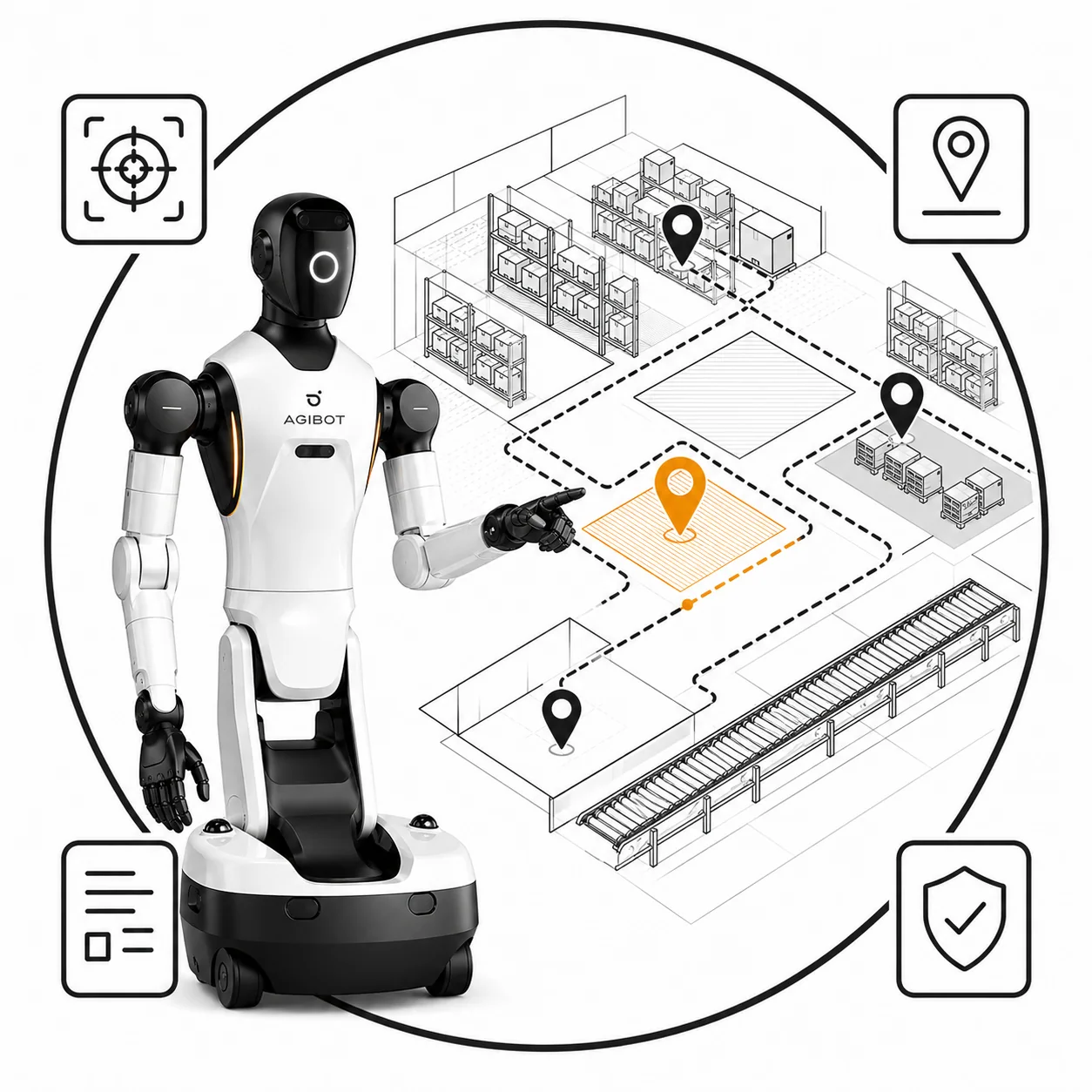
Mapping (hourly rate)
Mapping of the working area a robot will operate in, delivered as the map layer that the navigation stack and the picking process both depend on.
View detailsInteraction software for reception, guidance and public-facing deployments.
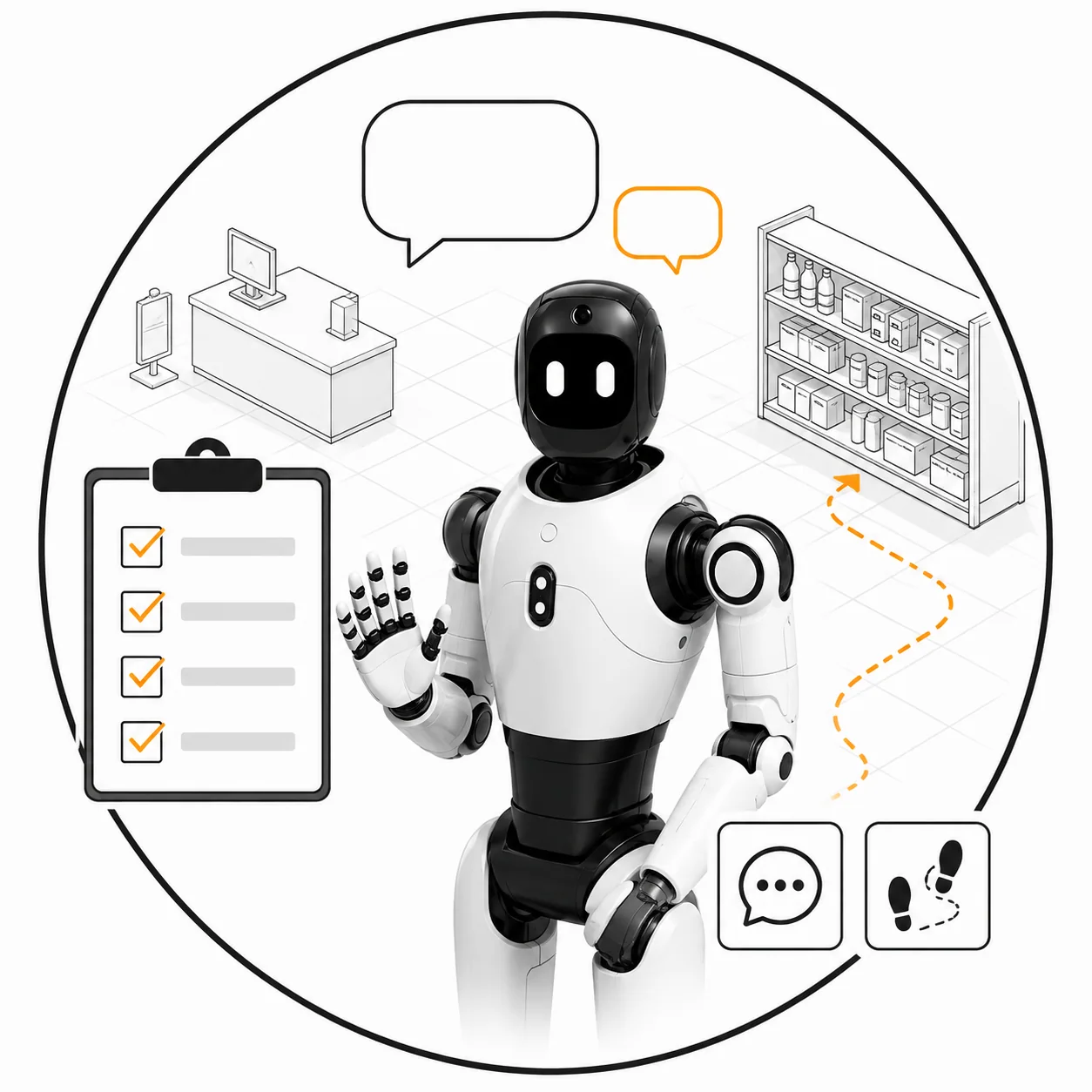
Mapping of the working area a robot will operate in, delivered as the map layer that the navigation stack and the picking process both depend on.
View details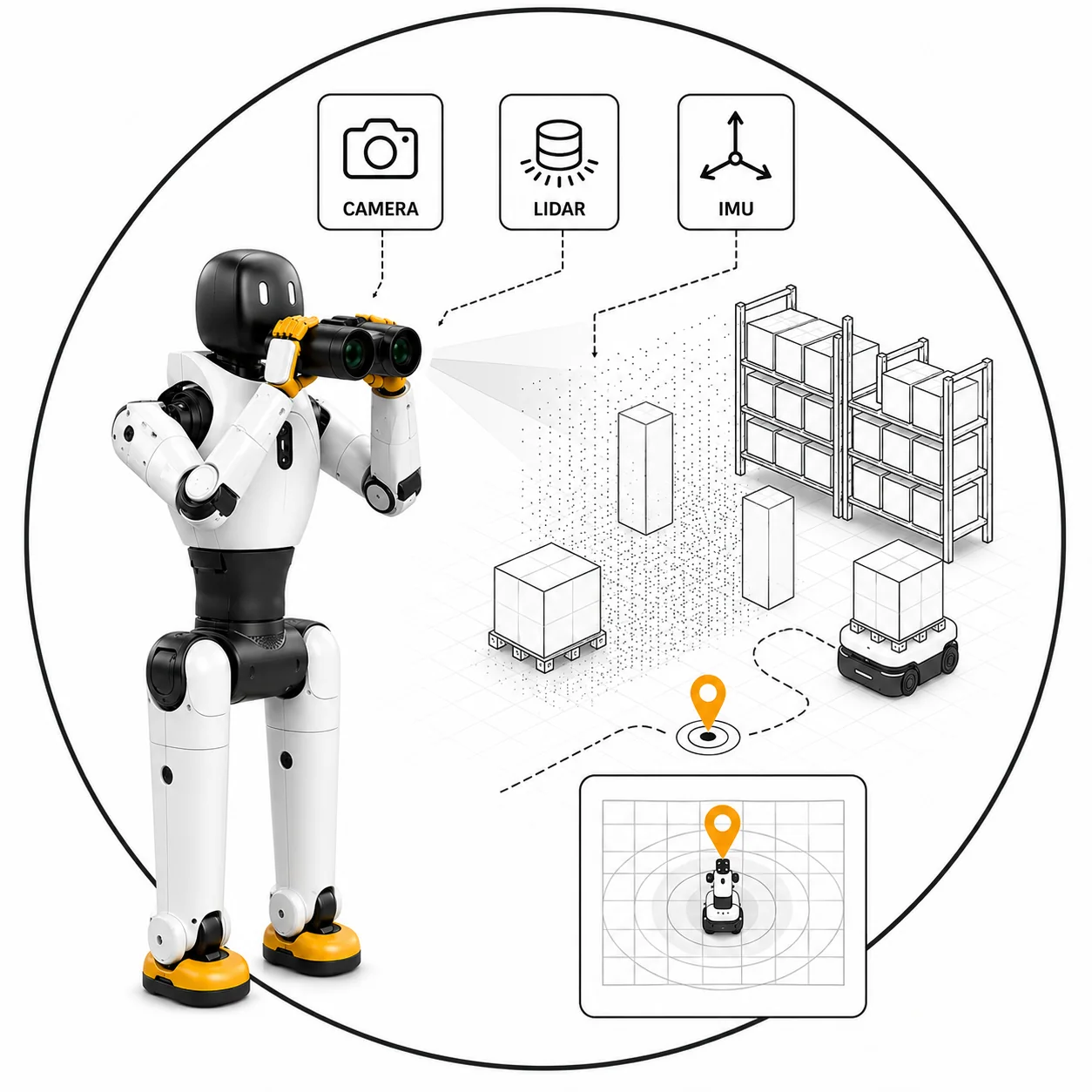
Perception and localisation for humanoid and mobile platforms: recognise the part, know where the robot is, and keep both stable in a live environment.
View details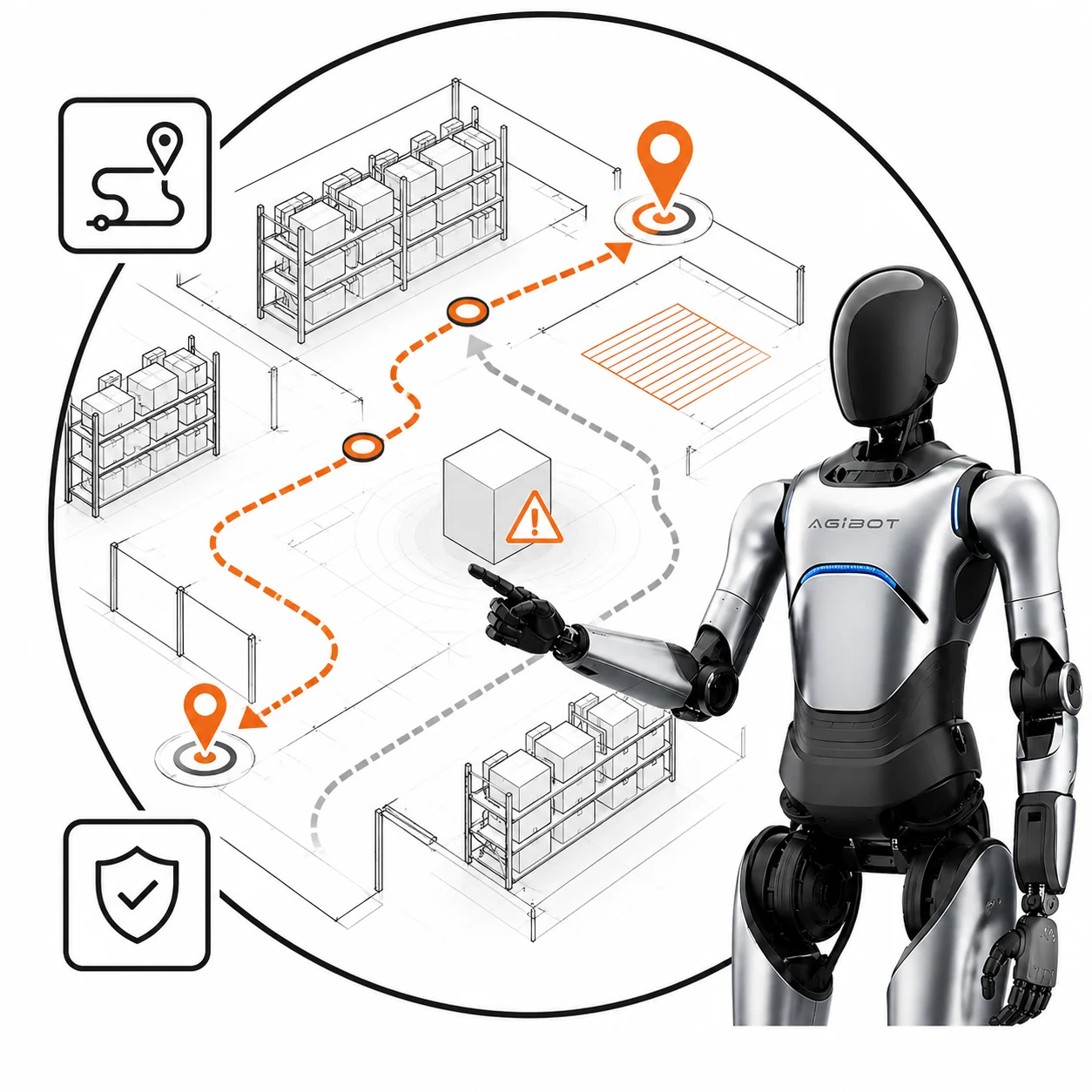
ROS-based navigation for humanoid and legged platforms, path planning, obstacle handling and recovery behaviour tuned to your floor, not a demo hall.
View detailsRequirements management for a customer-facing marketing robot: what it should say, where it should go, and how it behaves when a visitor interrupts it.
View details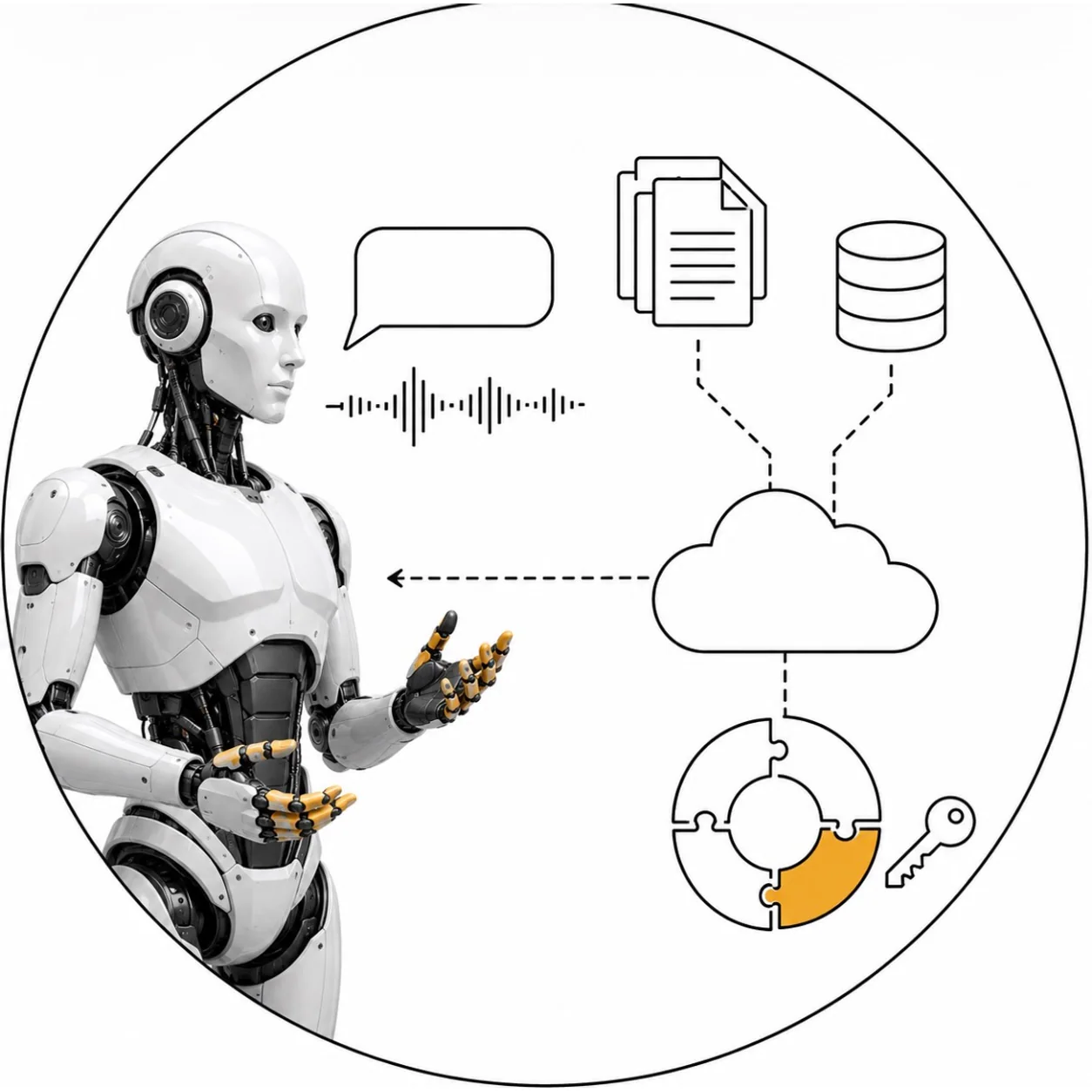
Connects your own LLM to the robot, so it answers in your language, from your content, with the guardrails your brand and legal team require.
View detailsFive items, and the order matters more here than the total. A greeting robot is easy to imagine and easy to get wrong, because the part that makes it work is not the hardware.
A robot in a public space is a different proposition from a robot in a warehouse, and the differences are not technical ones.
Related reading: Can a robot actually dance at your event: what ships and what is engineering
Yes. Most platforms can be demonstrated on a working unit, and our humanoid robots, robot dogs and the cleaning robot are also available to rent for a trial on your own site.
See rental termsEvery supply includes commissioning, operator briefing and European service handling, with a 12 month warranty handled inside the EU. If a machine stops, a named engineer responds the same working day and works remotely first; on-site attendance is set in the service agreement. On-site engineering is 825 EUR per engineer per day within Europe, with travel and accommodation included. Remote engineering is quoted per request, as is work that runs past midnight or starts before 06:00. The figure here is indicative until we issue a written quotation.
For a standard configuration, allow 12 to 16 weeks from a firm order. A configuration built to order takes longer. The binding date is the one in your written quotation.