
Skip to content
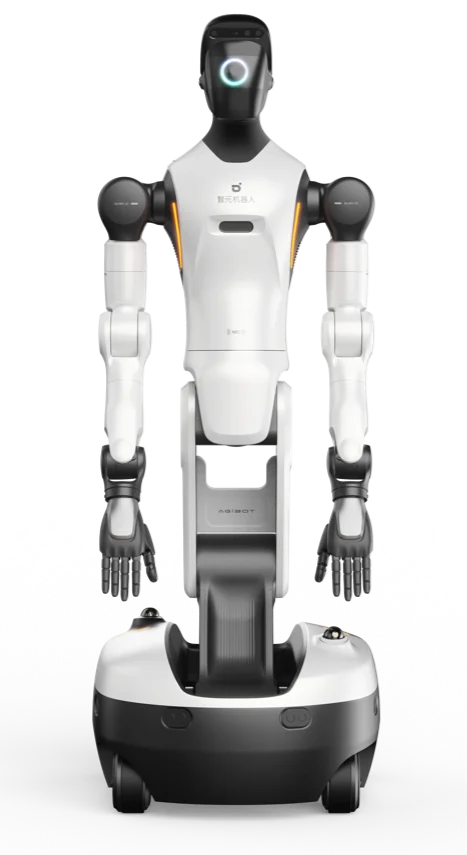
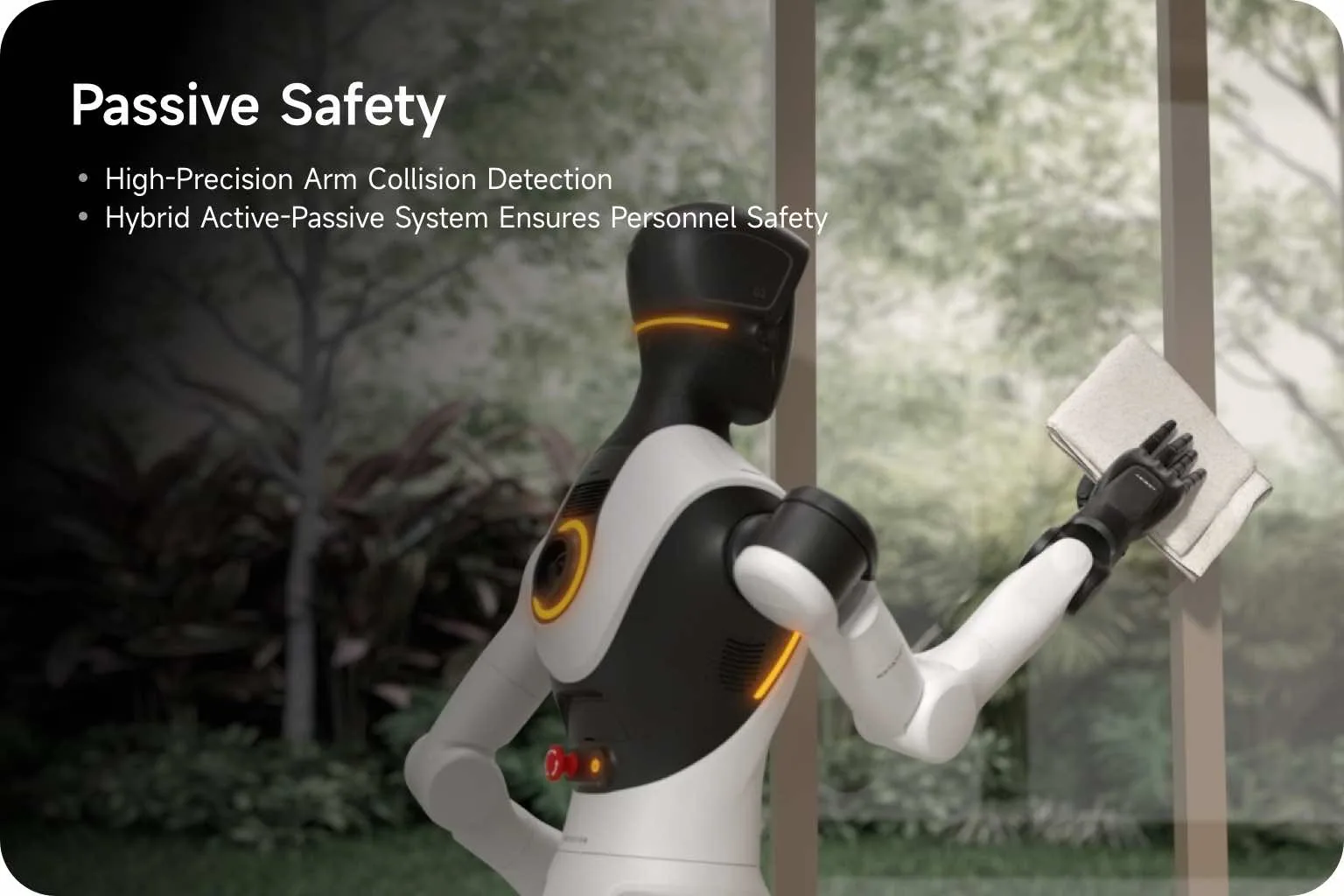
The AGIBOT G2 humanoid robot on its wheeled base, front view, the white upper body and arms rising from a dark rounded chassis instead of legs.

Humanoid robots

AGIBOT G2

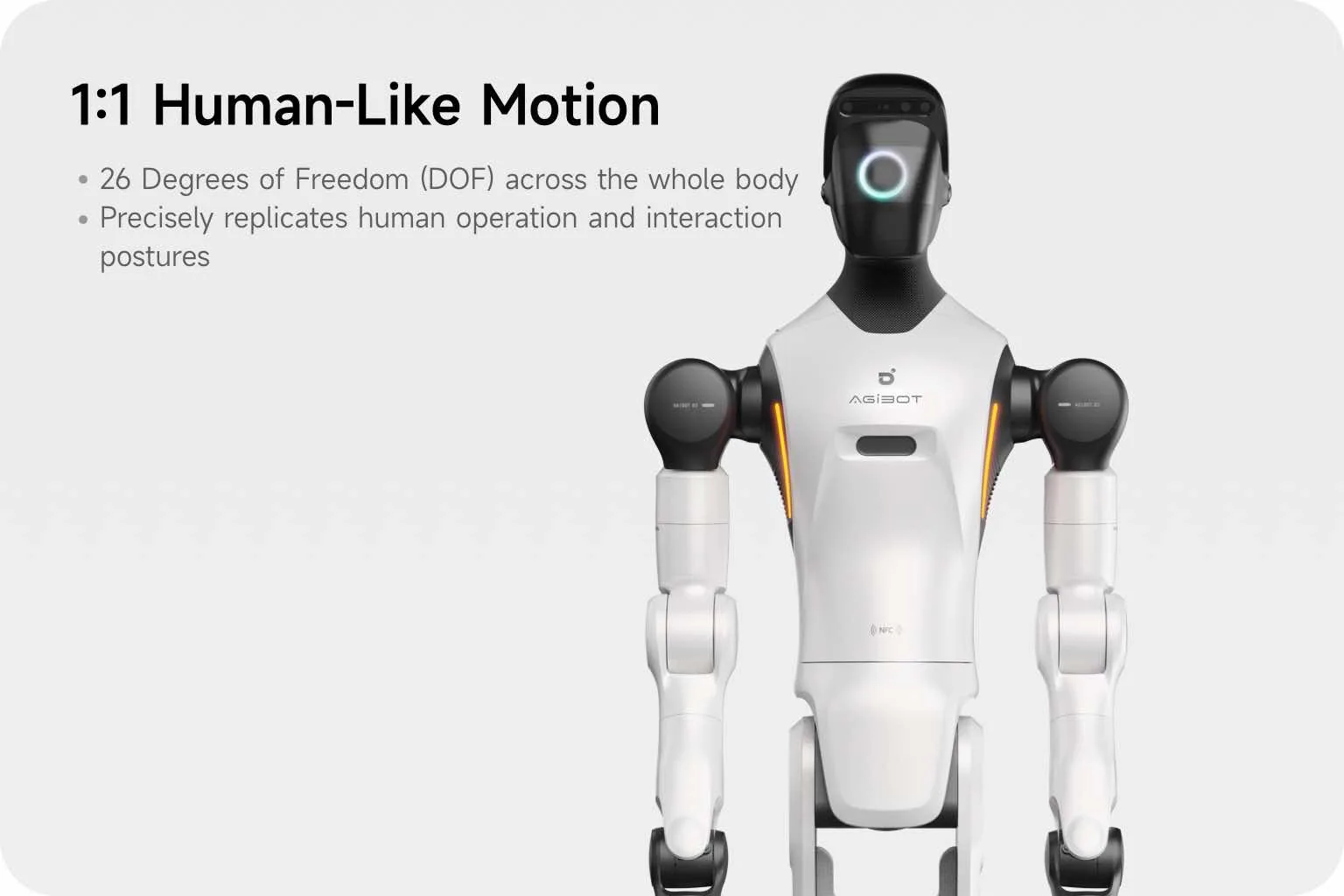
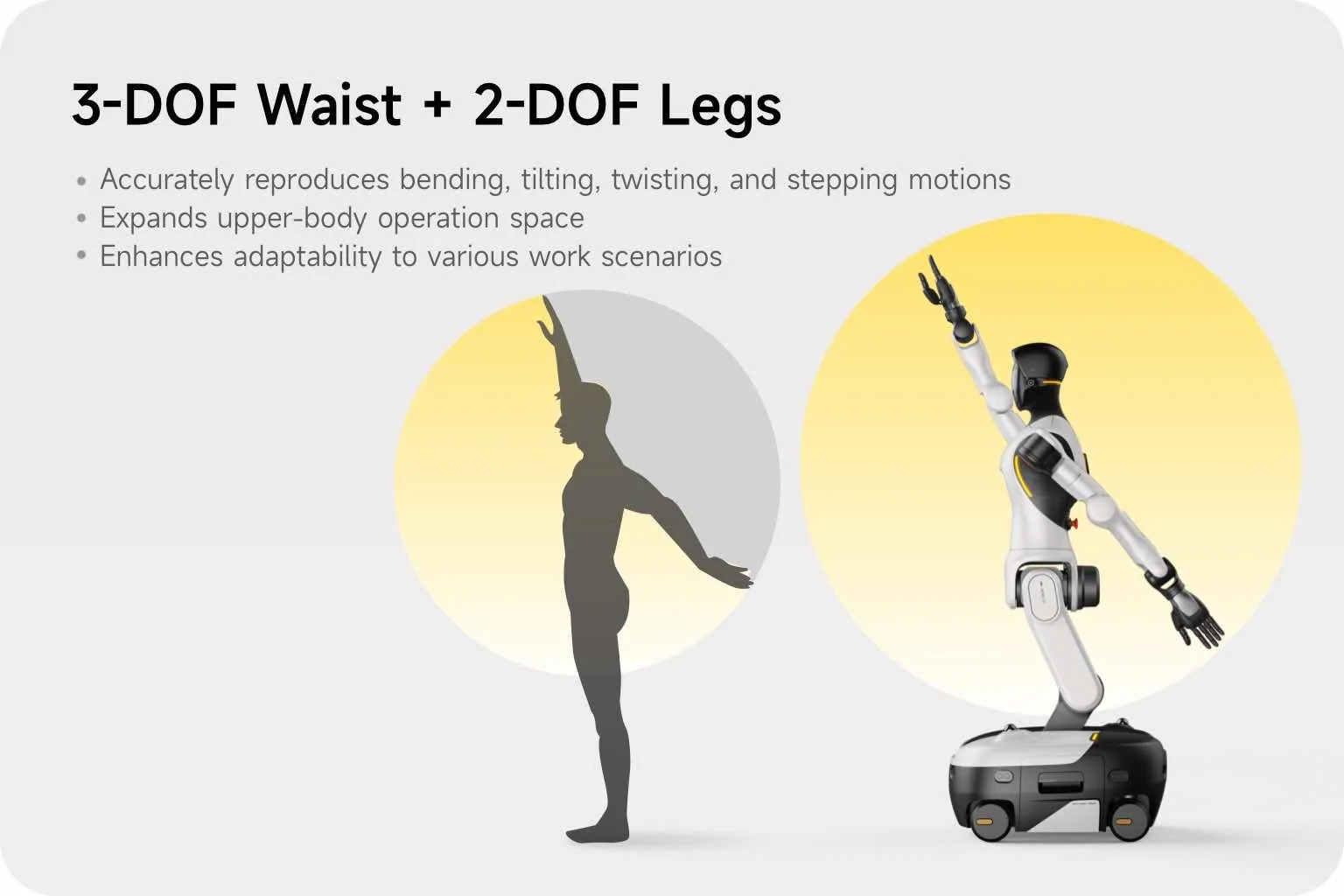
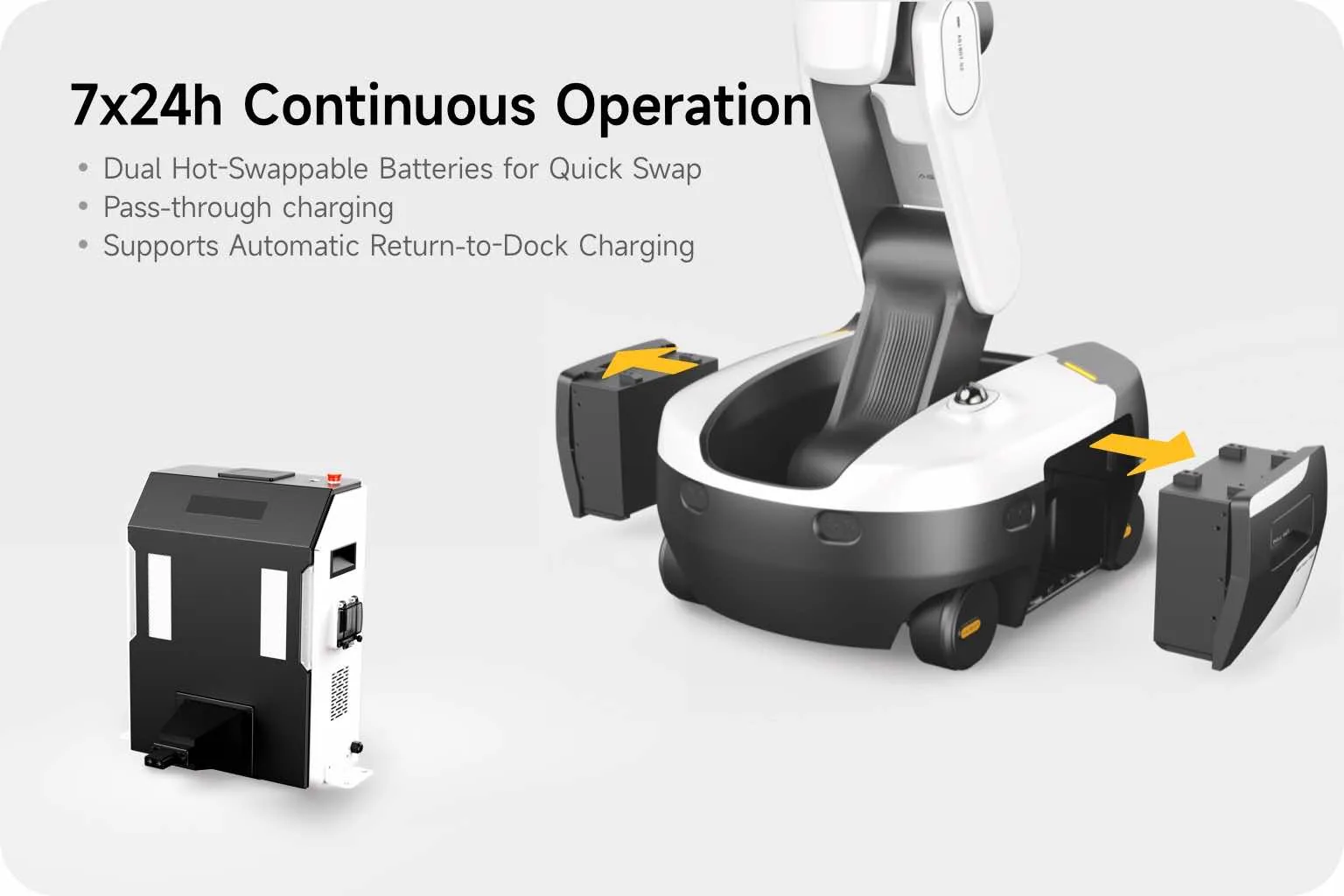
Built for work where the robot touches things with people nearby: all 26 joints are force-controlled, so contact is regulated rather than resisted. A wheeled base keeps it stable on flat industrial floors, its height adjusts between 1225 and 1795 mm to reach a low bench or a high shelf, and each arm carries 5 kg. Dual hot-swap batteries give about four hours. IP42 keeps out solid objects over 1 mm and dripping water; it is not a dust or washdown rating.

Manufacturer: AGIBOT

Also available for rental

Request a quote

This platform is supplied to order. Tell us your application and we will confirm configuration and availability.

Request a quote

What it does

Photography and published figures from AGIBOT, the manufacturer of this model.

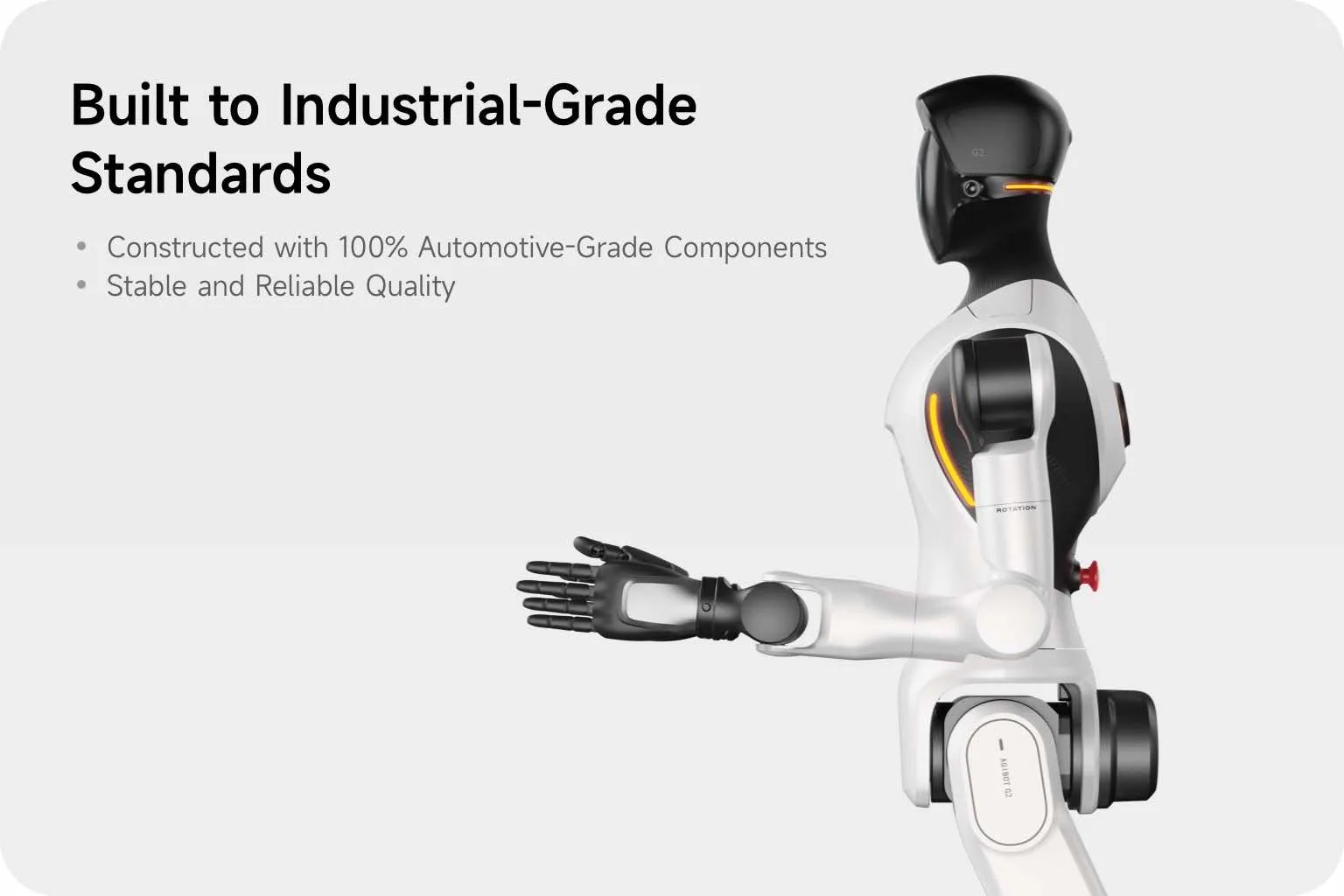
Industrial-grade construction

Built from automotive-grade components throughout, with an IP42 rating for the whole machine.

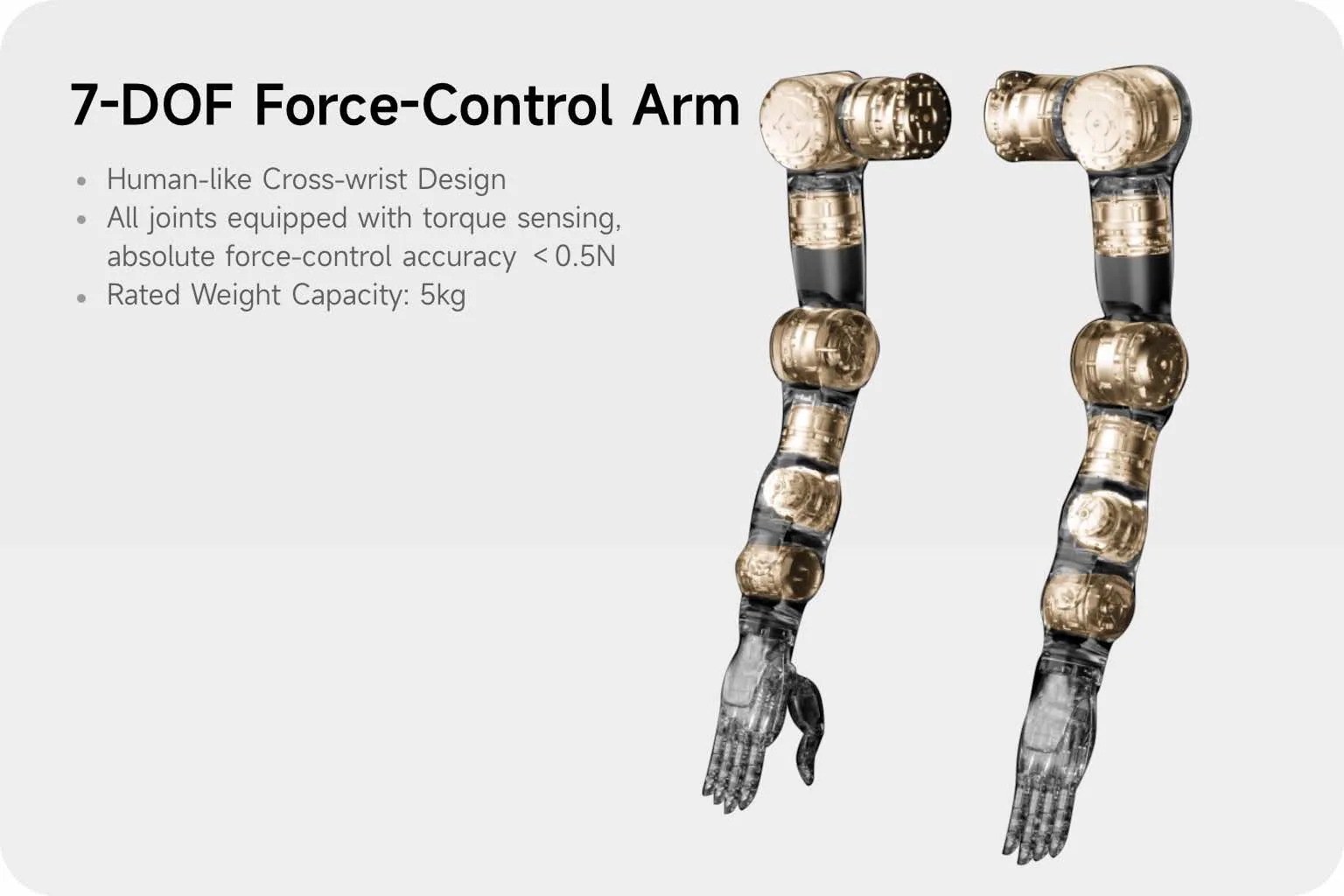
Force-controlled arms

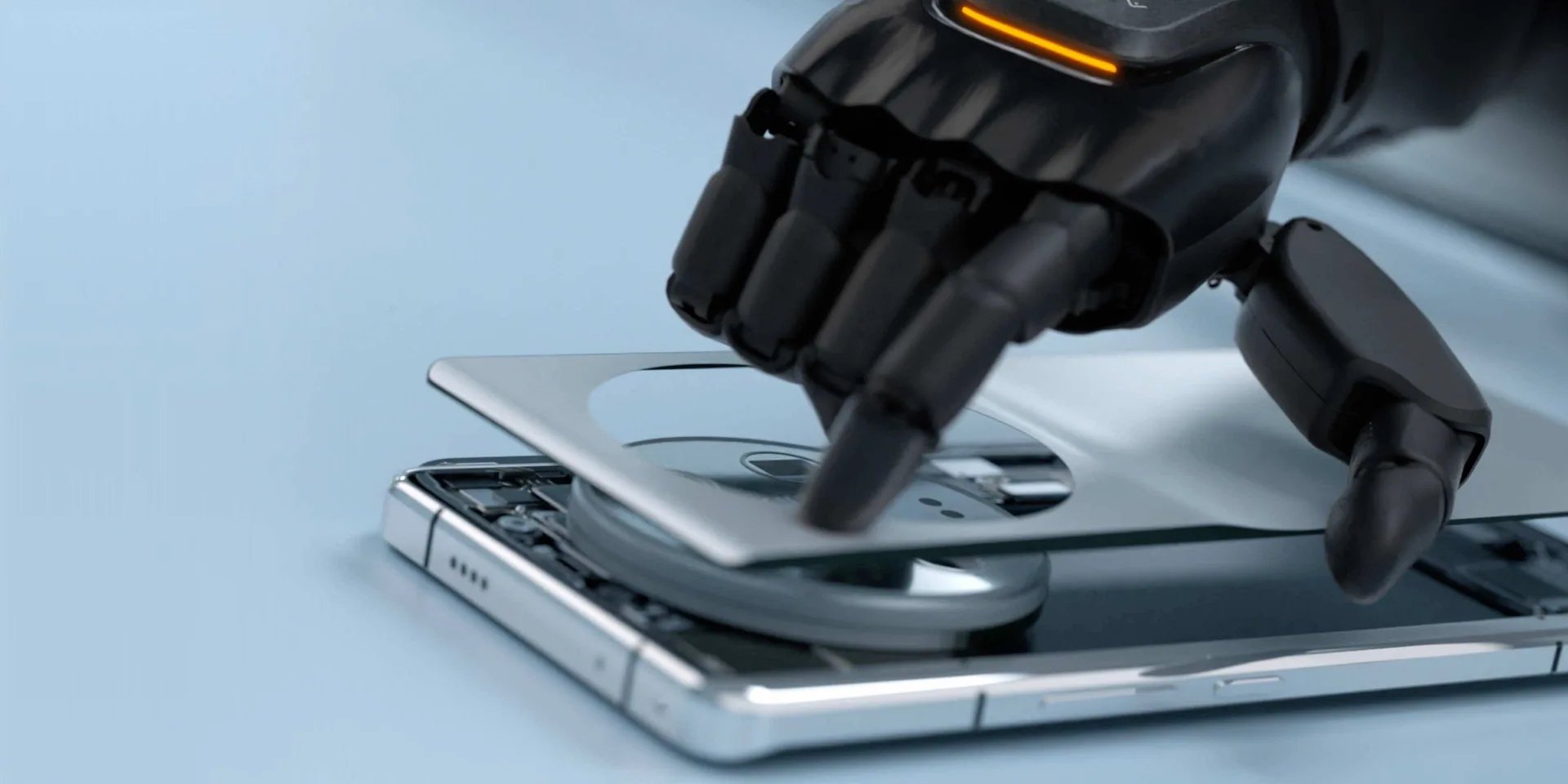
Seven degrees of freedom per arm, force-controlled, out of 26 on the machine. No force resolution or repeatability figure is published for the G2, so read this as the class of work the arms are built for rather than as a precision specification.

Interactive intelligence

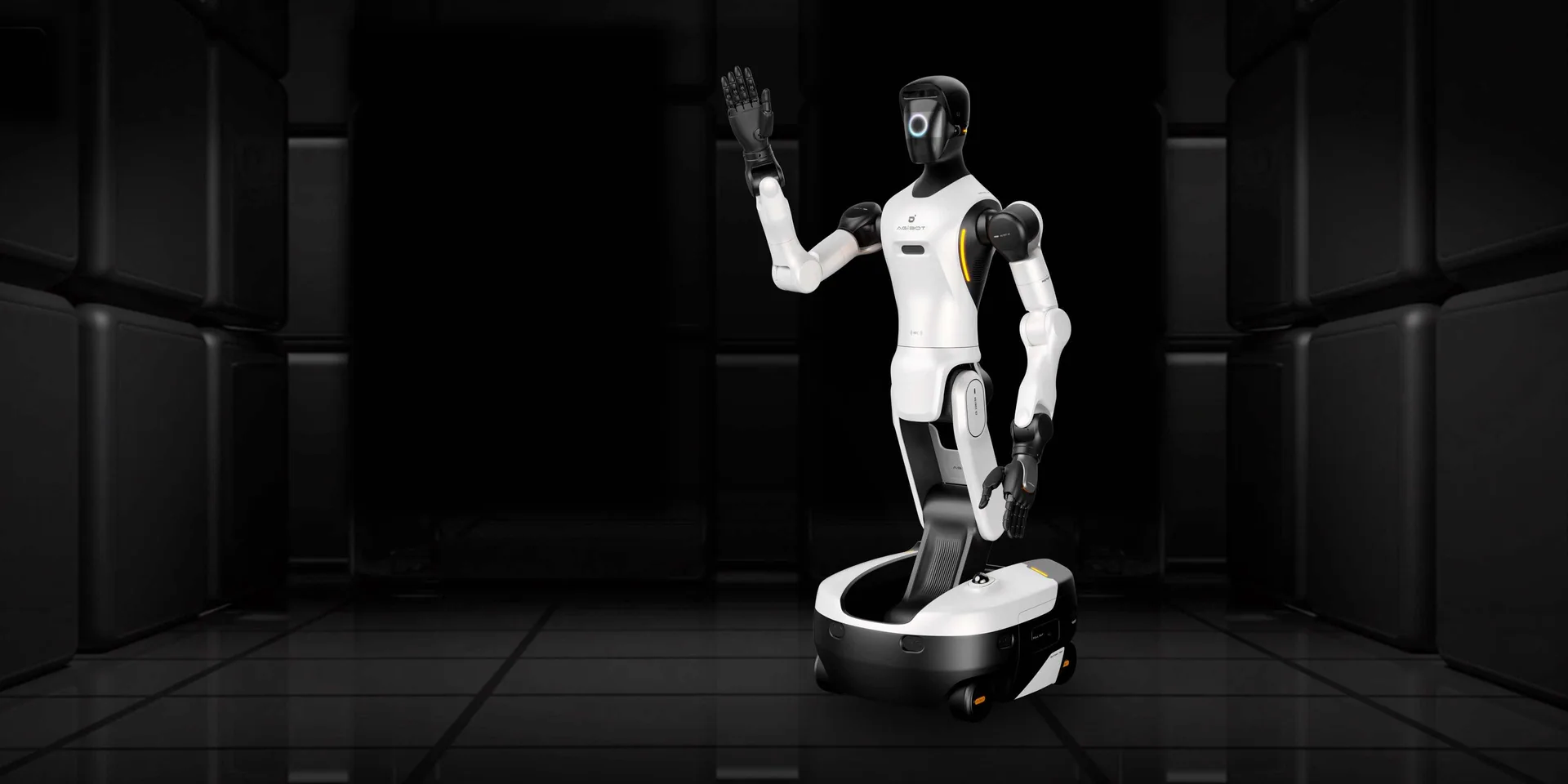
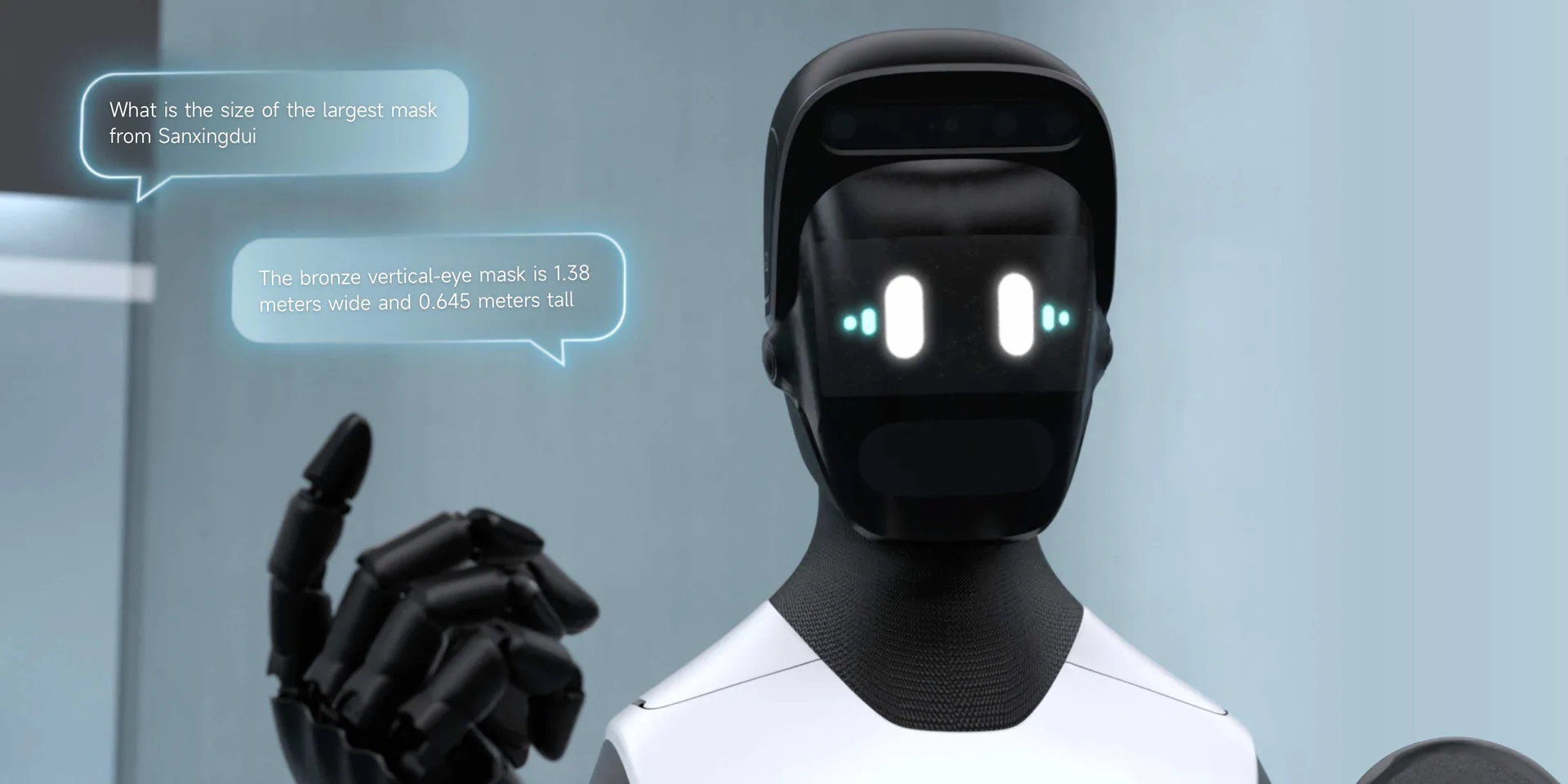
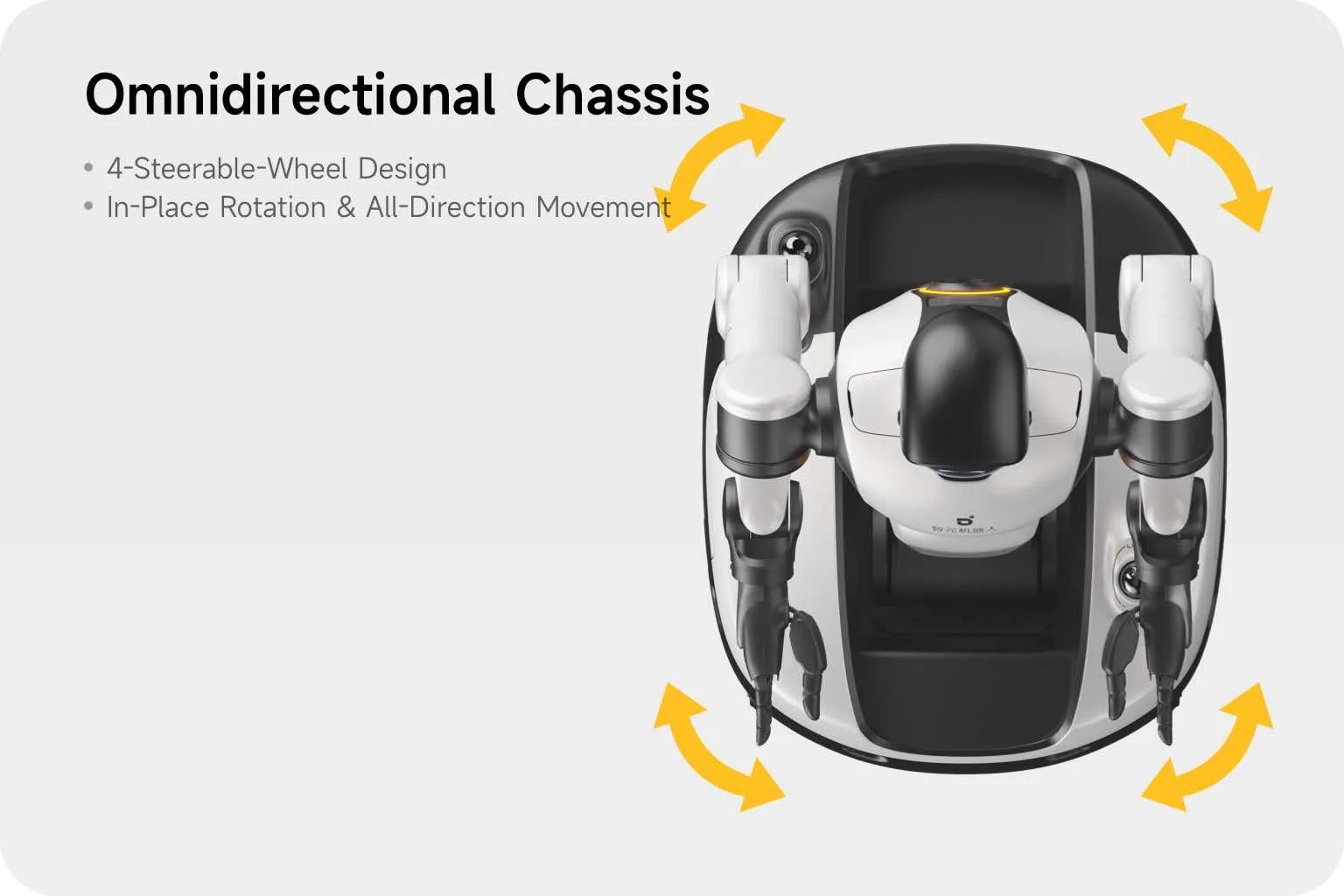
Expressive facial animation, eye-gaze tracking and multi-user conversation, on a chassis that rotates in place.

Diagrams from the manufacturer

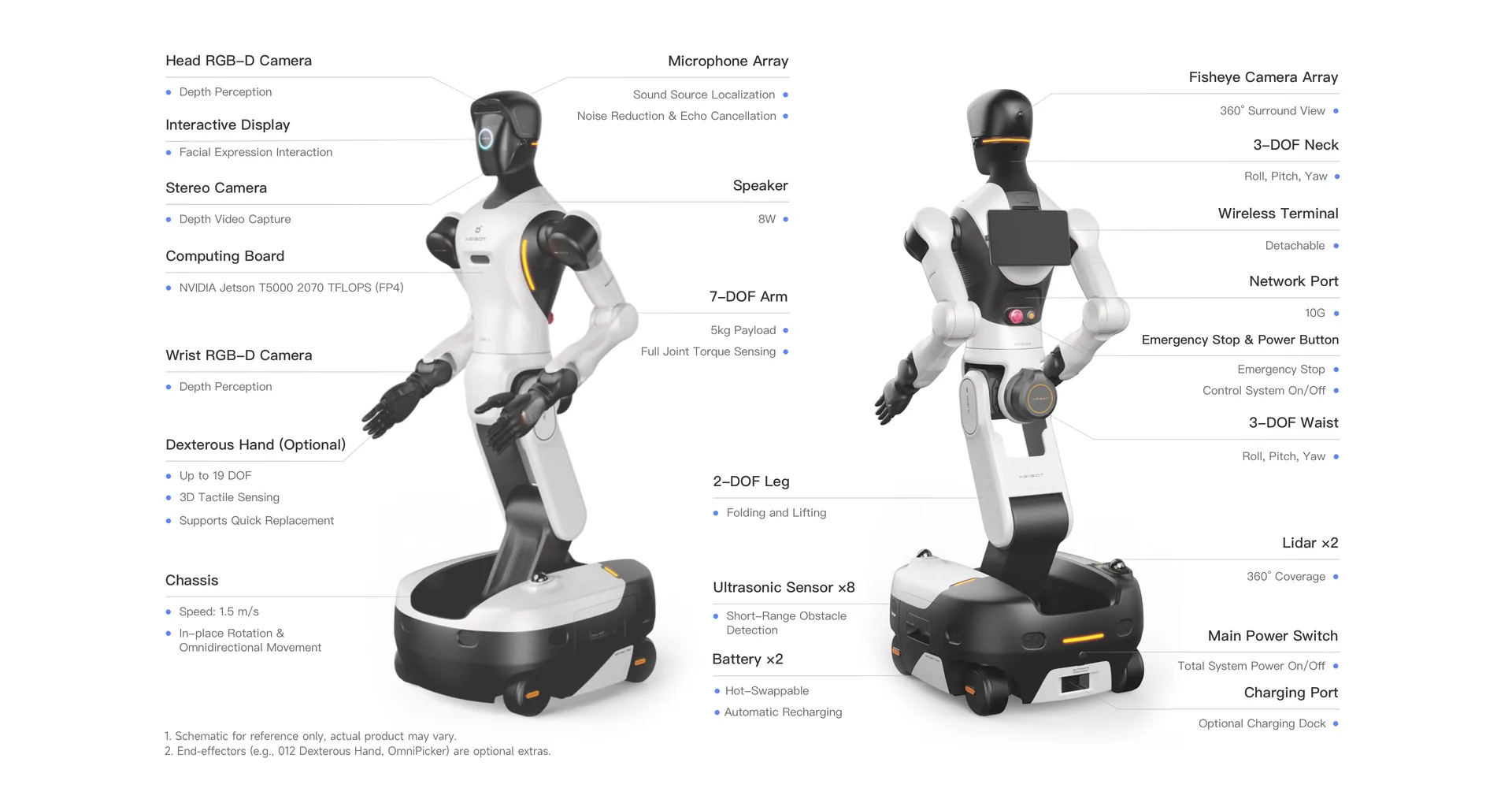
AGIBOT publishes these drawings in English. We show them exactly as published.

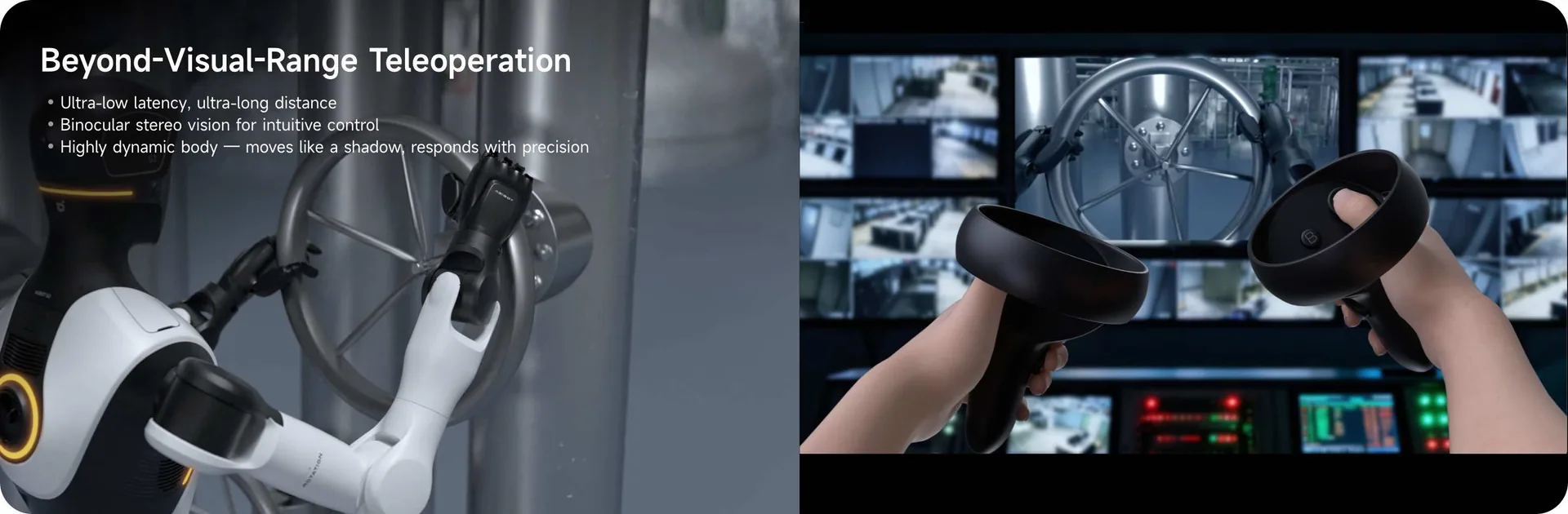
  • Technical diagram 1 of 10 for the AGIBOT G2, published by the manufacturer
  • Technical diagram 2 of 10 for the AGIBOT G2, published by the manufacturer
  • Technical diagram 3 of 10 for the AGIBOT G2, published by the manufacturer
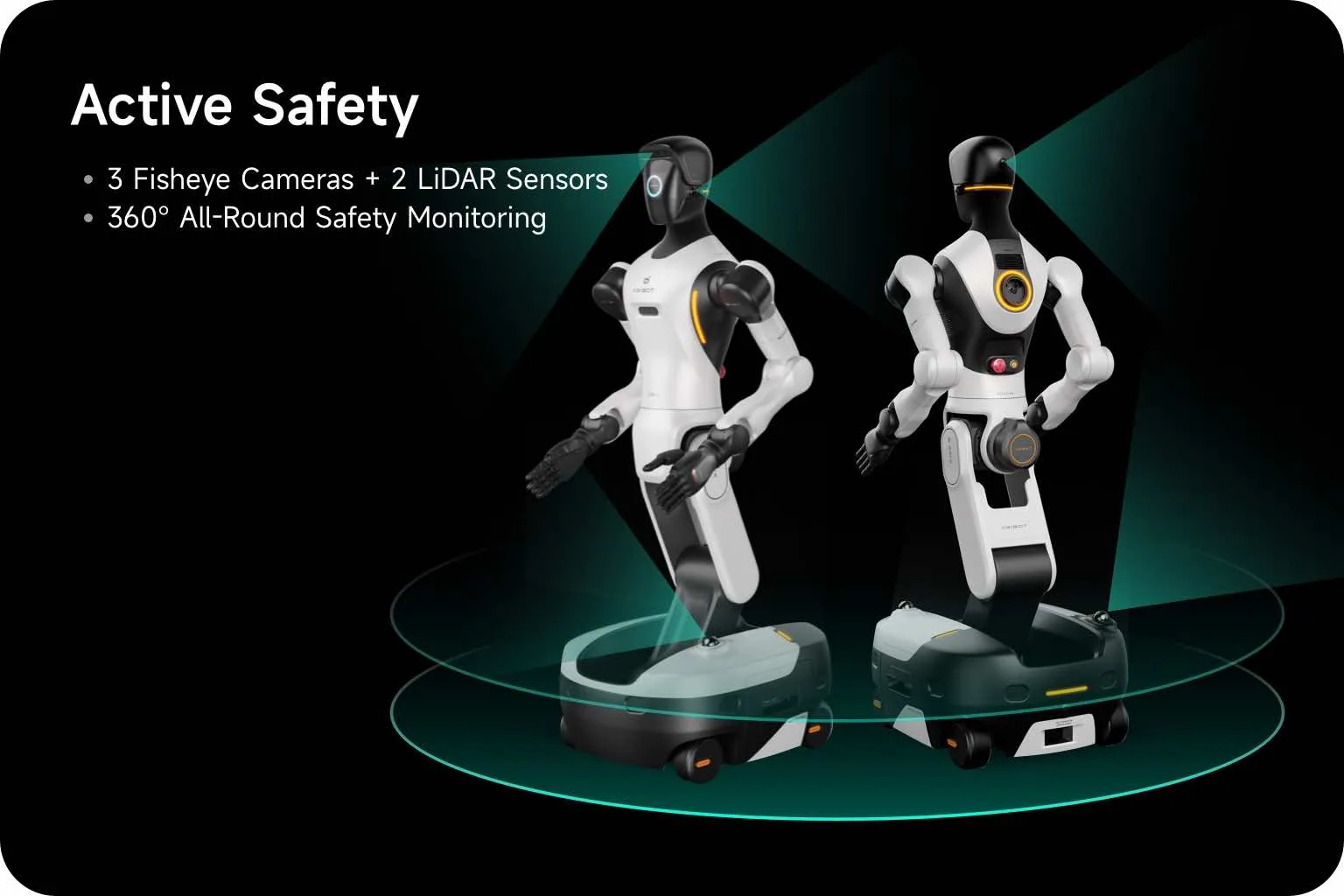
  • Technical diagram 4 of 10 for the AGIBOT G2, published by the manufacturer
  • Technical diagram 5 of 10 for the AGIBOT G2, published by the manufacturer
  • Technical diagram 6 of 10 for the AGIBOT G2, published by the manufacturer
  • Technical diagram 7 of 10 for the AGIBOT G2, published by the manufacturer
  • Technical diagram 8 of 10 for the AGIBOT G2, published by the manufacturer
  • Technical diagram 9 of 10 for the AGIBOT G2, published by the manufacturer
  • Technical diagram 10 of 10 for the AGIBOT G2, published by the manufacturer

Software and SDK

Manufacturer product page
www.agibot.com/products/G2

Technical specification

Technical specification
Product typeWheeled humanoid robot
Height1225–1795 mm
Weight185 kg
Degrees of freedom26 DoF (7 DoF per arm, force-controlled)
Ingress protection ratingIP42
BatteryDual hot-swap, approx. 4 h per charge
SensorsDual LiDAR, RGB-D, RGB cameras, 8-channel microphone array, ultrasonic, fingertip visuo-tactile
AI compute powerNVIDIA Jetson T5000, 2070 TFLOPS (FP4)
Software stackGO-1 (VLLA), GE-1 world model, Genie RL, WorkGPT
Operating temperature range0 °C to 40 °C
Dimensions1225–1795 (H) × 640 (W) × 760 (L) mm
Neck DoF3
DoF per arm7
Payload per arm5 kg
Speed1.5 m/s
Total battery capacity1652 Wh
Charging time≤ 2 h
Charging voltage100–240 V
Charger output54.75 V / 15 A
Compute platformHUIXI R1, 500 TOPS (INT8)
3D LiDAR2
Fisheye camera3
RGB-D camera3
Interaction screenEquipped
Indicator lightEquipped
Communication interfacesWi-Fi, 4G/5G, Bluetooth, NFC
Handheld controllerIncluded
Over-the-air updatesSupported
Customer-side developmentSupported

Where these figures come from: 23 of the 29 rows above are held against the manufacturer's own published parameter tables. The remaining 6 come from the reseller listing this catalogue was built from.

Related products

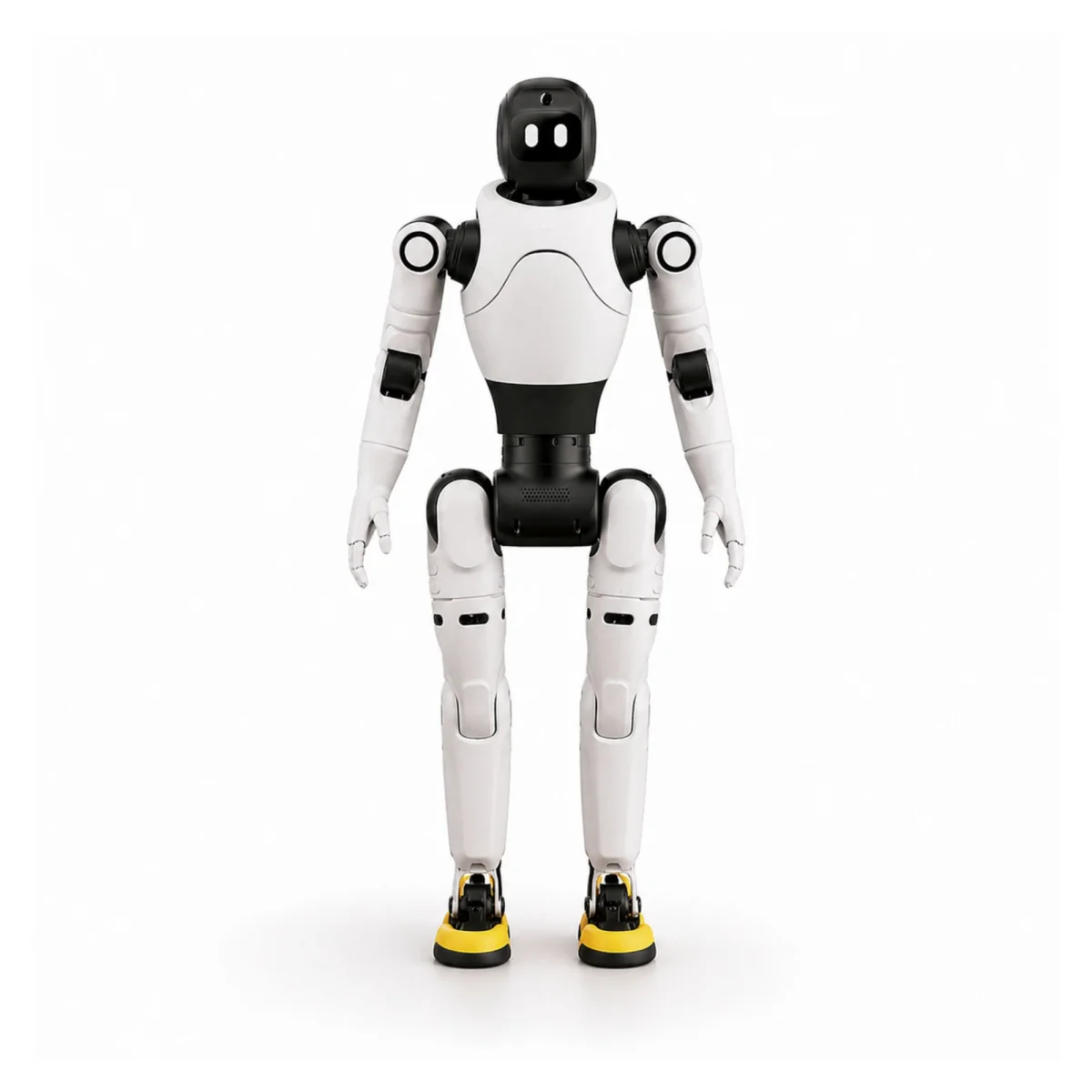
The AGIBOT A2 Ultra humanoid robot seen head on and full length, standing with its arms at its sides, its white shell showing the dark grey joints at the shoulders, elbows and knees.

AGIBOT A2 Ultra

AGIBOT

Works at human height and human reach, so it uses the benches, shelves and controls a room already has instead of needing the space rebuilt around it. Its 40 joints and force sensing suit demonstration, service and research work rather than lifting: about 2 kg per arm at 1.2 m/s. The software stack is AimRT and open source, and the 14.4 Ah pack swaps for a charged one rather than stopping the shift.

View details
The AGIBOT X2 Basic humanoid robot standing upright on a plain white ground, front view, its white torso and limbs broken by black joint housings and yellow soles.

AGIBOT X2 Basic

AGIBOT

A compact humanoid at 131 cm and 33 kg, small enough to share a room with people and light enough for one person to reposition. It suits a reception, a stand or a teaching lab, where being approachable matters more than payload. The AimDK_X2 SDK ships with it in Python and C++, so a group can write its own behaviour rather than run a fixed demonstration.

View details
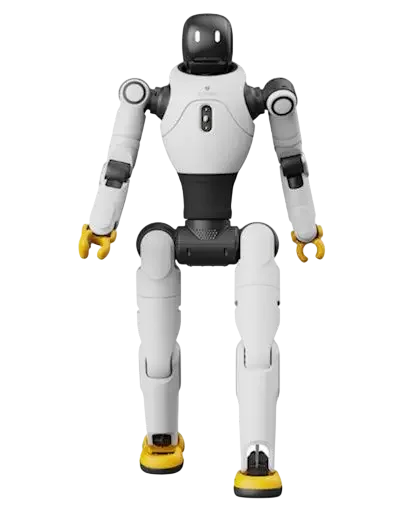
The AGIBOT X2 Ultra humanoid robot standing with its arms held slightly away from its body, front view, with yellow hands and yellow soles against a plain ground.

AGIBOT X2 Ultra

AGIBOT

The X2 that finds the part rather than being handed it: 3D LiDAR and RGB-D vision let it locate objects and move through a space nobody mapped by hand. It lifts 3 kg per arm, walks at 2 m/s and returns to its own docking station to charge, so nobody has to plug it in mid-shift. Two hours of runtime, 30 active joints, and the same AimDK_X2 SDK as the Basic.

View details
The AGIBOT A3 humanoid robot standing upright on a white ground, front view, its pale shell showing the articulated joints at the hips, knees and shoulders.

AGIBOT A3

AGIBOT

The one to specify for shift work rather than a single demonstration. Batteries hot-swap in ten seconds, runtime reaches ten hours, and more than a hundred units can be coordinated as a group over UWB, so a fleet is a plan rather than an experiment. It walks at 1.8 m/s, runs at 5 m/s and carries 5 kg per arm with an actuator fitted. AGIBOT publishes 92 automotive-grade tests behind it and a design life of up to three years.

View details