Skip to content

Robots engineered for real work

We select, integrate and support humanoid robots and robot dogs across Europe, from a first proof of concept to real work: on a production line, at an event, or in front of visitors.

Talk to an engineer
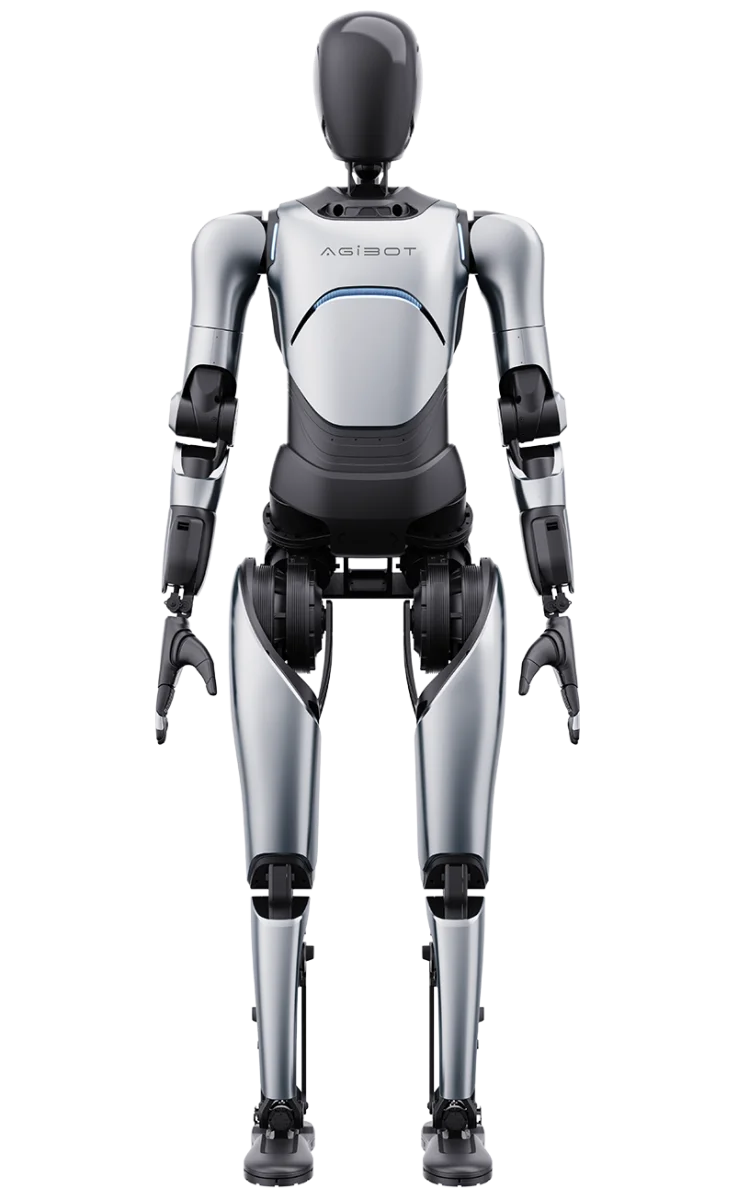
The AGIBOT A2 Ultra, a full-size humanoid robot, standing upright
  • Sales & distribution

    Direct supply of humanoid platforms, robot dogs, grippers and spares, with European warranty handling.

  • Engineering

    Application development on ROS 2: perception, navigation, pick-and-place, and the integration work in between.

  • Rental

    Short-term units for trade shows, teaching and pilot projects, so you can evaluate before you commit.

Humanoid platforms

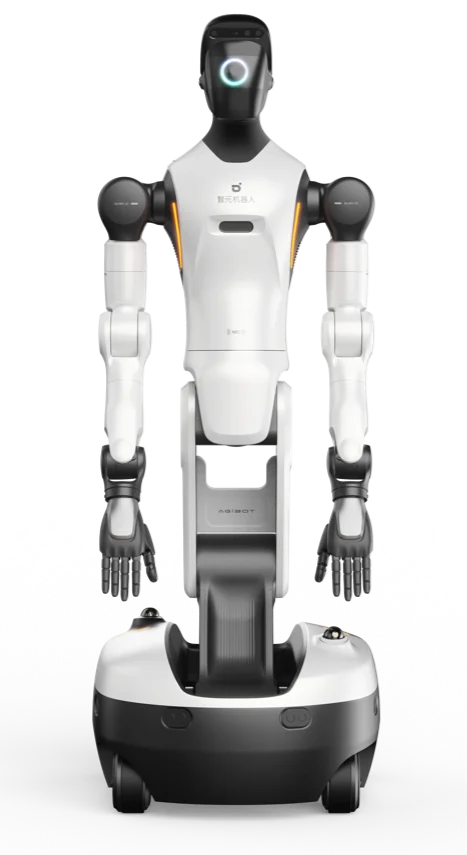
The AGIBOT G2 humanoid robot on its wheeled base, front view, the white upper body and arms rising from a dark rounded chassis instead of legs.

AGIBOT G2

AGIBOT

Built for work where the robot touches things with people nearby: all 26 joints are force-controlled, so contact is regulated rather than resisted. A wheeled base keeps it stable on flat industrial floors, its height adjusts between 1225 and 1795 mm to reach a low bench or a high shelf, and each arm carries 5 kg. Dual hot-swap batteries give about four hours. IP42 covers dust and dripping water, not washdown.

View details
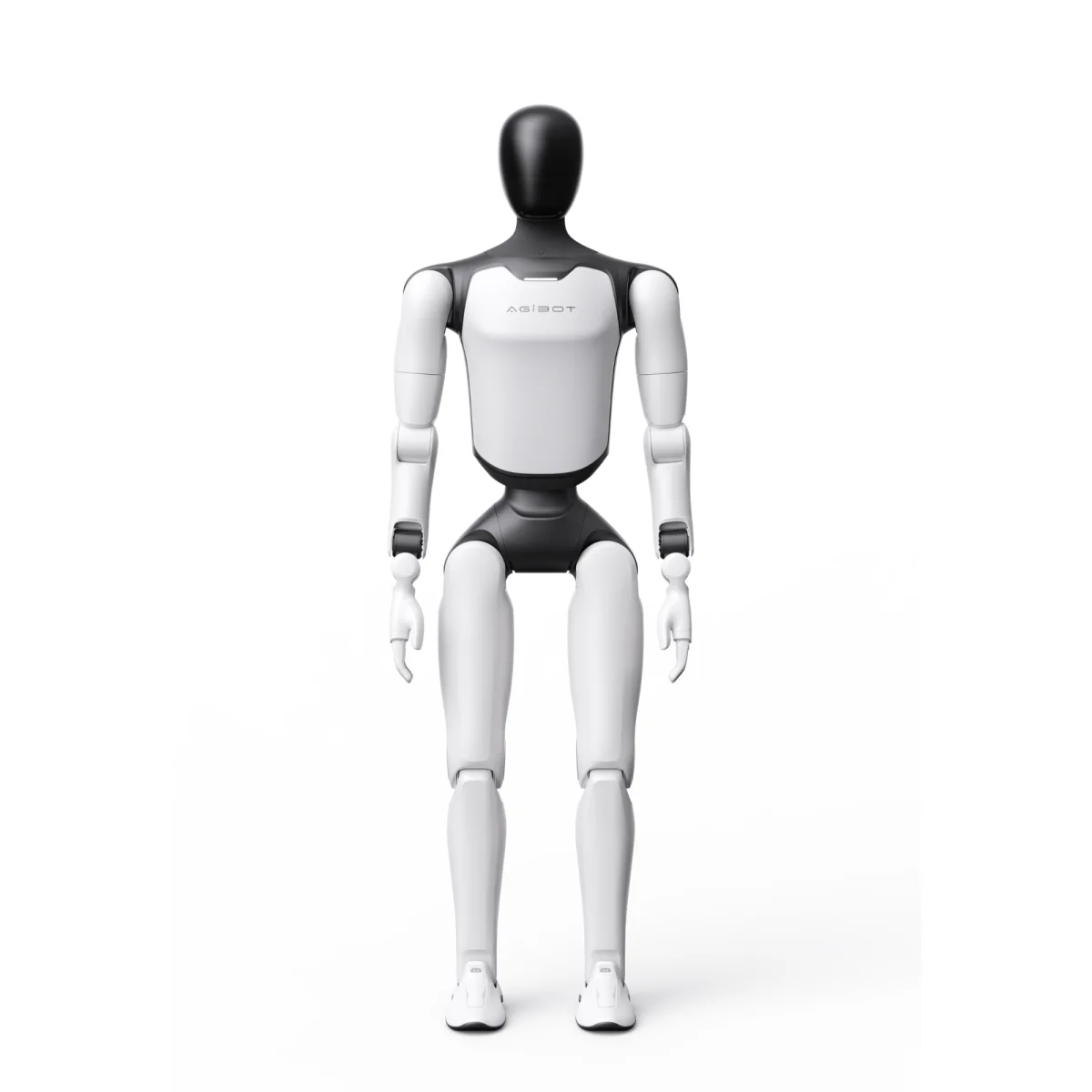
The AGIBOT A2 Ultra humanoid robot seen head on and full length, standing with its arms at its sides, its white shell showing the dark grey joints at the shoulders, elbows and knees.

AGIBOT A2 Ultra

AGIBOT

Works at human height and human reach, so it uses the benches, shelves and controls a room already has instead of needing the space rebuilt around it. Its 40 joints and force sensing suit demonstration, service and research work rather than lifting: about 2 kg per arm at 1.2 m/s. The software stack is AimRT and open source, and the 14.4 Ah pack swaps for a charged one rather than stopping the shift.

View details

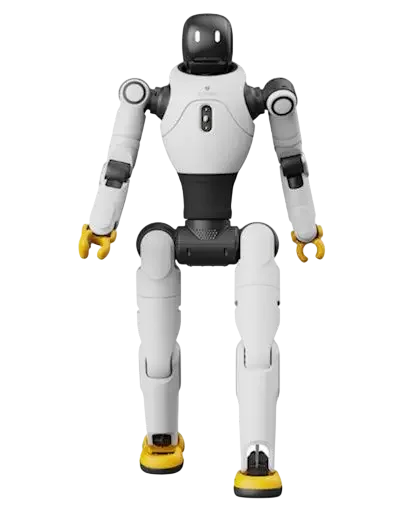
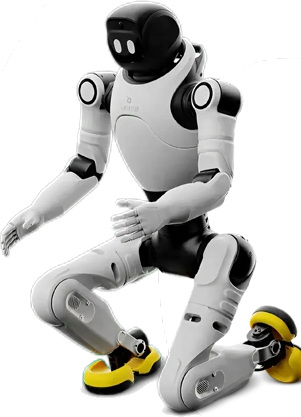
The AGIBOT X2 Ultra humanoid robot standing with its arms held slightly away from its body, front view, with yellow hands and yellow soles against a plain ground.

AGIBOT X2 Ultra

AGIBOT

The X2 that finds the part rather than being handed it: 3D LiDAR and RGB-D vision let it locate objects and move through a space nobody mapped by hand. It lifts 3 kg per arm, walks at 2 m/s and returns to its own docking station to charge, so nobody has to plug it in mid-shift. Two hours of runtime, 30 active joints, and the same AimDK_X2 SDK as the Basic.

View details
The AGIBOT A3 humanoid robot standing upright on a white ground, front view, its pale shell showing the articulated joints at the hips, knees and shoulders.

AGIBOT A3

AGIBOT

The one to specify for shift work rather than a single demonstration. Batteries hot-swap in ten seconds, runtime reaches ten hours, and more than a hundred units can be coordinated as a group over UWB, so a fleet is a plan rather than an experiment. It walks at 1.8 m/s, runs at 5 m/s and carries 5 kg per arm with an actuator fitted. AGIBOT publishes 92 automotive-grade tests behind it and a design life of up to three years.

View details
See all humanoid platforms

Robot dogs

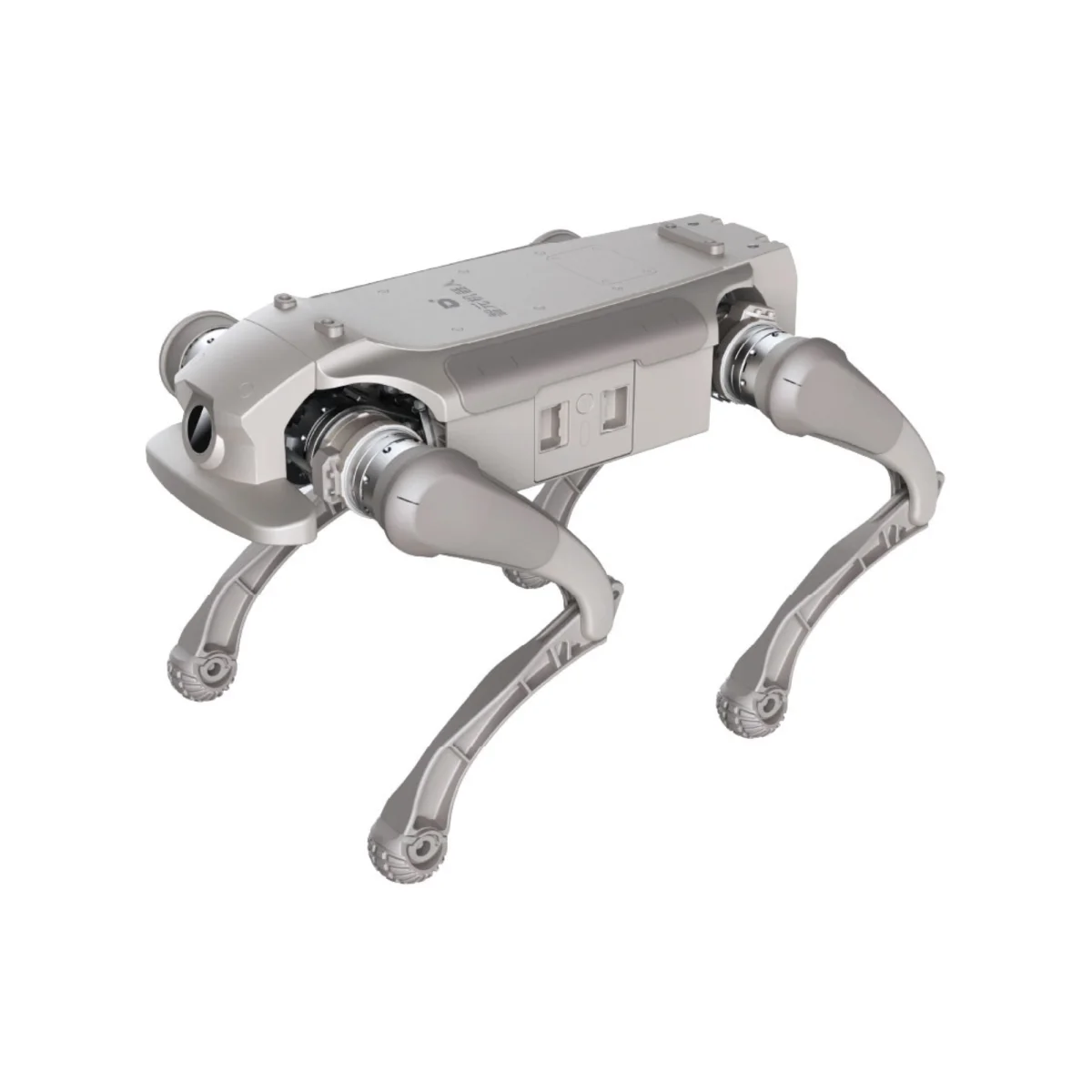
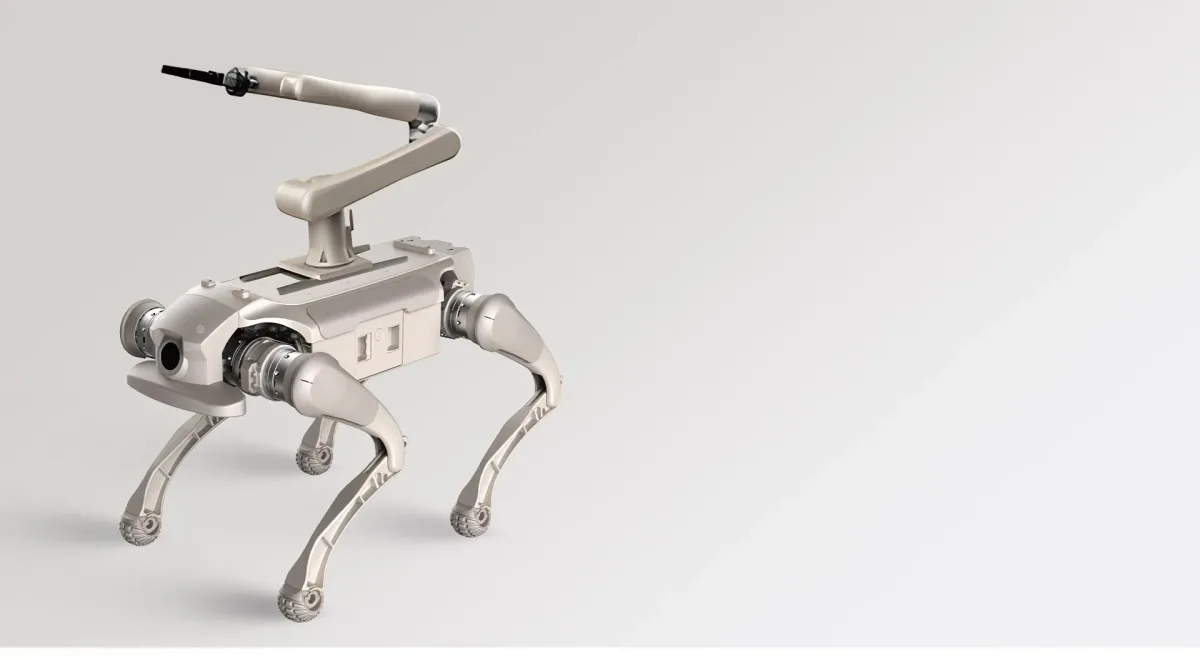
The AGIBOT D1 Ultra quadruped robot standing with its legs braced apart, three-quarter view, its silver body carrying a sensor module on top.

AGIBOT D1 Ultra

A 16 kg quadruped light enough for one person to carry to the site and sealed to IP54 for staying out in the weather. It covers a 6 km round at up to 3.7 m/s, climbs a 16 cm step and jumps 35 cm, so kerbs and stairs do not end the route. It ships with an IMU and expansion ports for Ethernet, USB, SBUS and UART: the sensors your job needs are the ones you fit.

View details
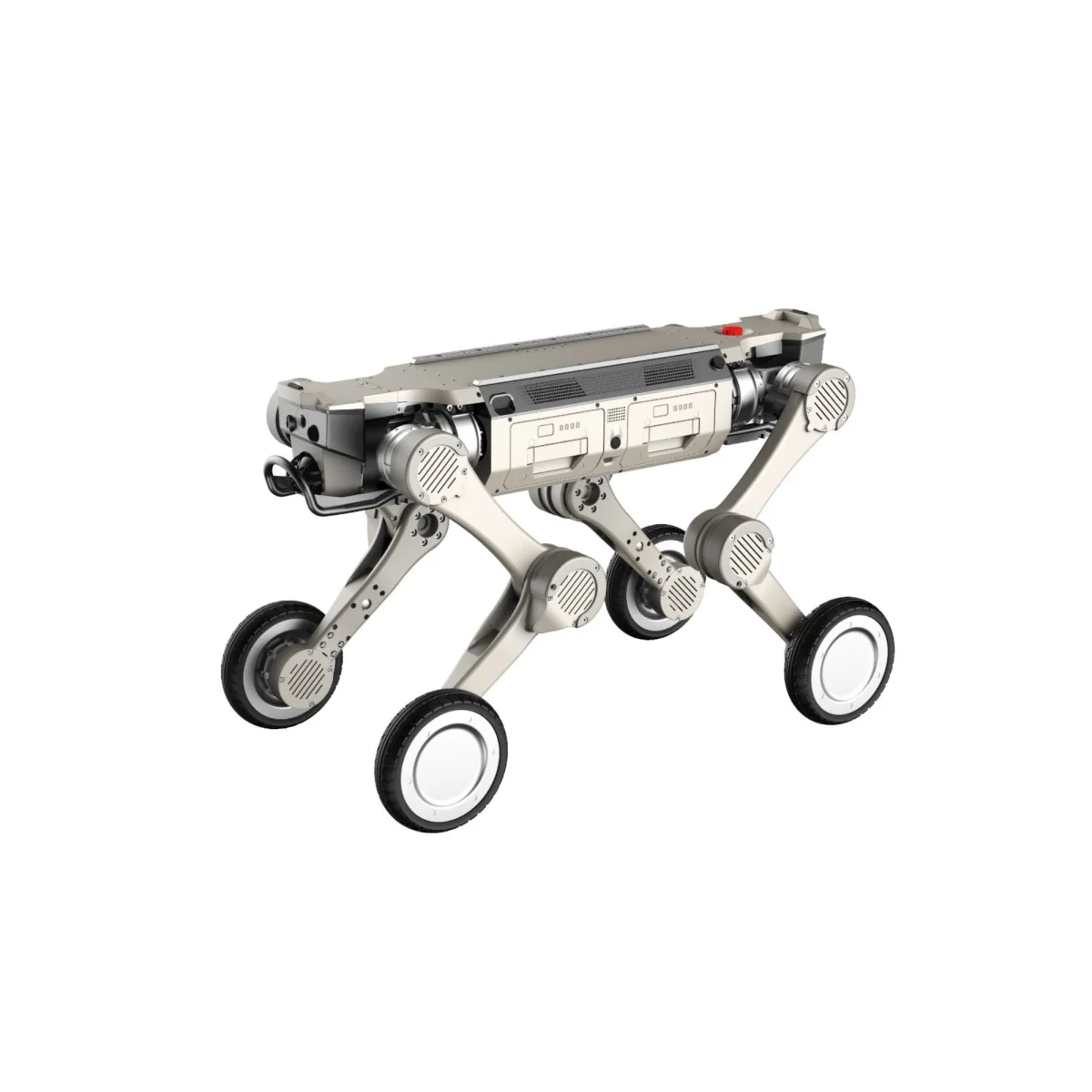
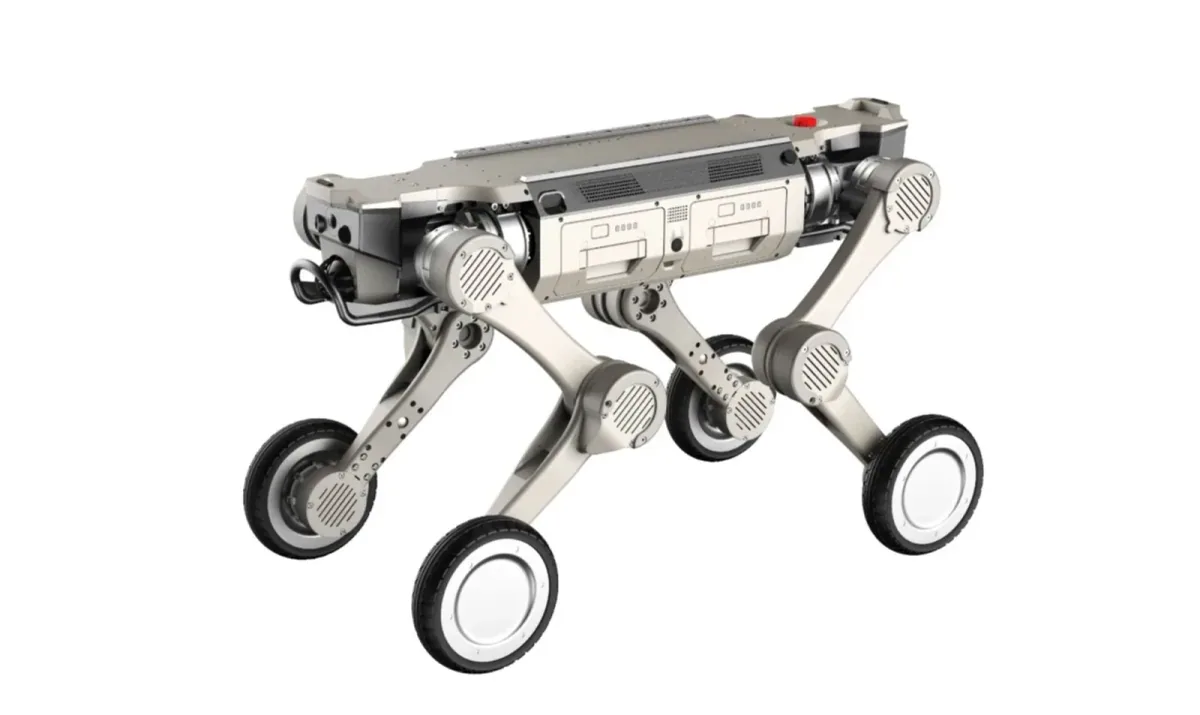
The AGIBOT D1 Max wheel-legged quadruped robot seen from the front, its four legs splayed wide and a wheel mounted at the end of each one.

AGIBOT D1 Max

AGIBOT

The quadruped for outdoor work with something to carry: 25 to 30 kg of payload, IP67 sealing, and 29 km on a charge unloaded or 18 km with the load on. It crosses an 80 cm gap, climbs a 45° slope and squeezes through a 50 cm passage, which is what decides whether a route exists at all. Twin 192-line LiDAR and GNSS-RTK let it know where it is outdoors without a prepared map.

View details
See all robot dogs

Cleaning robots

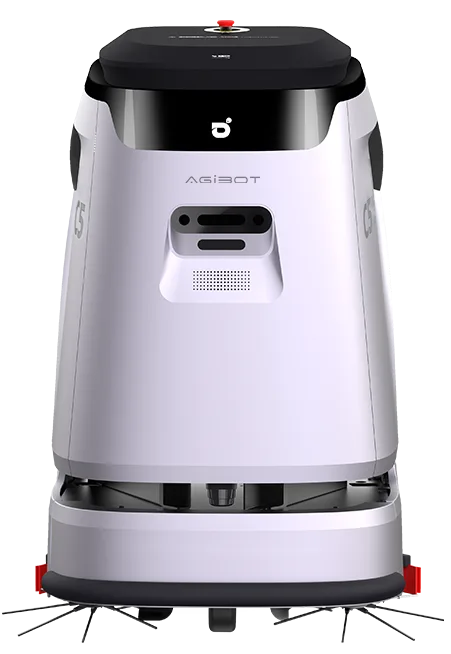
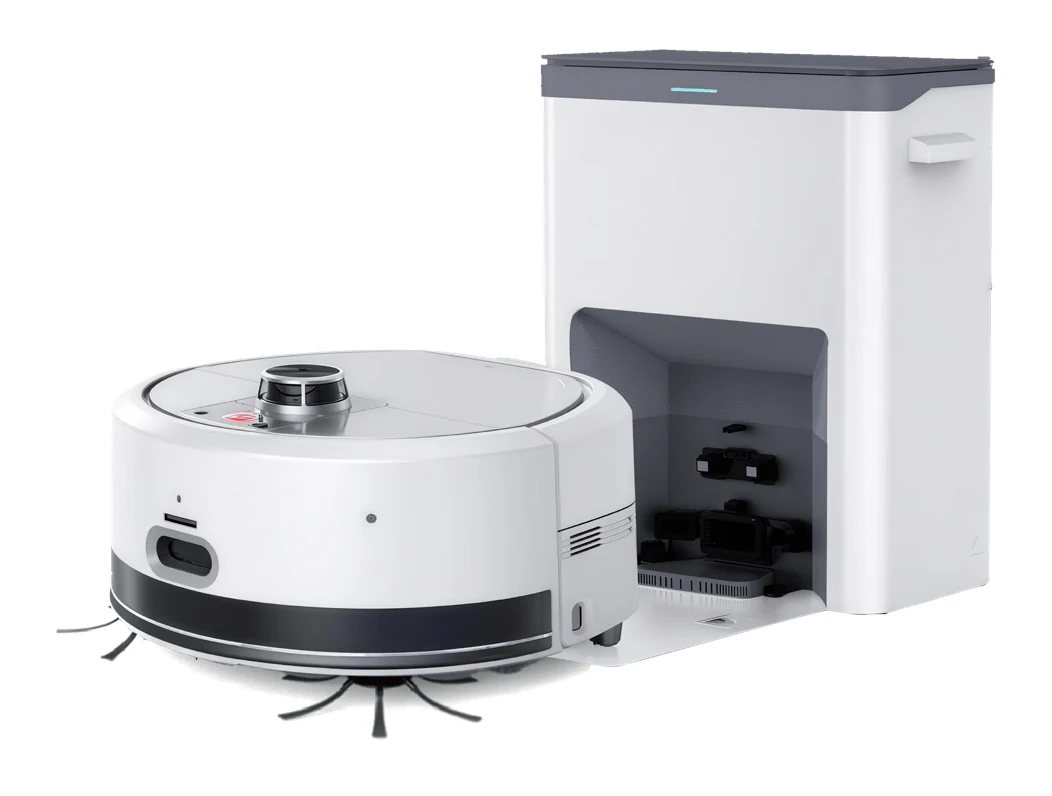
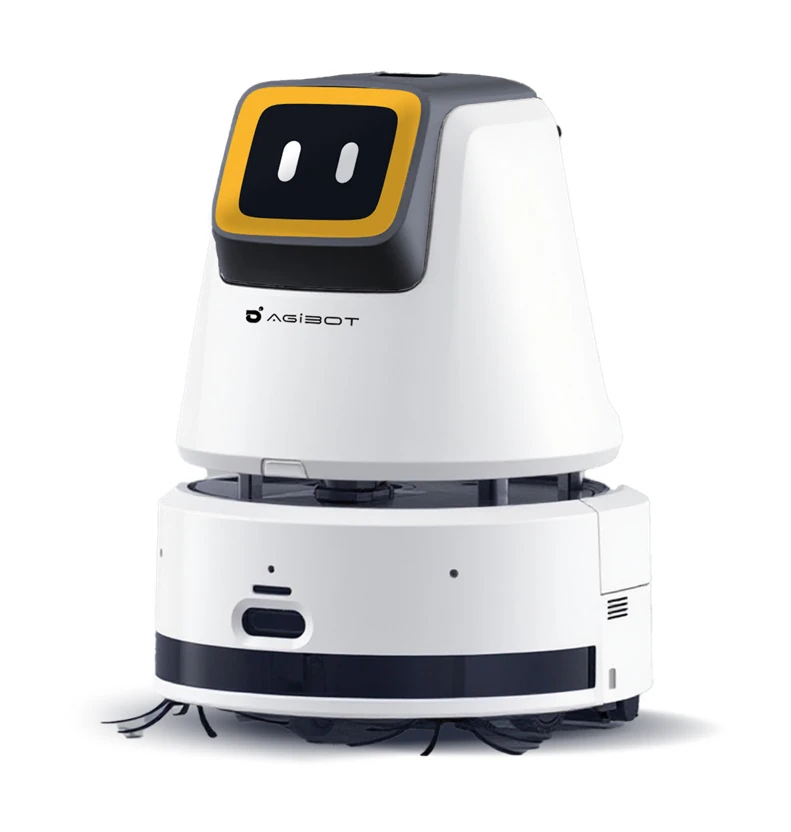
The AGIBOT C5 commercial cleaning robot, a tall white cylindrical machine on a low wheeled base, with a control panel set into the front of its body.

AGIBOT C5

AGIBOT

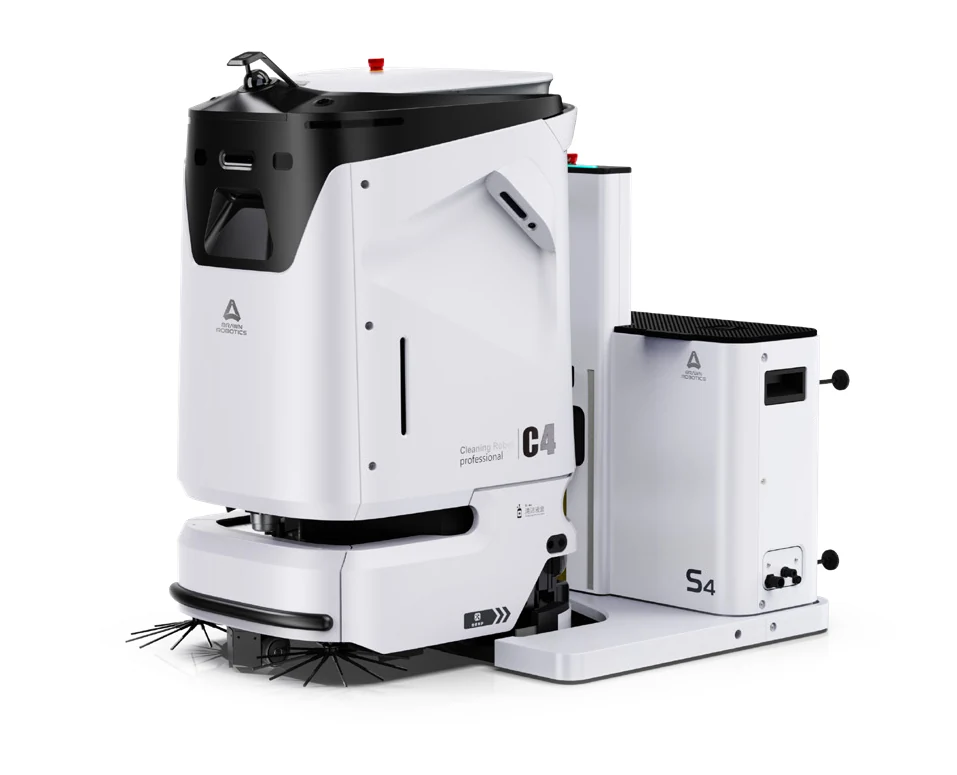
Sweeps, wet-scrubs and dry dust-mops a commercial floor in one pass, at up to 1,920 m² an hour and 840 mm wide with the side brush extended. Built for large, continuously-used sites, malls, airports, hospitals, offices, where the alternative is several separate machines or several separate staff passes. Its own docking station handles charging, water refill and drain, and a 4-minute tank self-clean without anyone attending it, and it can move between floors through a building's own lifts and access control. Quote on request.

View details
See cleaning robots

Why work with us

  • Series machines, not prototypes

    We work with AGIBOT: platforms in series production, built for real operation rather than concepts that exist for the demo.

  • Service inside the EU

    We deliver to Bulgaria, Romania, Greece and Cyprus. Spare parts and service are in Europe, and one of our engineers answers the same working day. When a question has to reach the manufacturer, it goes to a named person there.

  • We test before we deliver

    Every machine goes through our engineers: we set it up and run it to see what actually works. If we have not tried something ourselves, we say so instead of copying it out of the brochure.

  • One contract, one partner who answers

    Hardware, application software, integration, training and service are one solution. We train your team and stay responsible for the system after it goes into service.

What you get with us

  • We start with the job

    We begin with what you want to achieve, not with a particular robot. If a robot is the wrong answer, we say so at the start.

  • Engineers behind the robot

    Our team takes on the programming, the integration and the setup for your particular job. We do not simply deliver a machine, we make it part of your process or your event.

  • One person beside you

    One engineer leads the project from the first idea to the robot doing real work: deployment, training for your team and support afterwards.

See how a project runs

Where robots work

  • Manufacturing

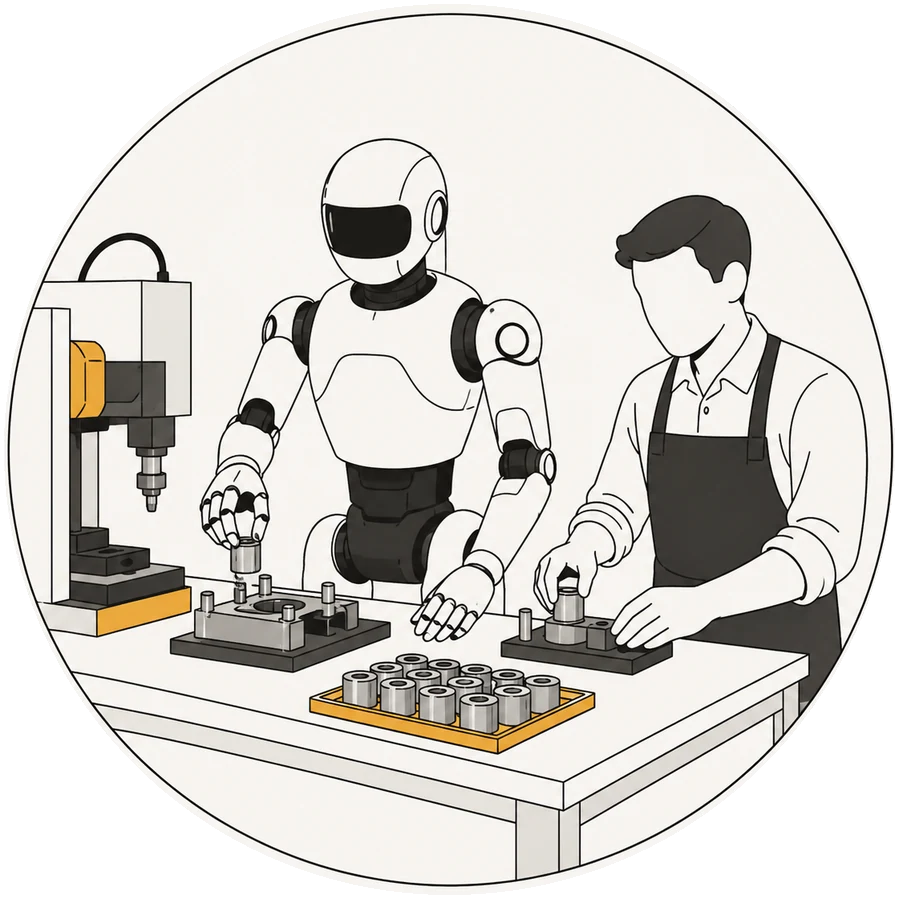
    They tend machines, feed them parts and take on the repetitive operations. They work beside the operators, in a defined work area.

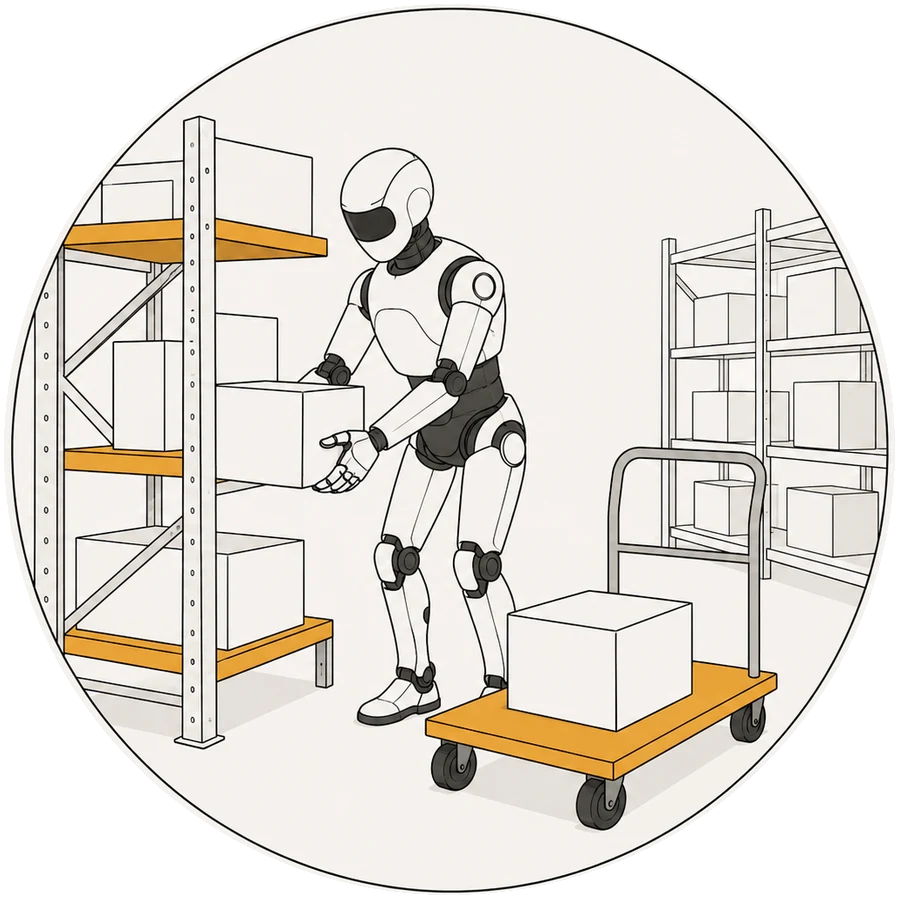
  • Logistics

    They carry, sort and move goods and materials between zones in a warehouse or on a site.

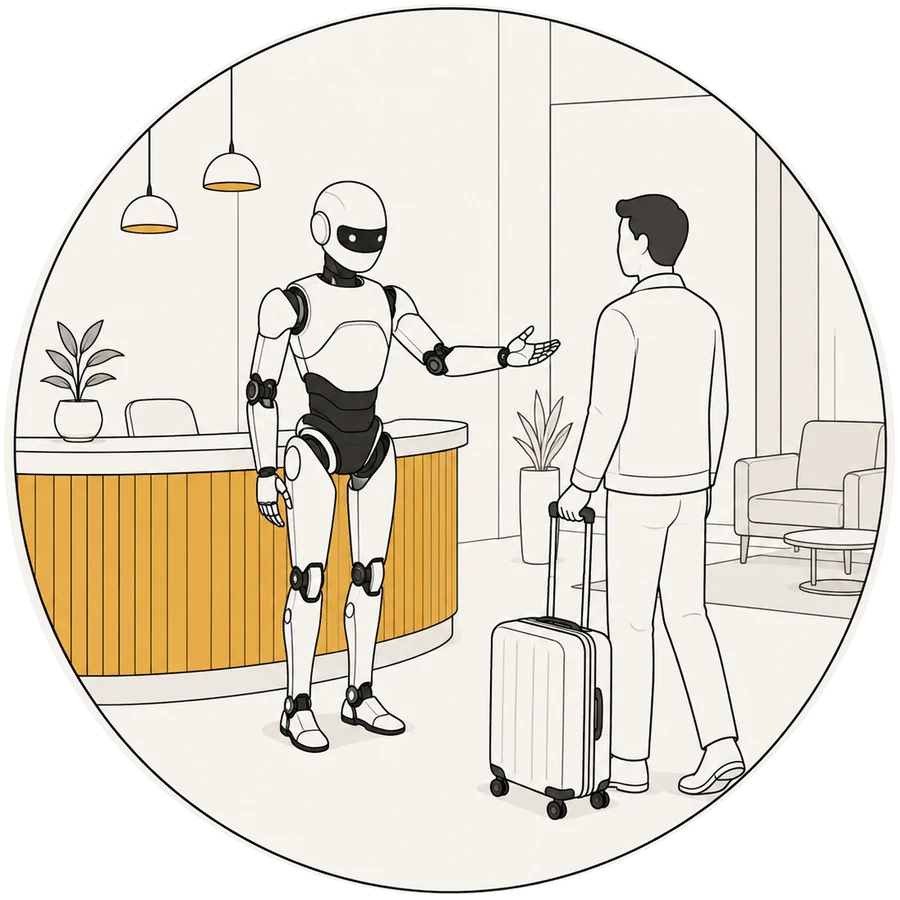
  • Welcoming and service

    They greet visitors, give information and deal with people in hotels, offices, shops and public spaces.

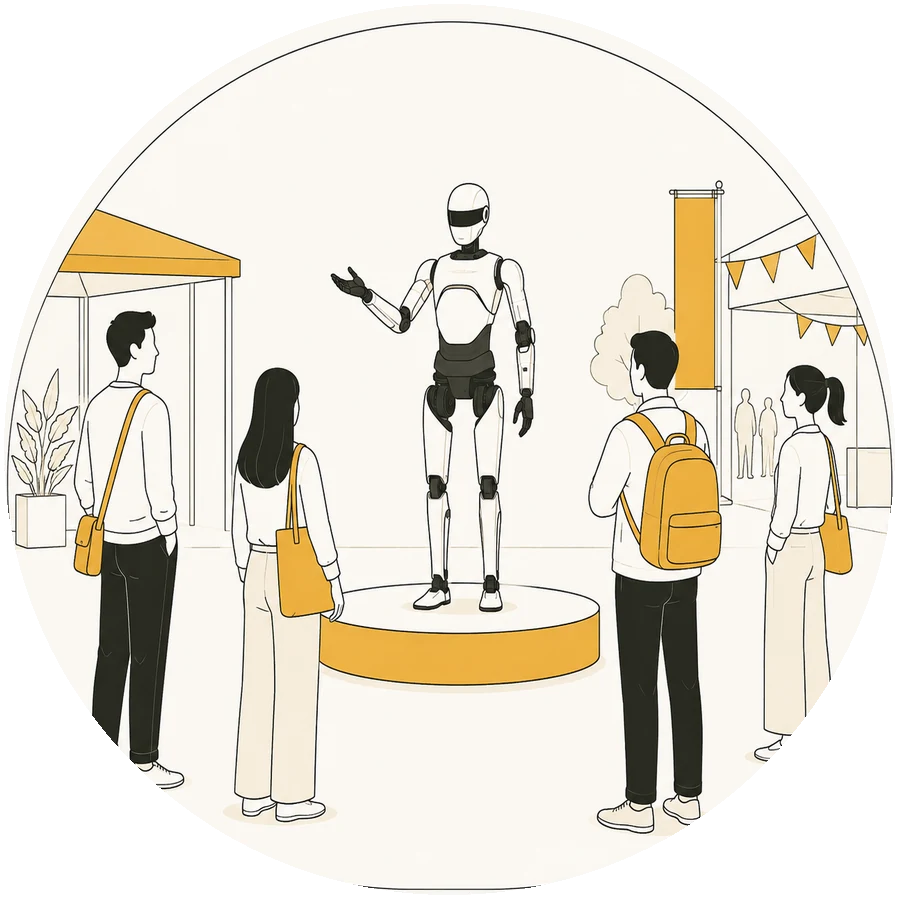
  • Events and entertainment

    Interactive robotic experiences for exhibitions, events, shopping centres and spaces built around an audience.

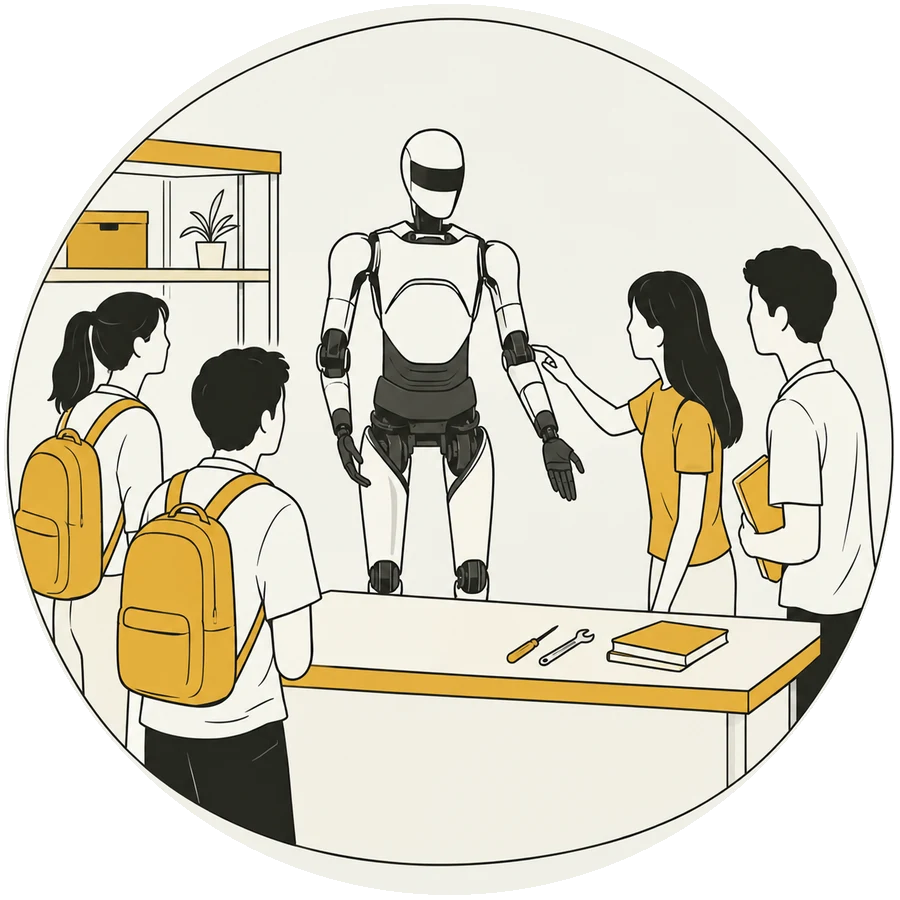
  • Teaching and demonstration

    Robots for training, workshops, universities, demonstration centres and pilot projects.

  • Research and development

    Open platforms with SDK access, for university laboratories and development teams inside companies.

Where the technology actually is

There is a lot of humanoid footage about. So we say plainly which parts work today and which do not.

  • Works reliably

    Moving over real ground, mapping and locating itself in a space it has seen once, speech good enough for a reception desk or a guided tour, and handling familiar parts from learned positions. That covers a surprising amount of the actual work.

  • Improving, but it depends on the task

    Picking arbitrary parts out of a bin, and long autonomous sequences with nobody watching. The success rate depends on the parts themselves, and a demonstration on someone else’s parts says little about yours.

  • Still research

    General-purpose work across a full shift with no supervision. No supplier offers that today. If someone implies otherwise, that is a reason to check further rather than to order.

The bridge to autonomy

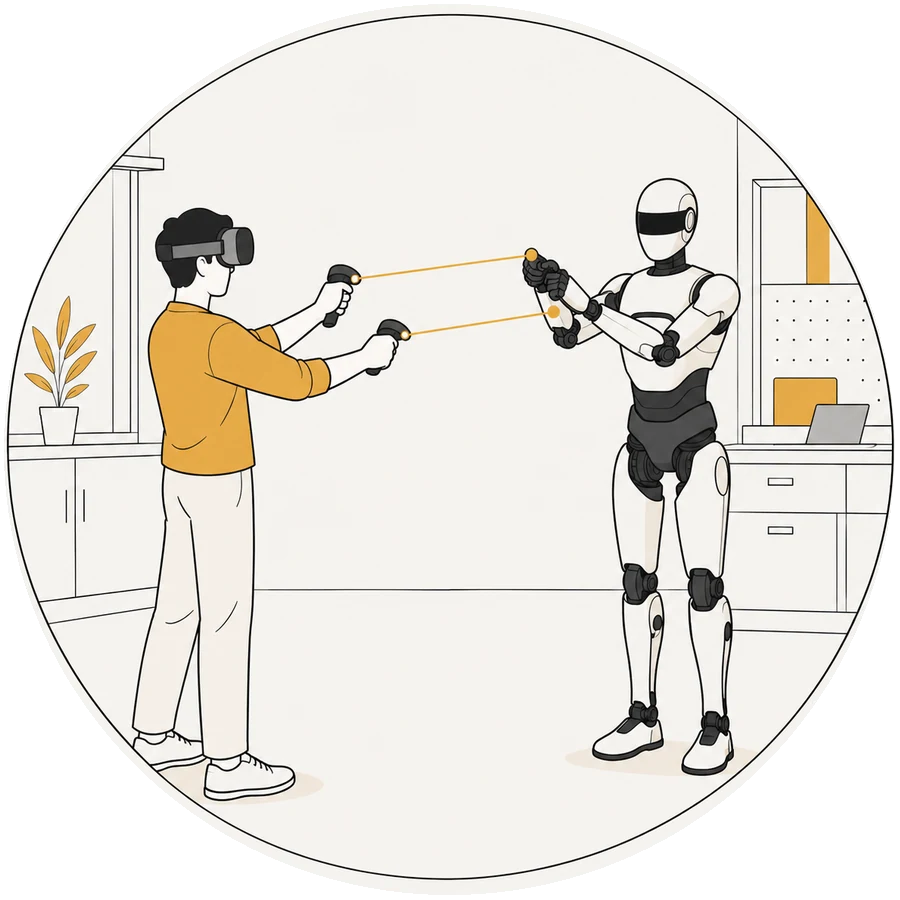
  • A person leads, the machine records

    An operator in a VR headset walks the machine through the task while the system records every movement. Those recordings are what later teach the robot to do it alone.

  • It is already in the catalogue

    The VR teleoperation kit for the AGIBOT A2 runs 26 degrees of freedom at 50 ms of wired latency, with a 105 degree field of view. On a first deployment this is often how the work actually gets done, while the autonomy is built up alongside it.

Operating time is part of the solution

Published figures across the range run from about an hour and a half of walking to ten hours on hot-swap packs. A platform that does not cover a full shift needs either a battery-change procedure or a charging window in the schedule. That is why we ask about the scenario at the start: the answer changes the whole proposal.

Our news

  • An AGIBOT D1 quadruped robot on a plain white background, three-quarter view.

    What a robot dog is actually for in a hazardous area

    A quadruped in a compressor house or tank farm is not there to patrol. It carries a gas detector, a thermal camera or an acoustic sensor to a spot too dangerous to send a person, and relays what it finds. The IP rating on the chassis is not the certification that matters here, and the catalogue is honest about that gap.

    Read more
  • The A3 seen from the chest up against a dark horizon, its shell mostly in shadow with warm gold rim light along the head, one shoulder and the near arm, and the AGIBOT wordmark faintly lit across the chest.

    What a robot actually does at a company party

    Hour by hour: where a robot earns its booking, where it should stand still, and the four things it does not do. Written for one evening with a crowd, not for a permanent reception desk.

    Read more
All news

Tell us what you are trying to automate.

Start a conversation