Substation inspection robot dog: what decides it
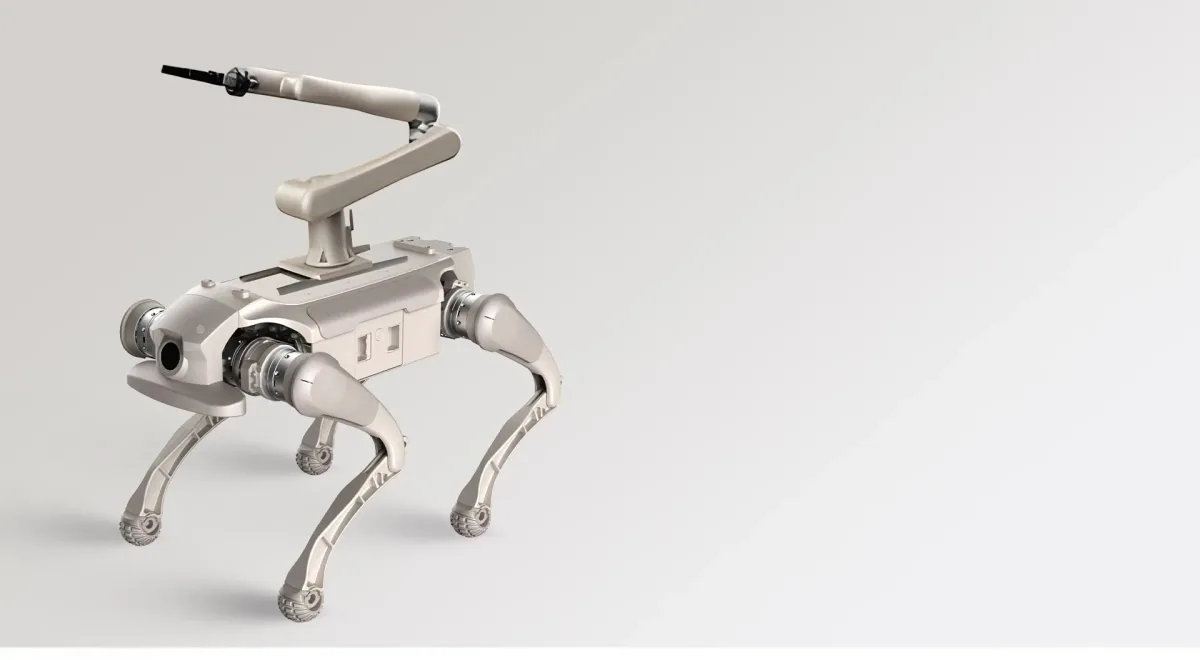
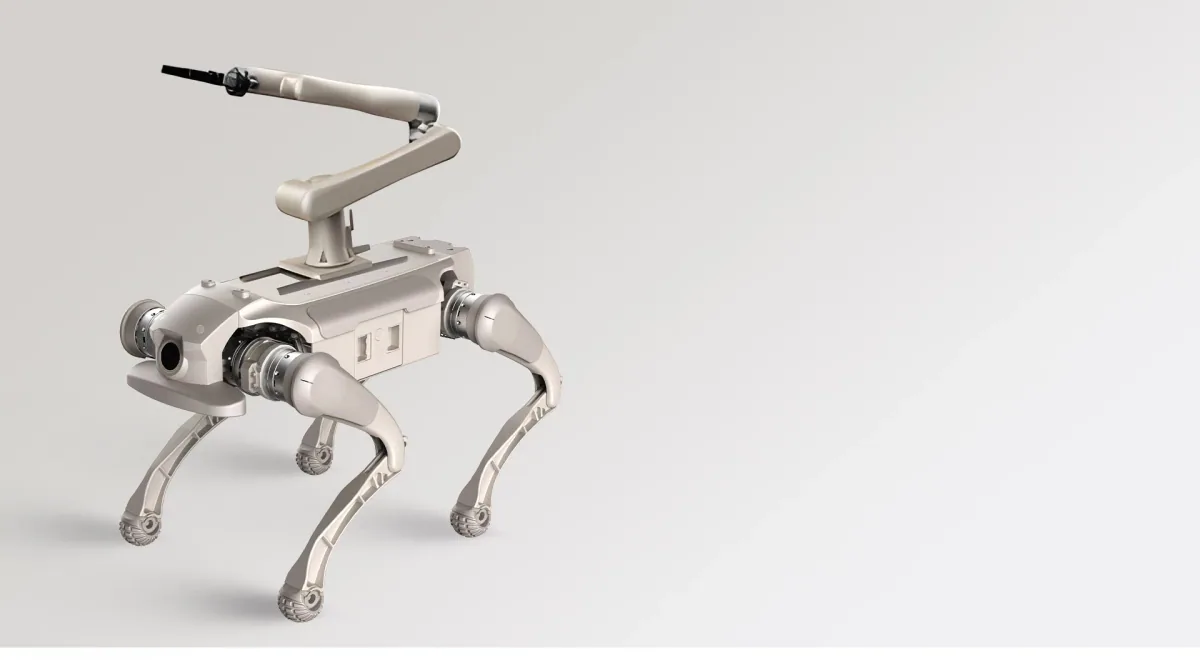
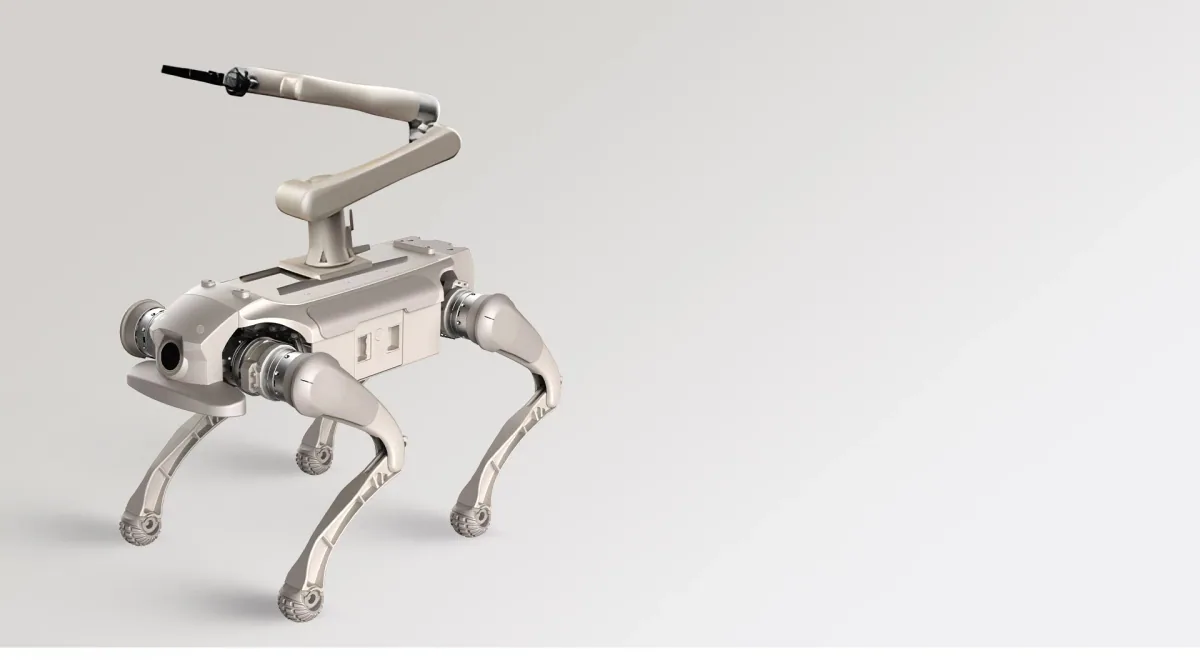
In a substation or a power-plant yard, a robot dog would walk the technician's round: past transformers, switchgear and cable trenches, on gravel, stopping at the same points for a visible and a thermal picture. What decides whether an AGIBOT D1 can do it is not payload or range. It is the D1 Max manual's rule on high-voltage substations, to be settled with AGIBOT before a route is drawn.
- The rule in the manual.
- The precautions on printed page 02 of AGIBOT's D1 Max User Manual say: "Please Do Not operate the robot dog in environments with strong electromagnetic interference, such as near high-voltage power lines, high-voltage substations, communication base stations or signal towers. If necessary, please consult our after-sales service first." Page 14 repeats it "to prevent magnetic breakdown", and page 25 says to store the robot away from high-power transformers. The manual's warranty policy puts damage from strong magnetism or strong interference outside free after-sales service. So the rule is "do not", with one way through: ask AGIBOT first, about your site.
- Where AGIBOT names the job.
- The opening paragraph of the D1 Max flyer, dated 2 December 2025, lists power inspection among the machine's applications. The D1 Max Patrol's draft specification of 18 March 2026 names power plants among its applicable scenarios and describes an alarm when the surface temperature of equipment passes a set threshold. The D1 Max page on agibot.com names neither. In the documents we read for these machines, substation appears in the D1 Max manual alone, in the warning.
- What the Patrol does on a round.
- The D1 Max Patrol, a D1 Max with AGIBOT's patrol kit, walks a scheduled waypoint route, photographs each waypoint, streams a visible-light and a thermal picture over 4G and files a report after each task. The thermal camera's one stated figure is a resolution of at least 384 × 288, and the specification gives no measuring accuracy: the alarm marks a surface above the set threshold, not a certified temperature. Its listed recognition covers people, vehicles, licence plates and bins, not gauges or oil levels; the optional edge box supports custom algorithms.
- Gravel, weather and clearances.
- The D1 Max SDK Development Guide lists gravel among the machine's terrains. The Patrol is rated for a 40° slope and, navigating by itself, a 20 cm step, so walk the trench covers and kerbs in a trial. Its ± 10 cm positioning accuracy has no stated conditions: take the distance to live equipment from your safety rules, not that figure. Against the -20 °C to 55 °C in the Patrol specification and the D1 Max sheet, the D1 Max manual asks for -20 °C to 40 °C in use, and no power-on in heavy fog, thunderstorms or sandstorms. The Patrol is IP55, the bare D1 Max IP67. The manual also rules out remote use where signals suffer interference: measure the mobile signal across the yard.
- Which of the three machines.
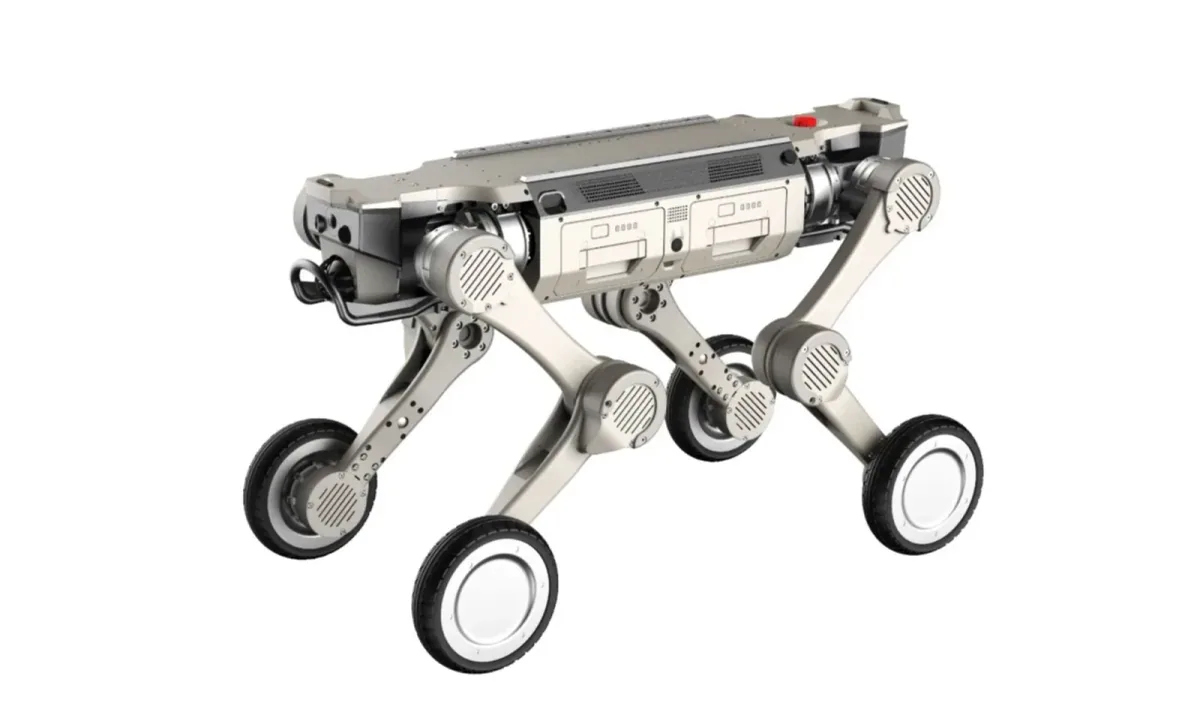
- The Patrol is the round as delivered. The bare D1 Max carries your instrument, 25 kg on its parameter sheet with up to 480 W of power, and the analysis and reports become integration work. The D1 MaxPro is a different machine, 68 kg on feet rather than wheels and rated for 50 kg on flat ground; its manual names security patrols, water utility and petroleum pipeline inspection. Neither that manual nor the Patrol's specification repeats the D1 Max warning. The silence is not a clearance, since the Patrol is a D1 Max underneath: ask about each machine.
The D1 Max and the D1 Max Patrol can be rented on request; the D1 MaxPro is not on the rental list. Write down the voltage levels on the route, its closest pass to live equipment, the highest step, the mobile signal and who reads each report, and raise the route with us before it is settled: AGIBOT's answer on interference comes first.