Robot dog rental: what one inspection round settles
The first hire is not a demonstration. It is a site survey carried out with a machine instead of a clipboard, and one inspection round answers the three questions that decide everything after it. None of the three can be read off a spec sheet, because all three are facts about your site rather than about the robot. Book the round to answer them, and say so in the enquiry.
- The route on the drawing is not the route that gets walked.
- Drawings age: a kerb appears, a grating replaces a hatch, a door opens onto a stack of pallets. The D1 Ultra is rated for steps of 16 cm taken one after another and for inclines of 30°, with 40° quoted as the extreme; the D1 Max is rated for 25 cm and 45°, and its parameter sheet gives no minimum passage width, though its SDK development guide lists one, so doorways, gates and the gap between two tanks are measured against that figure and its 480 mm body. Walk the round yourself with a tape measure first and write down three numbers: the tallest step, the narrowest gap, the steepest ramp. If the tallest step is above the published rating, the route has a detour in it, and a tape measure finds that out far more cheaply than a hired robot standing in front of it.
- Where the machine stops knowing where it is.
- Every quadruped inspection round has a stretch where positioning gets hard, and on most industrial sites that stretch is indoors, under a gantry, between tanks or along a service corridor. That is where a satellite fix disappears and where a LiDAR returns the same repeating structure in every direction. The published sensing tells you how much margin you have: the D1 Ultra lists an IMU as standard, while the D1 Max lists an IMU, GNSS-RTK and ultrasonic sensing alongside its LiDAR units. Neither catalogue entry publishes a figure for how long a machine holds a route once the fix is gone, because that number belongs to the building, not the robot. One round produces it: mark on a plan every point where the operator took the controls, with the time and the reason. That map is the real output of a first hire.
- The payload is decided by the sensor, not assumed before it.
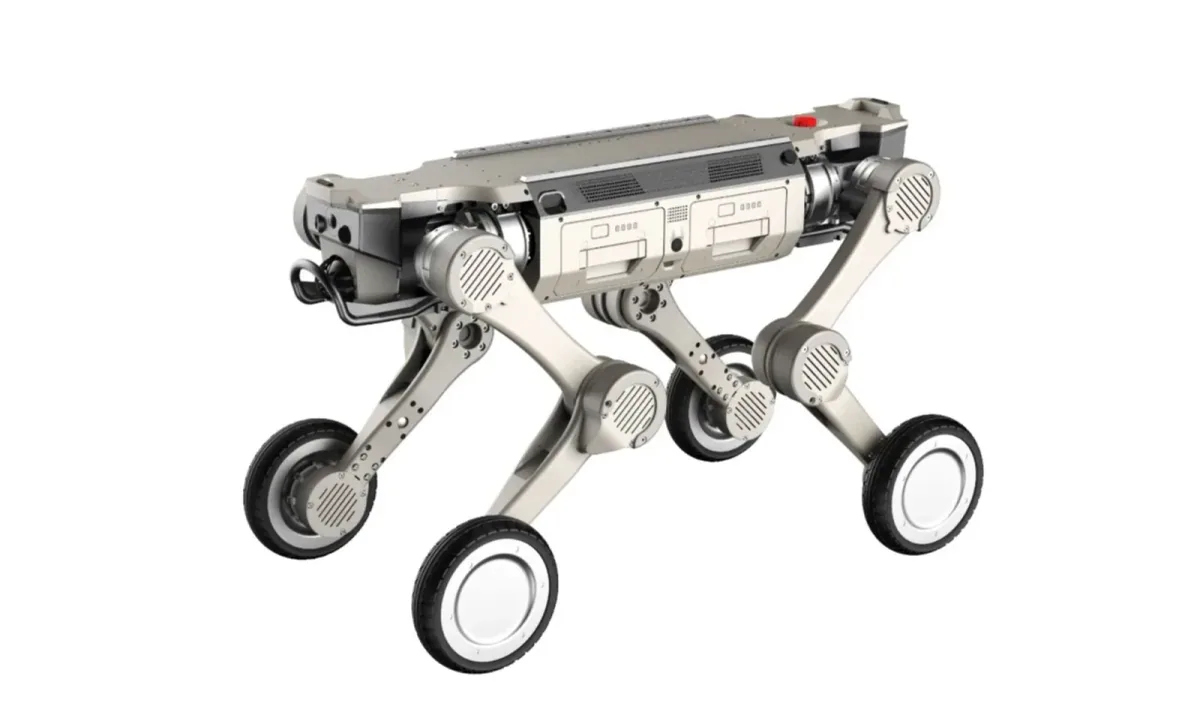
- Weigh the sensor the round actually needs, on a scale, with its mount, cable, radio and battery attached, and hold that against the 5 kg the D1 Ultra is rated for. If it fits with margin, the round is a D1 Ultra round. If it does not, the wheel-legged D1 Ultra-W is no help: AGIBOT's sheet gives it the same 5 kg, and its wheels add range, 9 km ± 1 km against 6 km ± 1 km in the laboratory, not capacity. The next rating on the rental list is the D1 Max at 25 kg, so a trial that ends above 5 kg is a D1 Max round.
- On request is what a robot dog hire is, and the round has no published duration.
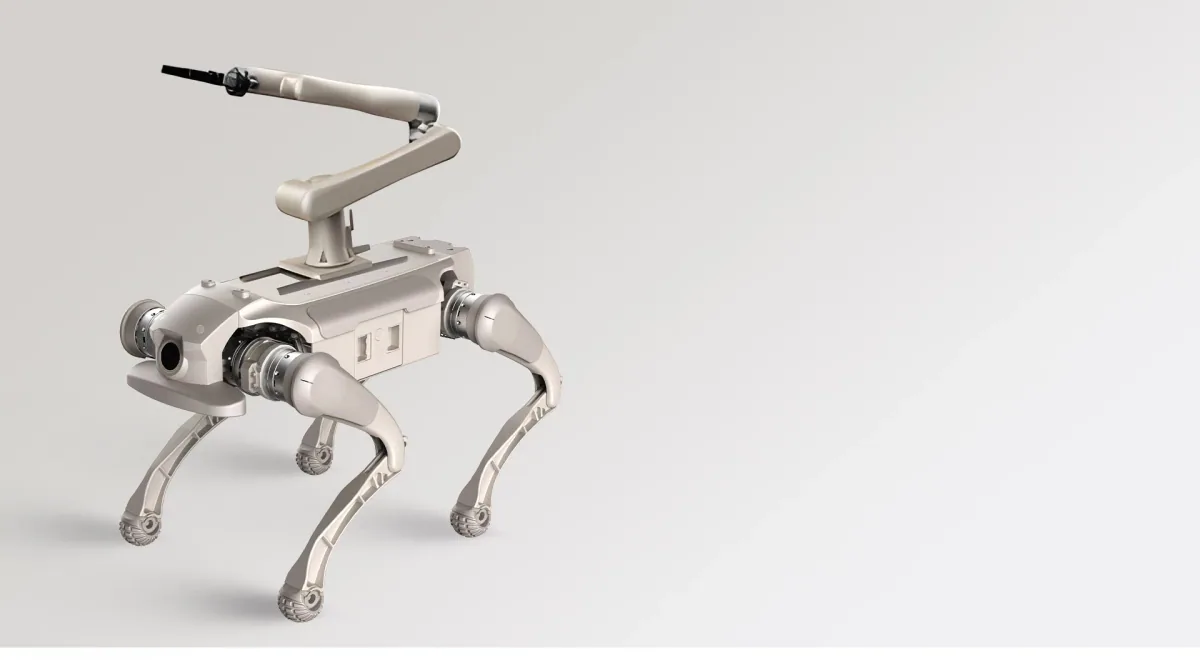
- The robot dogs on the rental list rent on request rather than from stock: the D1 Ultra, the D1 Max and the D1 Max Patrol, none with a published weekly rate. The humanoid platforms are the other case entirely: their weekly rates are published on the rental page. The catalogue also publishes no figure for how long a round takes, because a round is a property of the site. The D1 Ultra publishes 6 km of range and 1–2 hours of runtime, and neither number knows how many stops, ladders, gates and photographs sit on your route. So bring five things to the enquiry: the length of one round, the tallest step on it, whether the machine will be indoors, what the sensor weighs with its mount, and the dates you want.
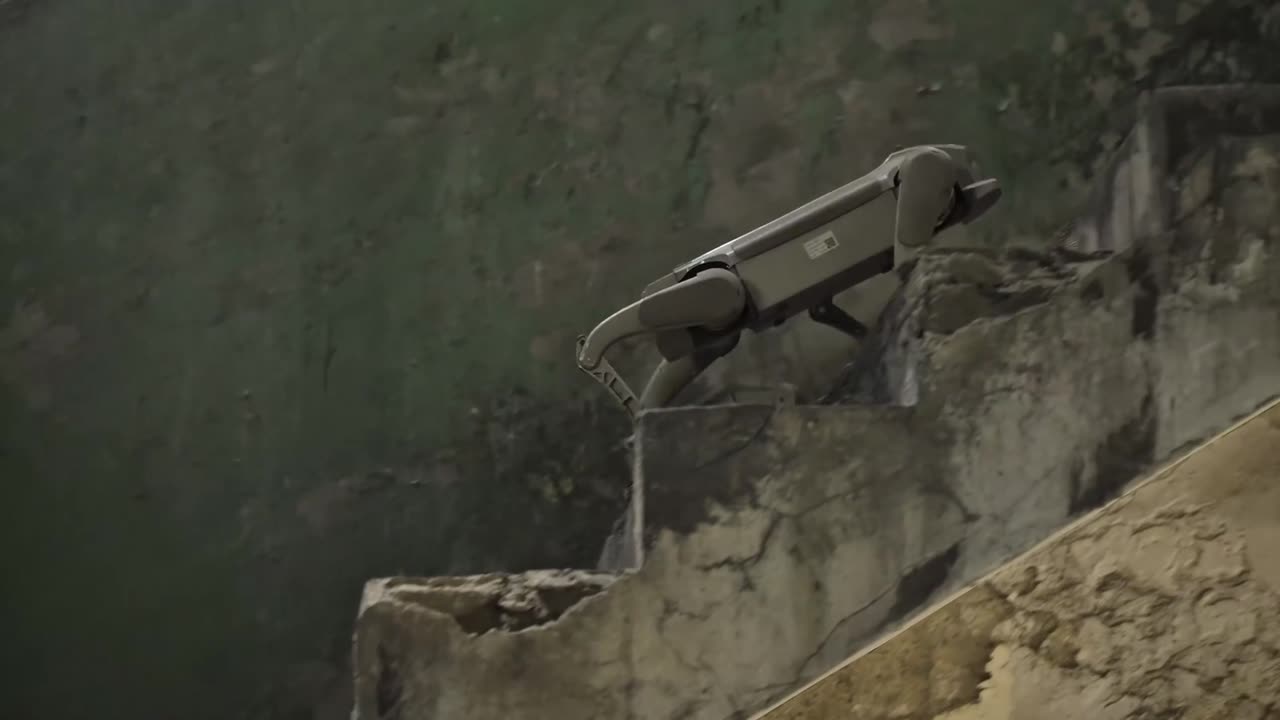
A D1 Ultra climbing a flight of stairs and coming back down. Stairs are the part of a round a drawing describes worst, and the first hire is where you find out whether the flight on your own site is one the machine takes step after step or one it has to walk around.
One round will not tell you what a year of rounds costs. What the first hire settles is which of the three questions above is the expensive one on your site: the route, the positioning, or the payload. That one question is what the second booking, or the purchase, gets designed around.