What a venue should check before a robot arrives
A robot booking usually falls over in its final week, and almost never for a reason anyone had been arguing about. The stand is agreed, the running order is agreed, and then somebody measures the goods lift. Nothing on this site has covered the physical side of getting a machine into a room, so here it is, roughly in the order a venue gets asked.
- Weight is the first question, and the answer is a range rather than a number.
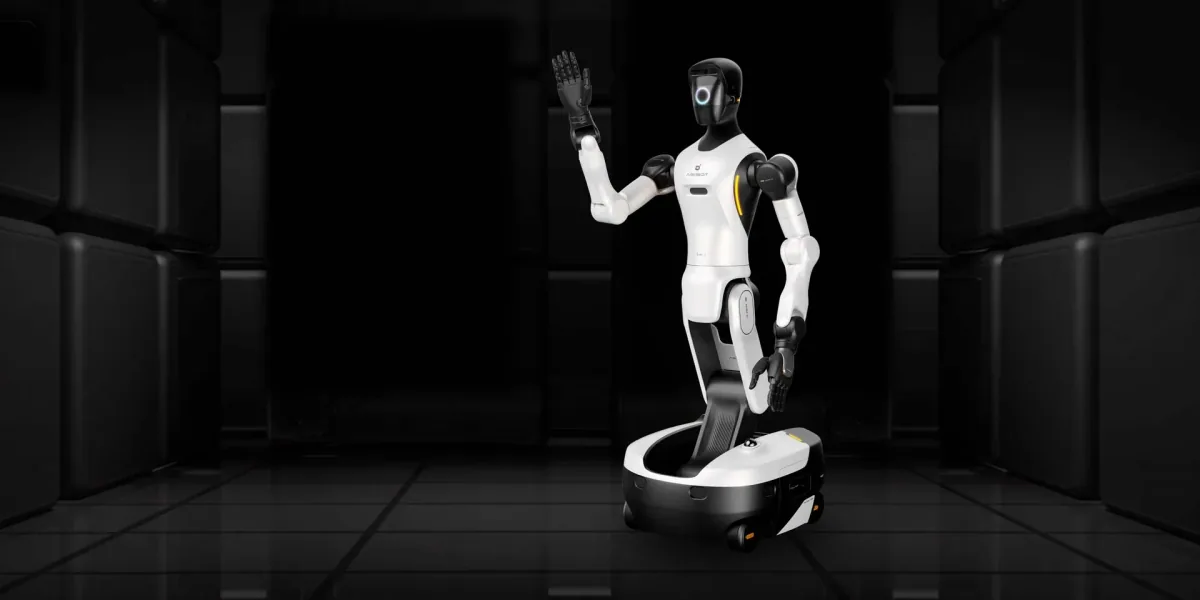
- The machines rented for events sit nowhere near each other on a weighbridge. The G2 is 185 kg. The A2 Ultra is 69 kg at 169 cm and the X2 Ultra about 39 kg at 131 cm, which two people manage between them. Of the robot dogs, the D1 Max is 41 kg with its battery fitted and travels in a case, and the D1 Ultra is 16 kg. So the honest answer to "how heavy is a rental robot" is that it varies by more than ten times across one rental list, and the figure a venue needs is not the average but the machine actually on the booking. Ask for it by name before anything is signed: 185 kg is a floor-loading conversation with a building manager, and 39 kg is two people and a passenger lift.
- Height decides the door, and among the humanoids only the G2 can lower itself.
- The G2 publishes a standing height of 1225 to 1795 mm, and the range is the useful part: the base raises and lowers, so a machine that works at 1795 mm can be brought in at 1225 mm. A walking humanoid cannot do that. The A2 Ultra stands 169 cm and the X2 Ultra about 131 cm, and a machine that walks in on its own legs has to clear the frame upright, with a person beside it. Ordinary interior doors are rarely the problem. The low header over a loading bay, a fire door on a closer, and a service corridor with pipework under the ceiling are the three worth measuring rather than assuming.
- The route is not the door, it is every level change between the door and the stand.
- A wheeled machine cares about what the floor does, not about how wide the entrance is. The G2's published footprint is 640 by 760 mm, which fits through most things; what stops it is a threshold strip, a cable ramp, a lift car with a lip, or carpet laid over an uneven joint. Walk the route from the vehicle to the final position and count the level changes rather than the metres. Lift depth catches people out more often than lift width, because a machine goes in standing and a case goes in flat. Only the robot dogs publish a step height, 25 cm for the D1 Max and 16 cm for the D1 Ultra, plus a 45° incline on the Max. No parameter sheet for these machines gives a minimum passage width, so measure the doors.
- Where the case lives, and who signs for the machine.
- Two items get forgotten because they belong to nobody. The first is the flight case: it does not leave with the delivery vehicle, it has to sit somewhere dry, lockable and off the guest route for the whole booking, and it takes more floor open than closed. The second is the name on the delivery note. A machine arriving at a venue needs a person on site who knows it is coming, has access to the loading door in the delivery window, and has the authority to sign. Where that person is a contractor rather than venue staff, the delivery slot has to fall inside their shift. This is the cheapest item on the list and the one most often left until the morning.
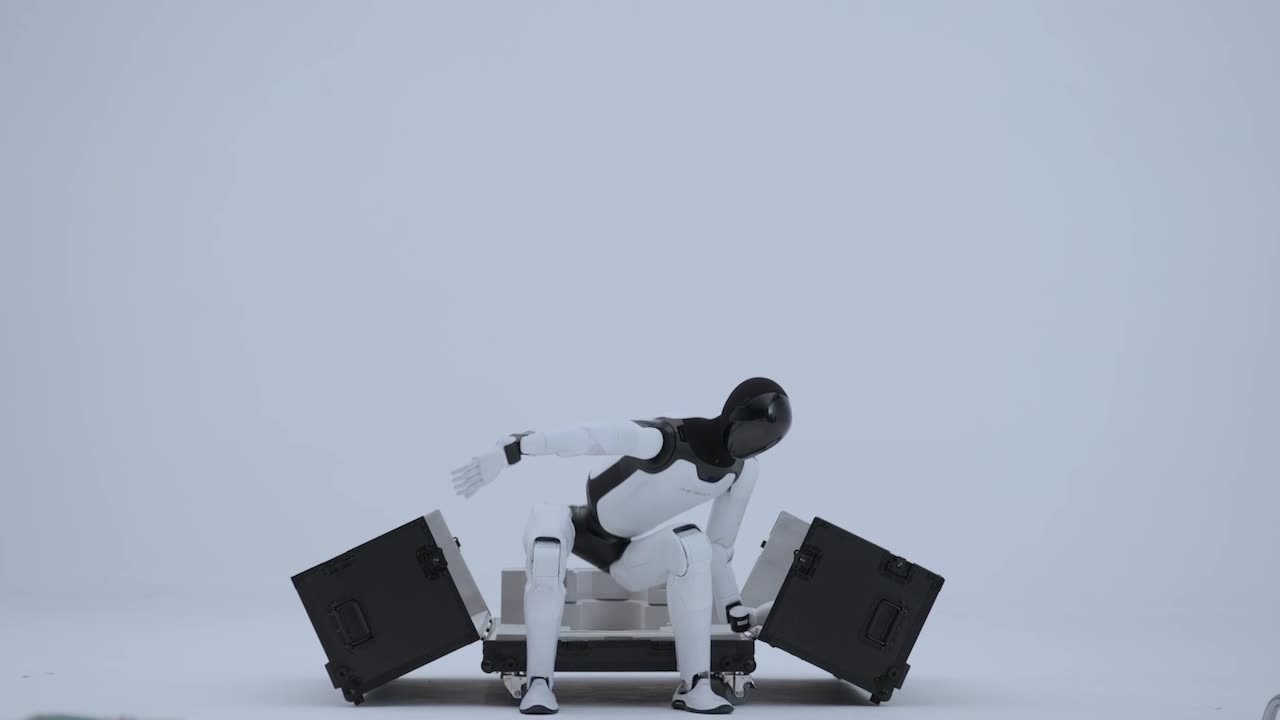
AGIBOT's own footage of an A3 sitting up out of its wheeled flight case, filmed in a studio rather than at a venue. The A3 is not one of the machines weighed above, and the clip is here for the case rather than the robot: both lids swing out to the sides before anything can come out. The floor a delivery needs is therefore the case footprint plus two open lids plus room for the person opening it, which is a larger rectangle than the one on the shipping label.
None of this needs an engineer. It needs a tape measure, one walk of the route from vehicle to position, and four written answers: the machine by name, its weight, the narrowest and lowest point on the way in, and who will sign for it. A venue holding those before the booking is confirmed does not get the phone call in the last week.