What a robot actually does at a company party
A robot at a staff party has one job, and it is not service. It is a focal point that gives people something to gather around and something to talk about, which is the hardest thing to manufacture at an event where half the room has never met the other half. The useful way to plan it is not by the machine's specification but by the evening's three parts: arrivals, the seated stretch, and the late hour. They want different things from it, and only one of them is where it earns most of the booking.
- Arrivals is the hour that pays for the evening.
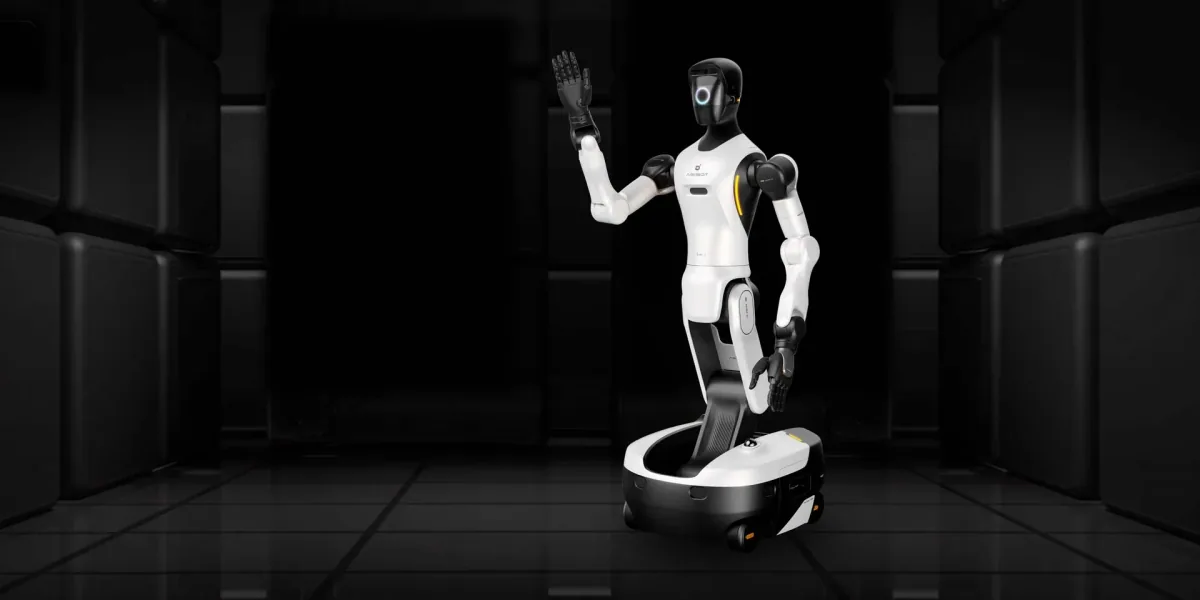
- Guests come in ones and twos over roughly an hour, which is exactly the pace a machine can hold, and a foyer is loud. The A3 Ultra publishes an 8-channel microphone array and two speakers at 5 W each, and the array matters more than the speakers here: picking one voice out of a room where forty people are talking over each other is what an array of microphones is for, while 5 W each is a pair of speakers, not a PA. It also carries a curved large-format display, which is the part that works when the speakers lose. Position it so guests approach from the front with light on their faces, not tucked beside the bar with the array pointed at a wall, and the evening's photographs take themselves.
- Through the seated part it holds a position, and that is a decision rather than a shortfall.
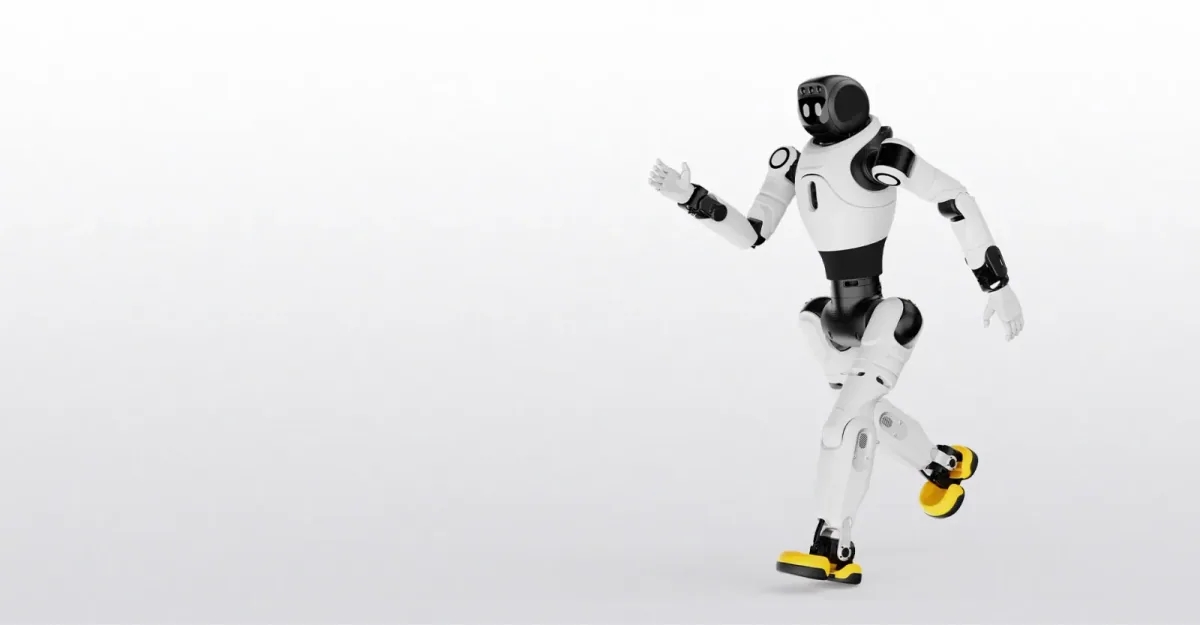
- The A3 Ultra walks at up to 1.8 m/s and the A2 Ultra tops out at 1.2 m/s. Either of those crossing a room where servers are carrying plates and chairs are being pushed back without warning is a hazard rather than an attraction. So the machine stands where it was placed, on about a metre of clear floor with a marked boundary, and people come to it between courses. A robot standing still in a good position is doing its job; a robot threading a dinner service is a risk someone will eventually have to explain.
- Four things it does not do, said plainly.
- It does not improvise: what it says was either written by somebody or produced by a language model that somebody configured, and whose account that runs on is a question to settle before the night rather than after an answer surprises you. It does not carry trays through a moving crowd. It does not last the whole evening on one battery, because the A2 Ultra publishes roughly 3 h standing and 1.5 h or more walking, so an evening runs as blocks with a pack change between them, done in a back room. And it is never left alone: one named person stays with it all night, knows how to stop it, and is not also running the bar.
- The late hour, and why December is decided in October.
- By the end of the evening the audience has changed. There are fewer questions and more photographs, and more people who have had a drink and would like to touch the machine. Plan to have it packed away before that shift rather than to work through it, and put the last scheduled interaction earlier than feels necessary. The seasonal half of this is simple arithmetic: December dates concentrate onto a handful of Thursdays and Fridays, the same units are wanted on the same nights, and the published figure of 48 hours describes getting an in-stock unit to you rather than one existing to send. A Christmas booking is settled in October for that reason and no other.
This is a different brief from a reception robot, which is the same forty seconds repeated for a year and is worth specifying in writing before anything is ordered. A party is one evening, one crowd that arrives all at once, and a room laid out for dinner rather than for a machine. Brief the evening as three blocks with a named person against each, and the robot will be the thing people remember rather than the thing that got in the way.