Booking a robot for a shopping centre activation
A trade show gives you a leased stand among people who came to look at stands; a company party gives you your own room and your own guests. A shopping centre gives you neither: the floor is a circulation route the landlord already promised to the tenants either side of you, the audience came to buy shoes, and the booking runs for days rather than one evening. Almost everything that goes wrong with an in-store robot hire is a permission somebody assumed rather than asked for.
- The machine's best trick is the centre's first objection.
- What a humanoid does for retail footfall is stop people who were walking past. That is the result the brand is paying for, and it is the first thing a centre manager pushes back on, because a standing crowd in a circulation route is an evacuation question, a pushchair question and a complaint from the tenant whose window it now blocks. So ask where a crowd may gather, not where the robot may stand: only the first answer is useful. In practice the centre offers a court or an atrium rather than a spot on the mall run, and taking that offer beats arguing for a position it has ruled out.
- A shorter machine is the right machine on this floor.
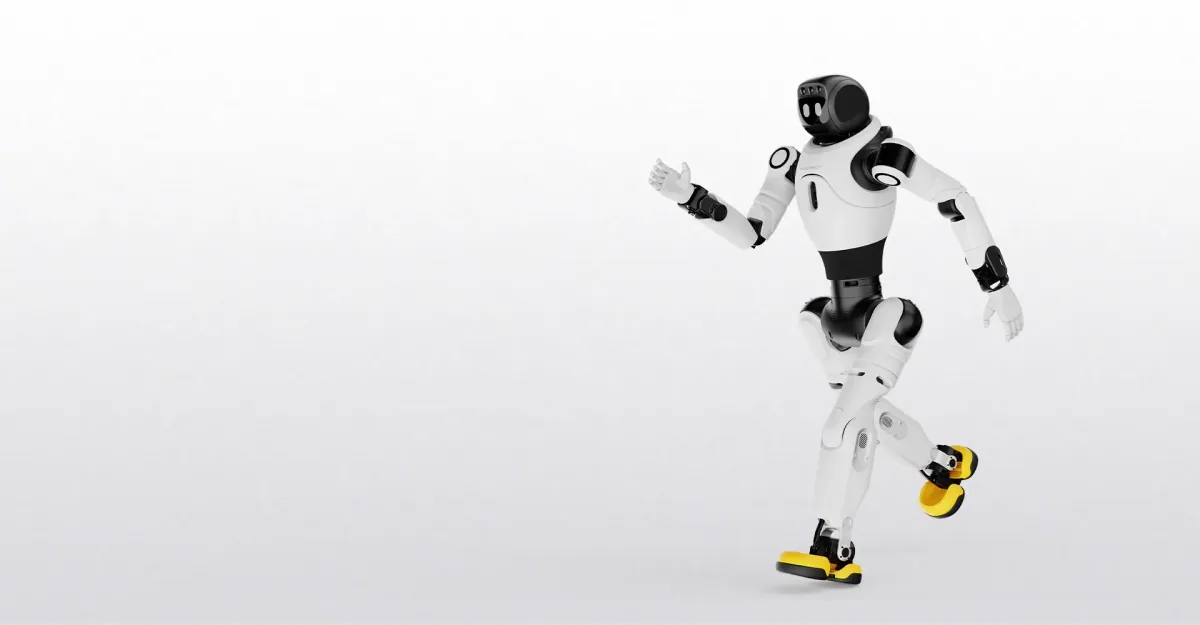
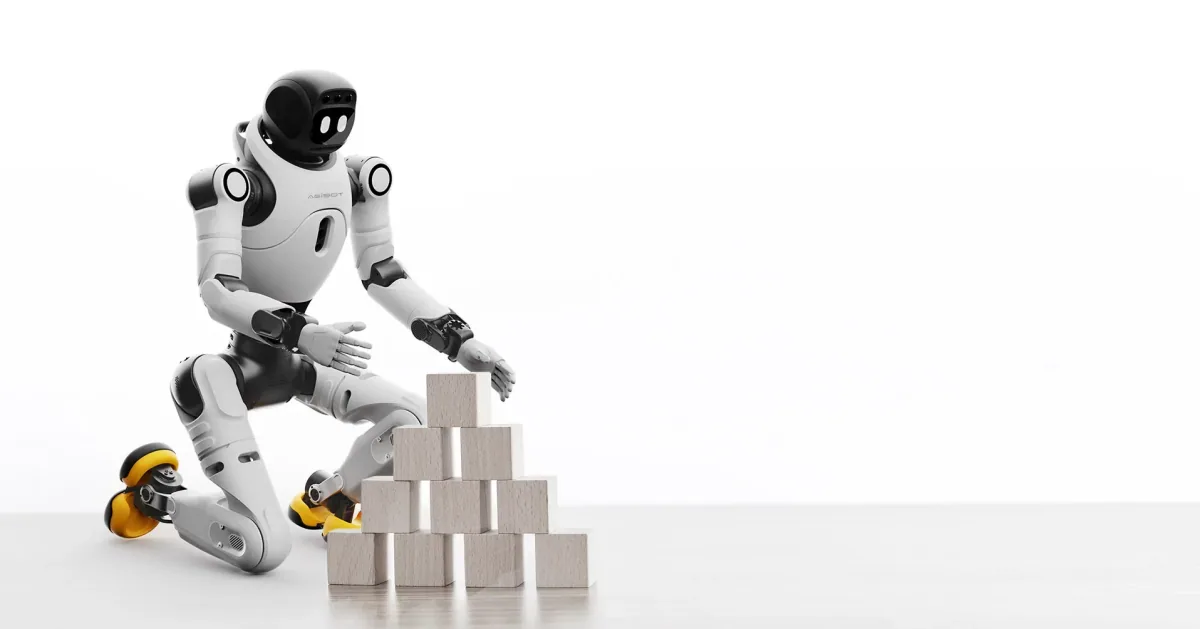
- The X2 stands approximately 131 cm, and its arm reaches 558 mm without an end effector. That is a machine built to be met at conversational distance rather than watched from the far end of a concourse, which is how an activation actually works: nobody is watching from across the building, they have walked up and stopped in front of it. The X2 Ultra publishes 30 active DoF, and at that distance those are what make a gesture read as a gesture rather than a pose. The figure to notice and then set aside is the top speed of 1.8 m/s, because no version of a public retail floor calls for it. You are booking a machine that owns a position and moves its upper body, not one that walks between shoppers.
- The socket, the square metre and the named person are the centre's to give.
- A trade fair stand comes with power because you leased it. Here, floor sockets belong to a tenancy or to the cleaning contract, and a cable run across a walkway is the one thing a centre manager refuses outright. Get the socket in writing, ask whose meter it is on, and agree where the lead runs. The floor is the same story: the robot needs a metre it owns for the whole booking, marked and kept clear, and the marking is a permission rather than a purchase. And because the booking crosses days, the person watching it changes, so name one for each day and check that Sunday's knows the same routine as Thursday's.
- Multi-day means the hours when nobody from your team is in the building.
- The centre closes, the cleaners come through, and the machine stands in a public space overnight. Two answers are on the spec sheet: the A3 publishes runtime up to 10 h and charging time up to 2 h, so a trading day and its recharge fit inside the centre's own closing hours, and the X2 Ultra publishes a dedicated docking station where the X2 Basic does not, which separates a machine that puts itself back on charge from one that needs a person with an access card before the doors open. The third is the centre's: agree in writing whether the machine is locked away, covered or left standing, and who can reach it overnight.
The order of the questions is not the one most briefs arrive in. Before choosing a platform, get three answers out of the centre manager: where a crowd may gather, which socket is genuinely yours, and what happens to the machine overnight. Those three settle the space, the platform and how many people you need, and they take longest to obtain. Bring them to an enquiry and a date can be confirmed against them; bring only the dates and the first week goes on finding them out.