Humanoid robot rental for a pilot: what to measure
Most enquiries that reach the rental page are about an event: a stand, an open day, a launch. The other half of what a hire is for gets asked about far less, and it is worth more. You can rent a humanoid robot to do work, on your own floor, long enough to find out whether an idea survives contact with your own parts.
A vendor demonstration runs on the vendor's floor, with a part the vendor chose, by somebody who has run it before. That is a real answer to whether the machine works. Not to whether it works here. A pilot hire moves the test to your side of the loading dock. It is a hire, not an engineering engagement: it answers what happens when your own people work beside the machine for a week.
- Cycle time on your parts, not on a demonstration part.
- This catalogue publishes reach, payload, joint torque and runtime. It publishes no cycle time, for any platform or task, and it could not: no figure predicts how long a machine takes on a part it has never seen. The published numbers settle whether the part can be lifted. The X2 Ultra publishes 3 kg at most, 1 kg or less across the full range, and the A2 Ultra approximately 2 kg. Anything heavier is answered before a booking. No number settles whether the pick takes eleven seconds or twenty-six, and that gap is the whole business case.
- Count the interventions, not the successes.
- A trial week that runs clean teaches you less than one that does not, because the interruptions are what you will be staffing. Write every one down: the mis-grip, the tote that arrived rotated, the stop somebody walked over and cleared. A machine that needs a person twice a shift is a different purchase from one that needs a person twice an hour, and no specification separates them. Count them in the first two days and again in the last two: your team is learning the machine while the machine stands there.
- Where the battery boundary lands in your shift.
- The X2 Ultra publishes about 2 hours at 0.5 m/s on approximately 500 Wh, and up to 1.5 hours to charge. The A2 Ultra publishes roughly 3 hours standing and 1.5 hours or more walking. Against an eight-hour shift those figures put three or four boundaries into a day, and a pilot tells you where each falls: inside a break your people already take, or halfway through a run. The spec sheet gives you the interval. Only your own floor tells you where each boundary lands.
- How much floor it takes once a pallet is in the way.
- The X2 Basic and the X2 Ultra both publish an arm reach of 558 mm without an end effector, which on a drawing is a clean radius. A warehouse aisle is not a drawing. Book the trial for a busy week, not a quiet one: a floor tidied ahead of the visit is not your floor, and the pallet left at the aisle end on the busiest morning is the real condition. Watch your own people too: a route they walk around for a week is a route the layout has to change.
An in-stock rental unit is with you inside 48 hours of a confirmed booking, and the X2 Basic sits on the weekly list at 1500 EUR. If the pilot involves manipulation, the tier matters: the X2 Ultra publishes 30 active degrees of freedom against the Basic's 25, with the extra joints in the arm and the neck. What comes off the truck is a machine in a flight case, general purpose, knowing nothing about your task. That is the honest starting position and also the point: nobody with an interest in the outcome has tuned the machine to your floor.
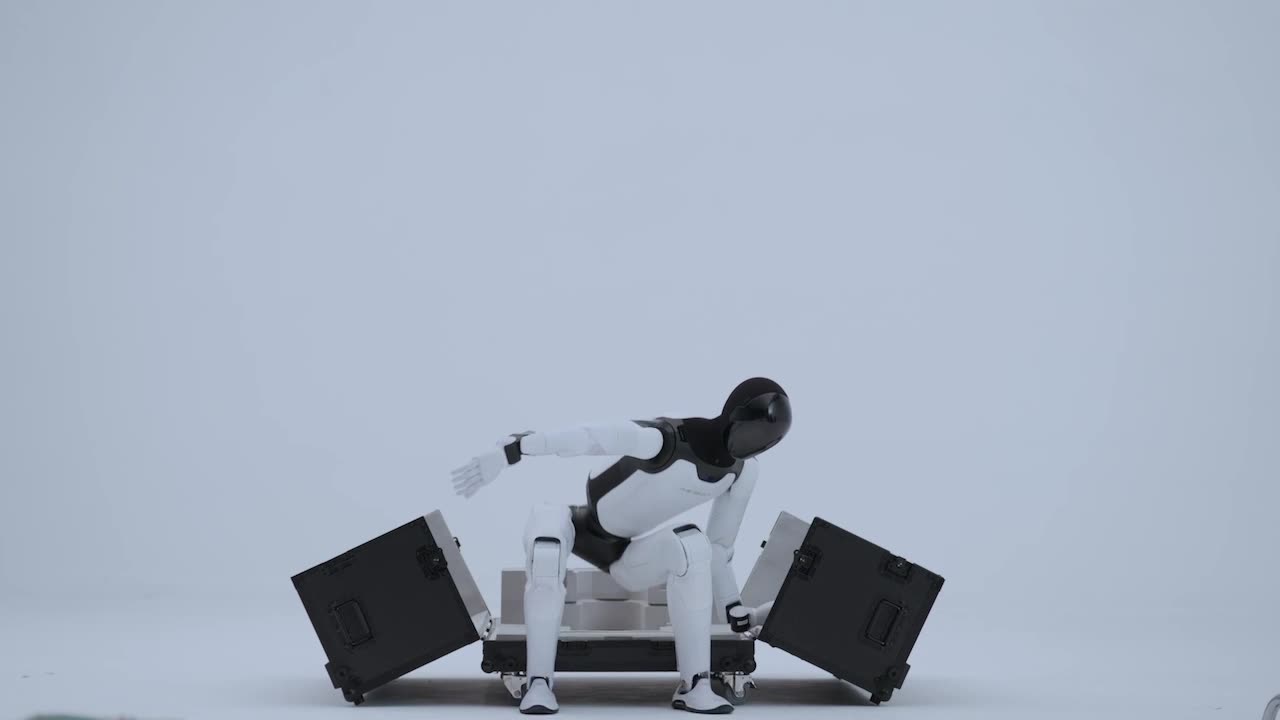
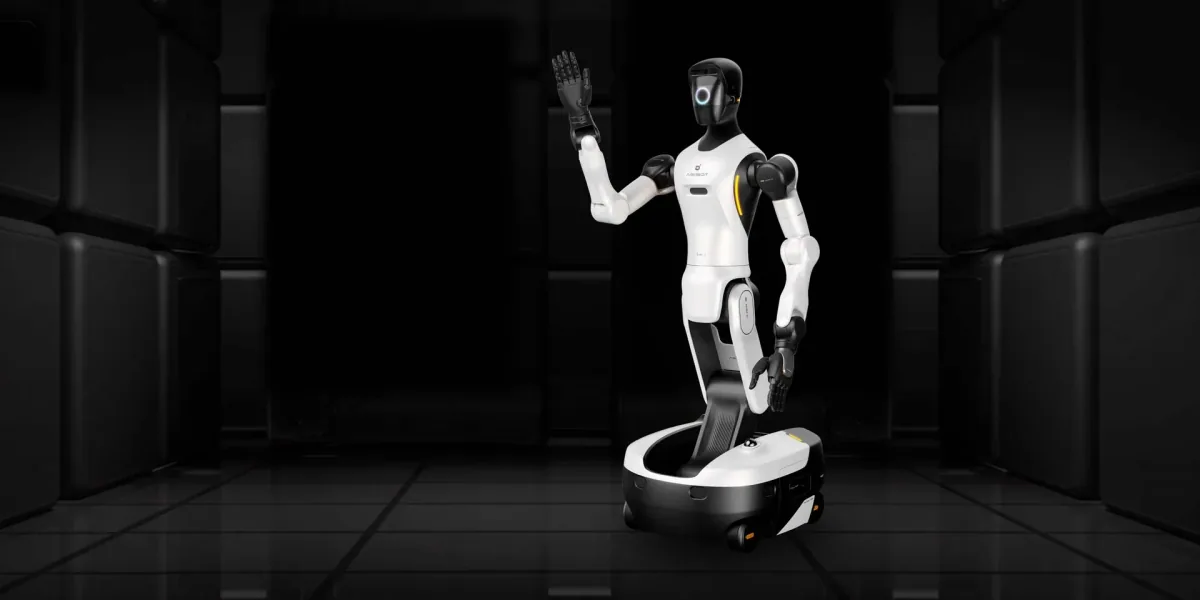
The machine in this clip is an A3 coming out of its wheeled flight case and sitting up, not one of the platforms priced above. What it shows is the shape of day one on any hire: a case on the floor and a machine that knows nothing about your task yet.
One thing is worth doing before the case is opened: measure the task as your people run it today, with a stopwatch. A pilot without that baseline produces a number with nothing to compare it against, which is the most common way a trial that went well settles nothing. Weekly rates and availability are on the rent-it page.