AGIBOT D1 Ultra-W vs D1 Ultra: what the wheels add and cost
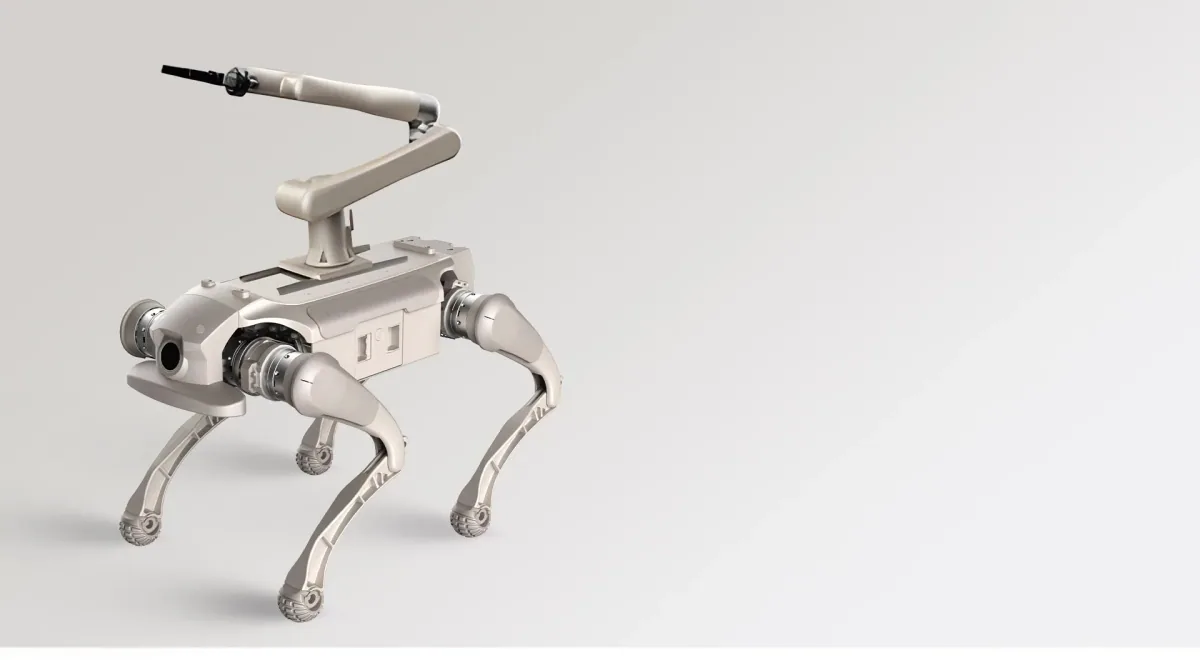
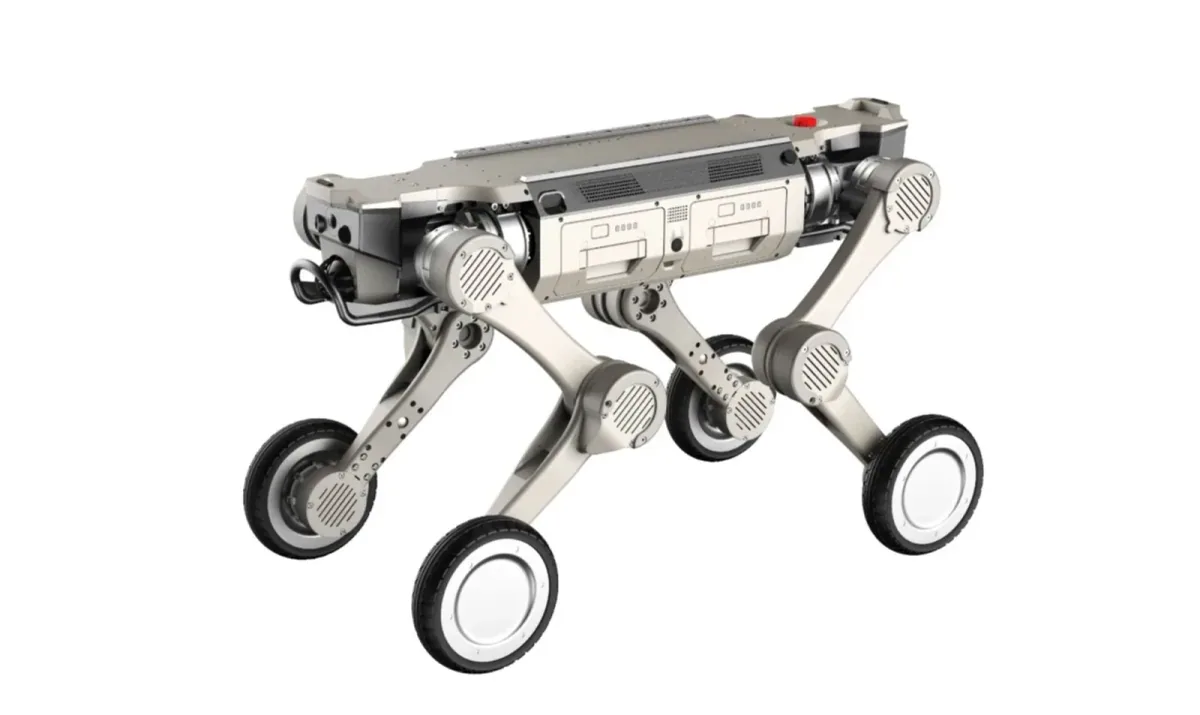
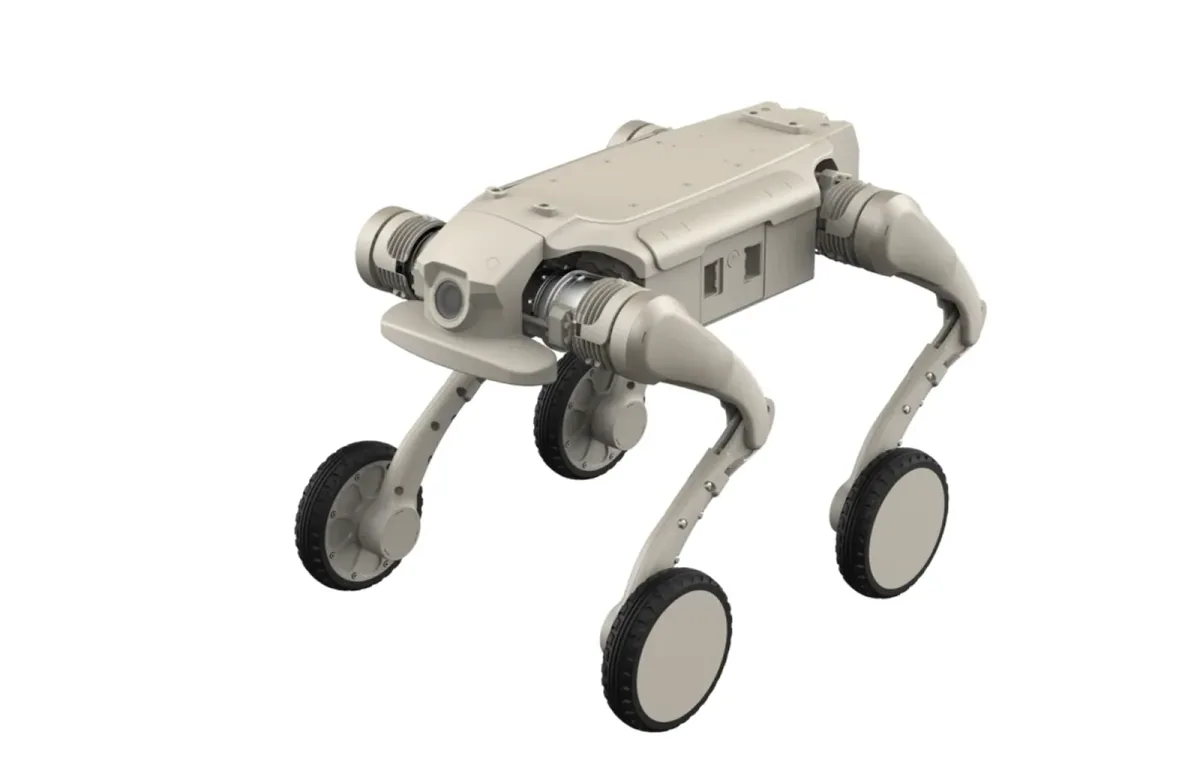
The AGIBOT D1 Ultra-W is for patrol and inspection rounds longer than the legged D1 Ultra covers: it is the D1 Ultra with a wheel at the end of each leg. AGIBOT's flyer for the Ultra-W names patrolling, inspection, and research and education as its uses, and describes it moving through corridors on a security patrol and crossing gravel and shrubs in the field.
- Each leg ends in a driven wheel where the D1 Ultra has a foot.
- The flyer calls this a wheel-leg configuration. The Ultra-W's specification sheet counts 16 degrees of freedom, four per leg, against 12 and three on the D1 Ultra's sheet, and the Ultra-W's user manual labels a hub motor and a six-inch solid tyre on its drawing.
- What the wheels add is distance.
- The Ultra-W's sheet gives an operating range of 9 km ± 1 km, the D1 Ultra's 6 km ± 1 km. Both sheets call these laboratory test data and say actual performance may vary with the environment and operating conditions. The user manual says all its figures are Turbo test data, and describes Turbo Mode as suited to research and demonstration, Normal Mode to daily use. So ask us what range to expect in Normal Mode before sizing a daily round on it. The Ultra-W's sheet does not say whether the distance was rolled or walked, or on what surface. Our reading, not AGIBOT's, is that the gain belongs to floor a wheel can roll over: measure how much of your round is corridor, hall and paved yard, and how much is steps and broken ground.
- They do not add time, top speed or payload.
- Both sheets list the same battery rating and 1–2 hours of operating time, so the extra kilometres come inside the same hour or two, not a longer shift. Both give a maximum speed of 3.7 m/s, although the Ultra-W's flyer speaks of increased transit speed. Both give an effective payload of 5 kg, so a sensor package too heavy for the D1 Ultra is too heavy for the Ultra-W: above 5 kg, the next rating in the range is the D1 Max at 25 kg.
- What they cost is weight and room.
- With battery, the Ultra-W weighs 22 kg against the D1 Ultra's 16 kg. Standing, it measures 630 × 430 × 485 mm against 630 × 360 × 420 mm: the same length, wider and taller, although its flyer speaks of high passability in narrow spaces. Lying down, as its manual requires before shutdown, it takes 690 × 540 × 165 mm against 670 × 435 × 145 mm. Neither sheet gives a minimum passage width, so measure the narrowest doorway against the standing width and the place it will rest against the lying figures.
- Each sheet has a row the other lacks.
- The Ultra-W's sheet lists a Maximum Climbing Height of 60 cm: not the stair figure, which is 16 cm on both, and the sheet says nothing about what is climbed or how. The D1 Ultra's sheet marks Target Tracking as supported; the Ultra-W's has no such row, although its manual describes a tracking function. Ask us about both before a route or task depends on them.
The legged D1 Ultra is the better buy when the round fits inside its 6 km ± 1 km with margin, when the machine is carried between sites, or when doorways and storage are tight: it has the same payload, top speed and stair height at 16 kg. It also rents on request, so the route can be walked before anything is bought; the Ultra-W is not on the rental list. Choose the Ultra-W when the round is long and, on our reading, most of it is floor a wheel can roll over. An earlier version of this article called the Ultra-W a wider-stance D1 Ultra with twice the payload, on a reseller's figures; the Ultra-W figures here are AGIBOT's. Send us the round's length, its surfaces and your sensor's weight, and we will say which of the two it points to.