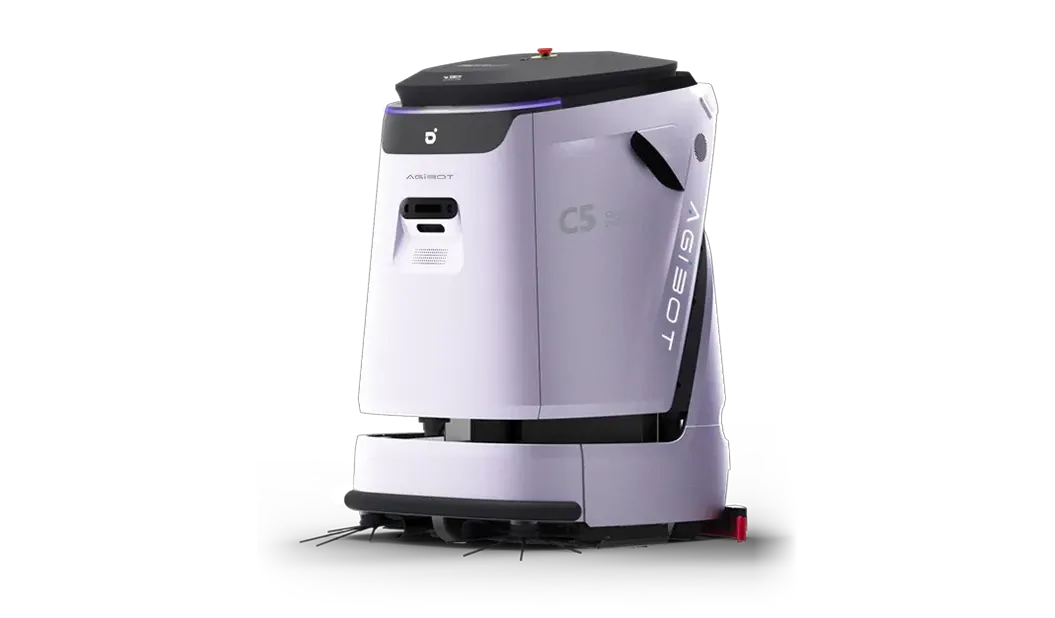
Airport cleaning robot: what decides it in a terminal or a station
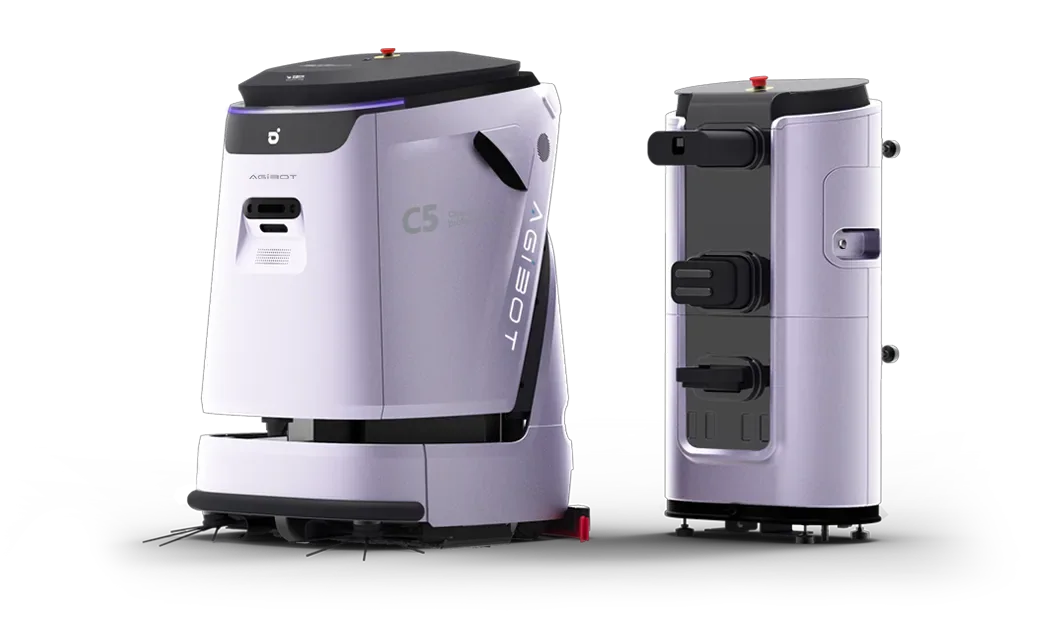
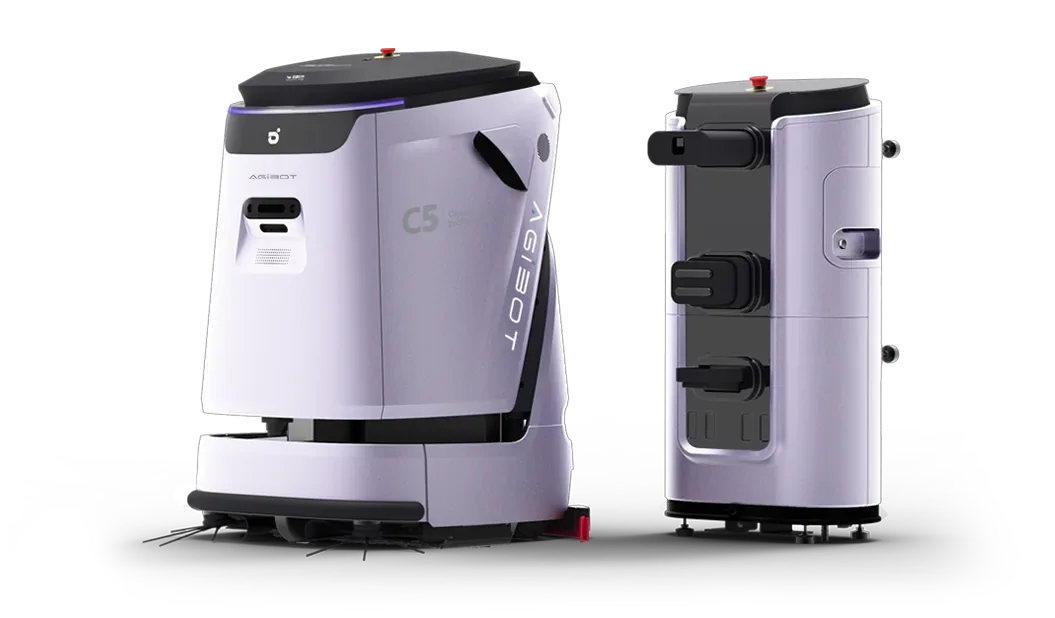
In an airport terminal or a railway station, a cleaning robot does the routine pass over concourses, halls and passages while the building stays open. AGIBOT names this setting for the C5: its July 2026 brochure lists transportation hubs, its product page names airports, and its manual names high-speed rail stations and airports. What decides the fit is level changes, the floor covering, the crowd and the hours a zone can close.
- Indoors, level, and away from every drop.
- The C5 manual says not to use it outdoors or on slopes and gives a climbing limit of 2% or less. Open-air platforms, the forecourt and steeper ramps are outside its use, so it changes level by lift, through the integration AGIBOT names; its 215 kg gross weight counts towards the lift's rated load. None of the C5 documents we read describes riding an escalator or a travelator. The manual asks for virtual walls round fall-risk areas such as steps, stairs and lifts, so ask how the C5 boards a lift. Wall off escalator landings, travelator ends and platform edges.
- Name the floor, map the glass.
- The manual and brochure together list ceramic tile, epoxy, marble, emery, cement, terrazzo and PVC. Granite, rubber and carpet are on neither list, so name your floor, and keep a carpeted gate lounge off the route. The C5 passes obstacles up to 15 mm high: measure expansion joints, drainage channels and thresholds. The manual names glass walls as a cause of an unclear map and asks for a virtual wall along them. It also rules out uneven floors and heavy litter, so staff clear it first.
- A hub that never empties is cleaned by zone.
- The C5 moves at up to 1.0 m/s, and the manual names collision, drop and runaway detection and an emergency stop button. Its troubleshooting table lists many onlookers at close range as a cause of location failure and allows none at start-up or relocalisation. The manual also asks for close attention near children. On a charge it dry-mops for about 8 hours and scrubs for about 3. Run the dry pass among passengers, but scrub a gate area or concourse section only once closed, and keep it closed until dry. A metro station that shuts for part of the night closes every zone at once.
- Cold halls, and where the dock goes.
- The manual sets indoor use between 0 °C and 40 °C so the water lines do not freeze: ask us about an unheated hall in winter. It is rated IPX3, and the manual forbids pouring water on it or flushing it. Where the workstation is fitted, the C5 returns to it to recharge in 1.5 hours, refill and drain, and wash its sewage tank in 4 minutes. A room off the concourse with power, water and a drain lets each run start away from the crowd, and AGIBOT's product page lists an optional mobile water tank for sites where re-plumbing is inconvenient.
- The C4 for the narrow parts.
- AGIBOT's July 2026 brochure lists subway stations for the smaller C4. It needs a 600 mm aisle and, AGIBOT says, turns within 80 cm, where the C5 needs 800 mm and a 1,720 mm turning radius, so measure the narrowest passage you want cleaned. The C4's brochure page and Chinese product page give no IP rating, temperature range, slope limit or weight, so ask before a cold hall or a ramp. No C5 or C4 document we read mentions ticket barriers, tactile paving or airside security: settle those with the operator.
The C5 and the C4 are both sold on quotation and rent on request, so a hub can try one on real nights before it buys. Bring the floor plan with ramps, escalators and platform edges marked, the floor covering by name, the hours each zone can close, the coldest hall in winter, and where a dock could reach power, water and a drain.