Rent a cleaning robot: what a trial week measures
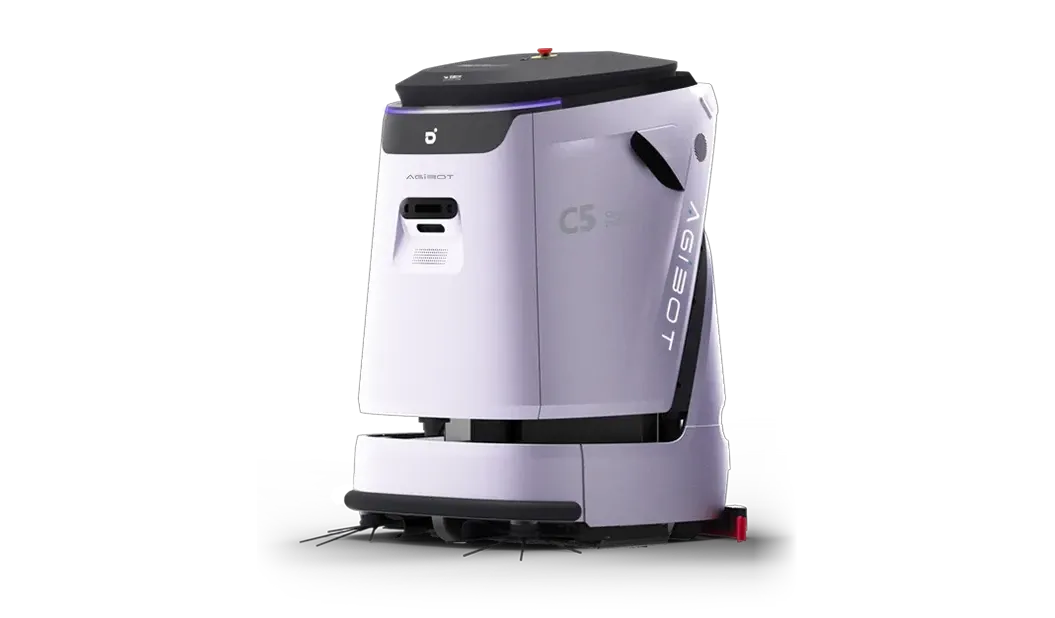
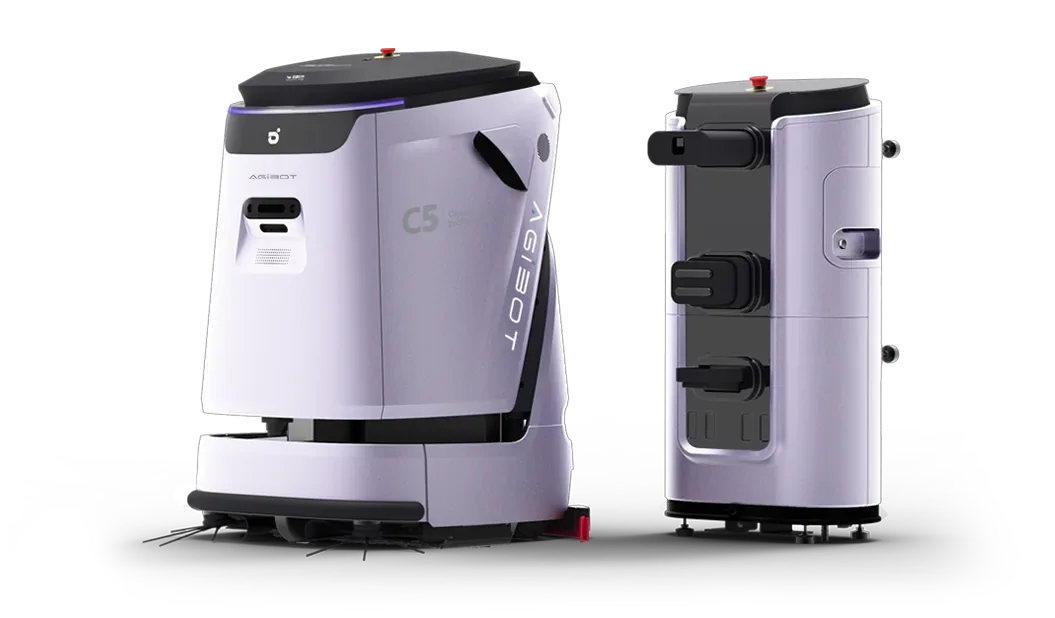
A cleaning robot is bought to take a floor off a rota, and for the C5 the catalogue answers with one number: its maximum cleaning efficiency is 1,920 m²/h. Other posts here take that ceiling apart. Here is what a facilities manager asks next: how a machine gets onto their own floor for a week before anybody signs for one.
- What a hire measures that a specification cannot.
- The 1,920 m²/h is published as a maximum, and AGIBOT's parameter table ties it to no route and to neither width: 840 mm with the side brush, or the 550 mm scrubbing width. A supermarket concourse in trading hours is not an empty floor, and neither is a ward corridor with a trolley parked in it. Rather than argue with a supplier about a discount factor, put the machine on the route and write down what happens. The list is short. What share of the route is narrower than the 800 mm the machine needs to pass. How many turns it takes at aisle ends. How many thresholds stop it. How many times somebody walks to the tanks. Every one of those is a property of your building, not of the machine.
- Where the machine stops, and how it gets to the floor.
- The C5 turns in a radius of 1,720 mm, so an aisle end or a lift lobby tighter than that is somewhere the route is planned around rather than somewhere the machine breaks. Its rated obstacle clearance is 15 mm, which is a tape-measure question about your own thresholds, door strips and taped-down cable runs. Then there is the mass. The C5 weighs 215 kg gross, and a hire has to put that on the floor being tested rather than in the loading bay. Goods-lift capacity, ramp gradient and door widths are worth confirming before a delivery date is agreed. The failure mode is common: the machine arrives, cannot get upstairs, and the week is spent cleaning a ground floor nobody was worried about.
- The tanks decide the labour, not the area figure.
- The C5 carries 45 L of clean water and 45 L for sewage. On paper that is a volume. On your floor it is a walk, and a hire settles how many of those walks a shift really needs, because the interval follows your soil load and your water setting rather than the tank size. Where the nearest drain and tap sit. Whether the route passes them. Who on the cleaning team is trained to run the machine. Those answers decide whether the C5 removes labour or only moves the work somewhere else, and a demonstration on a supplier's own floor cannot produce them.
- What the C5 is quoted on, and what the catalogue does not publish.
- Weekly rates are published for four humanoid platforms. The robot dogs and the cleaning robots sit outside that price list and are quoted on request, so anyone searching for commercial cleaning robot rental with a price attached should expect a quotation, not a rate card. An in-stock rental unit is with you inside 48 hours of a confirmed booking, and the C5 is not one of those, so ask for the availability date in writing at the enquiry. The catalogue sets no minimum hire period for the C5 either, and no figure for what a given layout does to the 1,920 m²/h ceiling, because that second one would describe a building the manufacturer has never seen.
Budget the engineering day too. A day of engineering time is 825 EUR whether a machine is hired or bought, and on a cleaning trial it turns a delivered robot into a mapped route. A purchase order runs 12 to 16 weeks before the machine is in the building at all, and the coverage question stays open through every one of those weeks.
Ask for the C5 on the route your cleaners already find difficult rather than on the easy one, and hold the week to the route counts above. If the C5 clears the difficult route at a pace the rota can live with, the purchase is decided on your own building's numbers rather than the catalogue's.