Are cleaning robots worth it for a commercial floor?
A commercial cleaning robot is worth it when three sums come out right for your building: the floor it reaches per hour, whether one charge and one tank cover the cleaning window, and how much of a person's time it still needs. If any one of them fails, the robot moves work around instead of taking it off the rota. All three start from published figures and a floor plan, and what those leave open can be measured on your own floor before you buy.
| Sum | C5 published figure | What you supply |
|---|---|---|
| Area per hour | 1,920 m²/h maximum | Your measured rate on the route |
| Minimum pass width | 800 mm | Your narrowest aisles |
| Runtime per charge | 3 h scrubbing, 8 h dry-mopping | Your cleaning window |
| Water | 45 L clean, 45 L sewage, 800 mL/min spray | Your soil load |
| Recharge | 1.5 h | Where the dock can stand |
How much floor will it clean in the time you have?
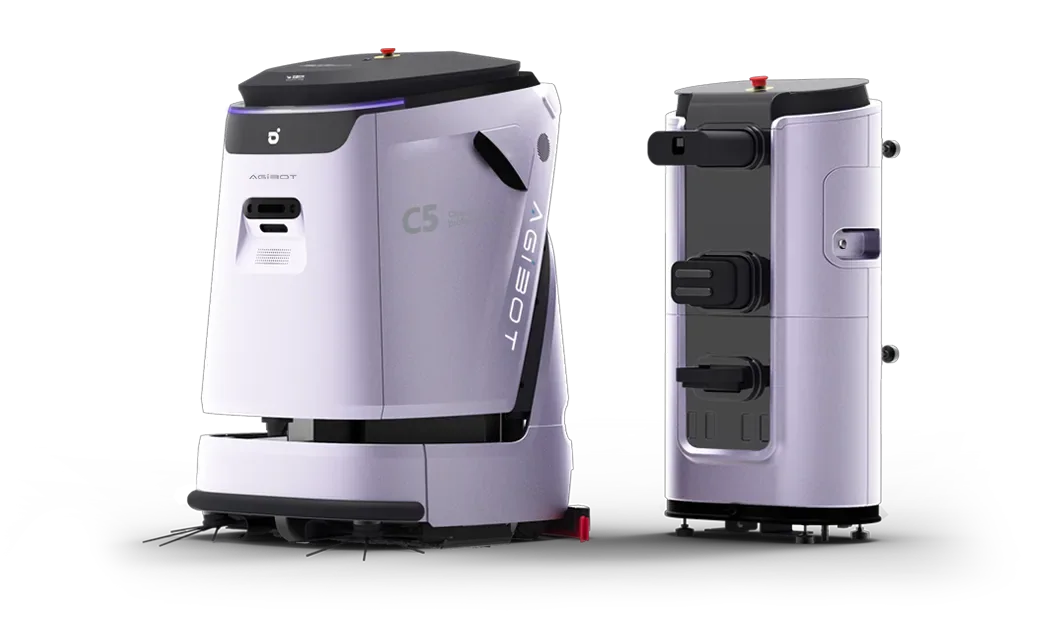
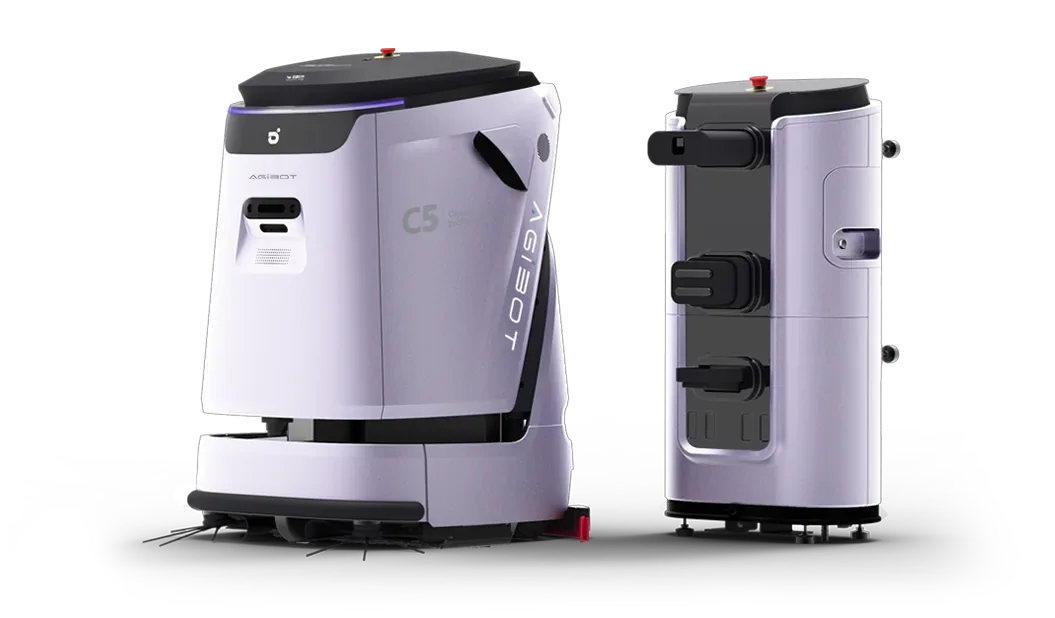
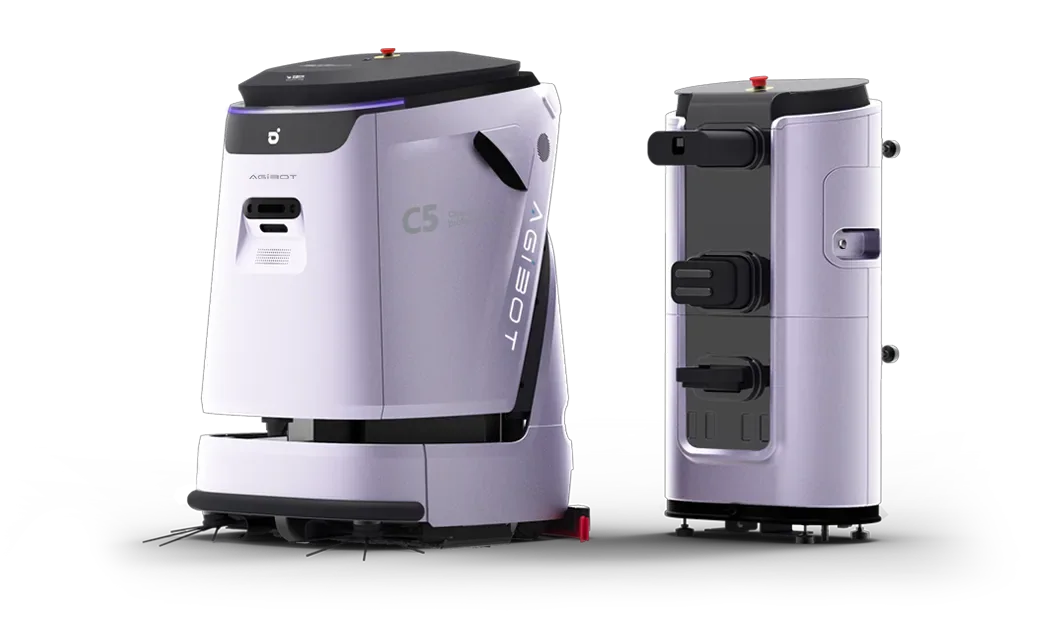
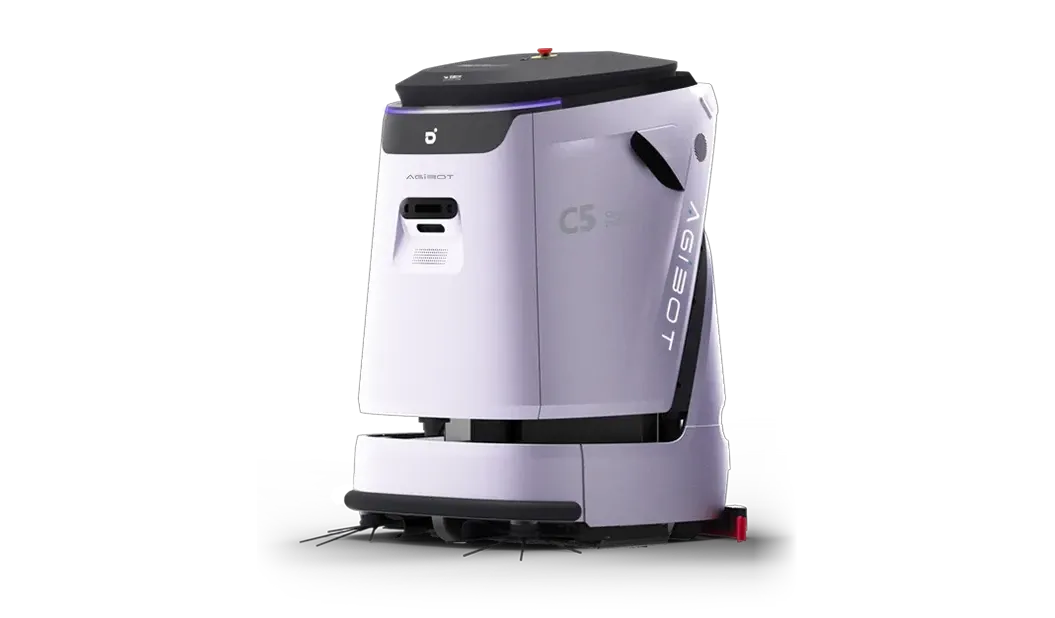
Start from the cleaning window, not from the machine. Multiply the hours the building is empty by the area per hour the robot reaches on your floor, not by the 1,920 m²/h ceiling. That ceiling is a maximum, and every turn and every stop takes away from it. Walk the route with a tape measure: every stretch narrower than 800 mm is below the C5's published minimum pass width, and every fixture costs a turn. If the realistic rate times the window is smaller than the floor, the answer is two machines, two nights or a shorter route, and each of those changes the sum.
Will one charge and one tank last the shift?
The C5 publishes 3 hours of scrubbing and 8 hours of dry-mopping per charge. A route that needs wet scrubbing all night reaches the 3-hour limit first, so the schedule needs the 1.5-hour recharge built into it, at a dock placed where the route ends. Water runs out on its own clock. 45 L of clean water at the maximum spray rate of 800 mL/min is less than an hour of spraying, so on a heavily soiled floor the machine returns to its dock more often than the tank size suggests. The dock drains the sewage tank and refills clean water on its own, which is what makes an unattended run possible at all.
Whose time does it free, and whose does it add?
AGIBOT's own store listing says the C5 lowers labour costs. It publishes no figure for how much, and neither do we. What can be counted is the work that stays. Someone stocks the detergent, clears the brushes and the squeegee, cleans the edges, stairs and corners, and answers the call when the machine stops at night. Someone also maps the route and agrees the lift and access-control integration with the building. Write those hours down next to the hours the robot takes off the rota. If the two lists are close, the robot is not worth it on this floor. If the first is much shorter, it may be.
When is the answer no?
For the C5, small floors broken up by furniture push the sum toward a person with a scrubber. So do thresholds above its published 15 mm obstacle clearance, aisle ends tighter than its 1720 mm turning radius, and buildings with no goods lift for 215 kg gross. Those are limits of that machine: the C4 passes a 600 mm gap and the C2, at 17.5 kg, is sized for small floors. A floor cleaned once a month is a no for all three: the mapping and integration are paid once and earn back only through runs.
How do you check the sums before buying?
On your own floor. A rental produces the two figures the table leaves to you: the rate on your route and the number of dock visits a night. The C5 rents on request, with its price and lead time in the quotation, and an engineering day to map the route is 825 EUR.
Send us the floor plan and the cleaning window, and ask for a C5 quote or a rental on your hardest route.