How much can a cleaning robot actually clean per hour?
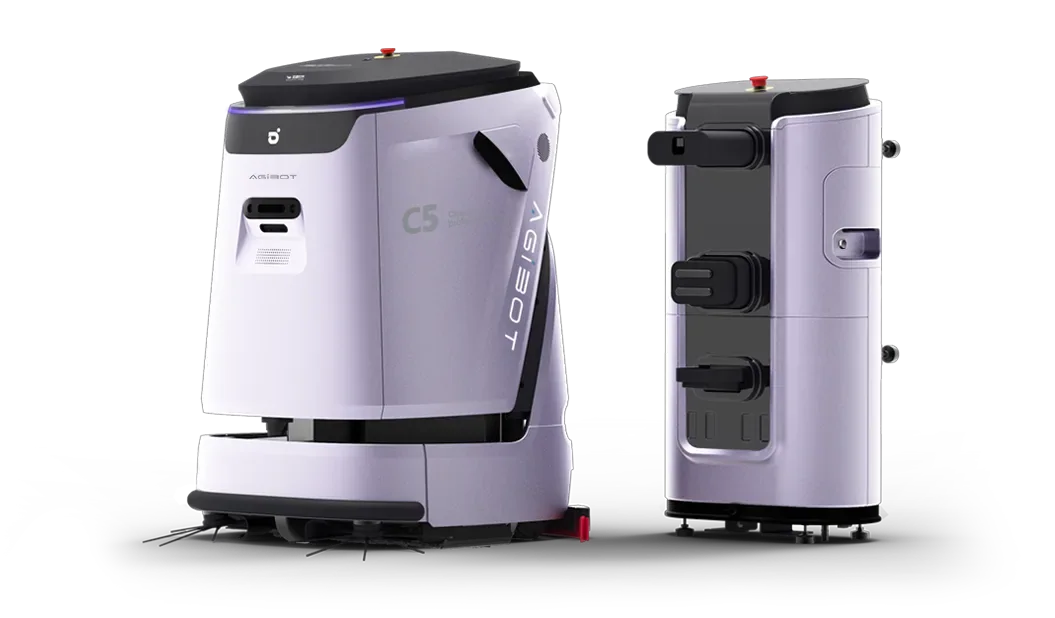
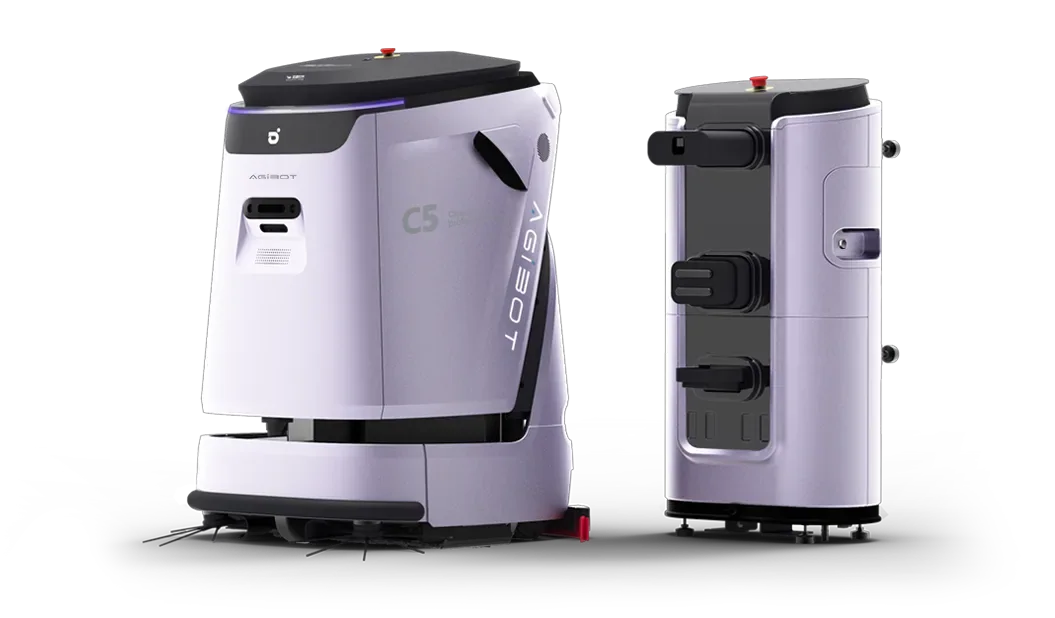
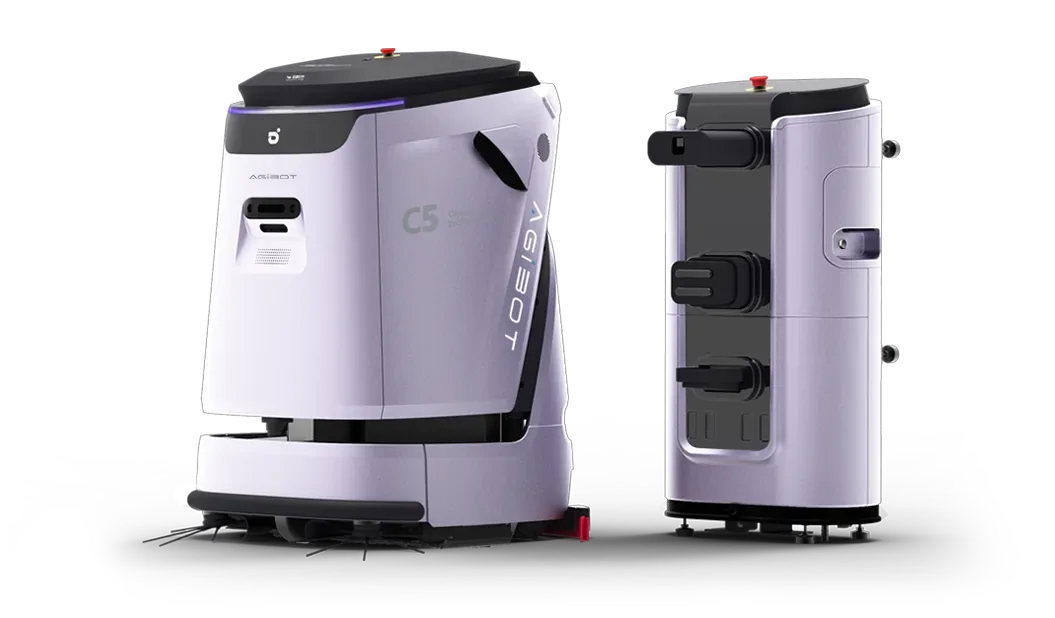
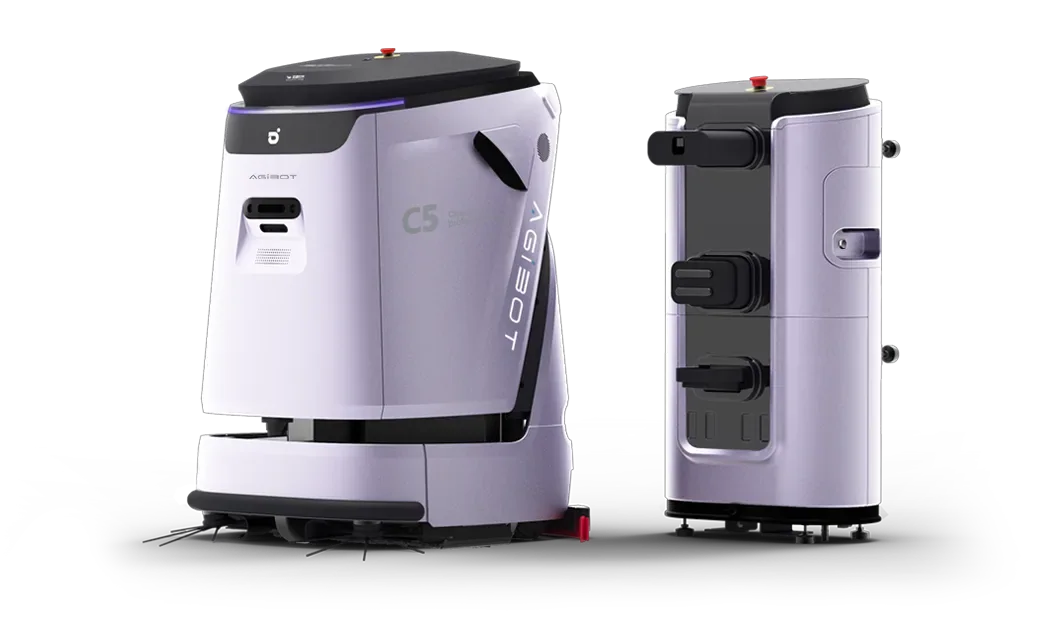
The first question a facilities buyer types is the right one, and for the C5 the catalogue answers it with a single figure: a maximum cleaning efficiency of 1,920 m²/h. That number is real. It is also a ceiling, not a plan, and treating it as a plan is how a purchase disappoints in month one.
- What is published beside 1,920 m²/h.
- AGIBOT's manual gives the C5 a maximum operating speed of 1.0 m/s, a working width of 840 mm once the side brush is counted, and a scrubbing width of 550 mm. Its parameter table lists them as separate rows from the 1,920 m²/h and does not say how that figure was calculated or on what floor. The figure is not speed multiplied by width: at 1.0 m/s, either width works out to more area in an hour than the published ceiling. So read it as the table labels it, a maximum. Stops, turns and obstacles to route around only take away from it.
- Why your floor plan changes the number, not the machine.
- A warehouse aisle wide enough for the full 840 mm path all day looks nothing like a retail floor broken up by fixtures, or a lobby with furniture the robot has to skirt every pass. Every turn takes time out of the hour, and an aisle narrower than 800 mm is one the C5 does not pass at all: that is the minimum pass width in AGIBOT's manual. Where the aisles are narrower than that, the smaller C4 needs 600 mm, at up to 1,400 m²/h. The manual's table publishes the ceiling with no floor attached to it. Your floor has corners.
- The width number matters more than the headline.
- 1,920 m²/h is a single figure published without its working; the manual's minimum pass width of 800 mm is one you can check against a tape measure today. Walk your narrowest regular corridor and your tightest turn radius before you compare quotes. Hold the first against that 800 mm and the second against the published turning radius of 1,720 mm. What the robot covers in an hour on your floor has to be measured, not multiplied out, because the catalogue's number was never describing your building.
- What the catalogue does not publish.
- There is no per-site coverage figure here, no rating for how much a corner-dense layout or a fixture-heavy retail floor cuts into the ceiling. That is not an oversight to distrust; it is a number nobody can publish honestly, because it depends on a floor plan the manufacturer has never seen. Any competitor's quoted "real-world" percentage should be read the same way you would read a fuel-economy sticker: measured somewhere, not measured here.
- What to do with the two figures you do have.
- Take the 800 mm minimum pass width and the 1,720 mm turning radius to your own floor plan and mark the aisles and aisle ends that clear them. Then time the robot over one zone and divide the zone's area by the time it took. That gives you a number that is yours rather than the manufacturer's. Expect it to be lower than 1,920 m²/h. How much lower tells you whether the C5 clears your floor in one shift or needs two passes, which is the actual purchasing question hiding behind "how much can it clean."
The honest way to use a maximum-efficiency figure is as an upper bound you discount against your own building, not as a promise. A proof of concept on your actual floor, run for an hour with a stopwatch, will tell you more than any spec sheet, including this one. We are happy to help set that measurement up before you commit to a unit.