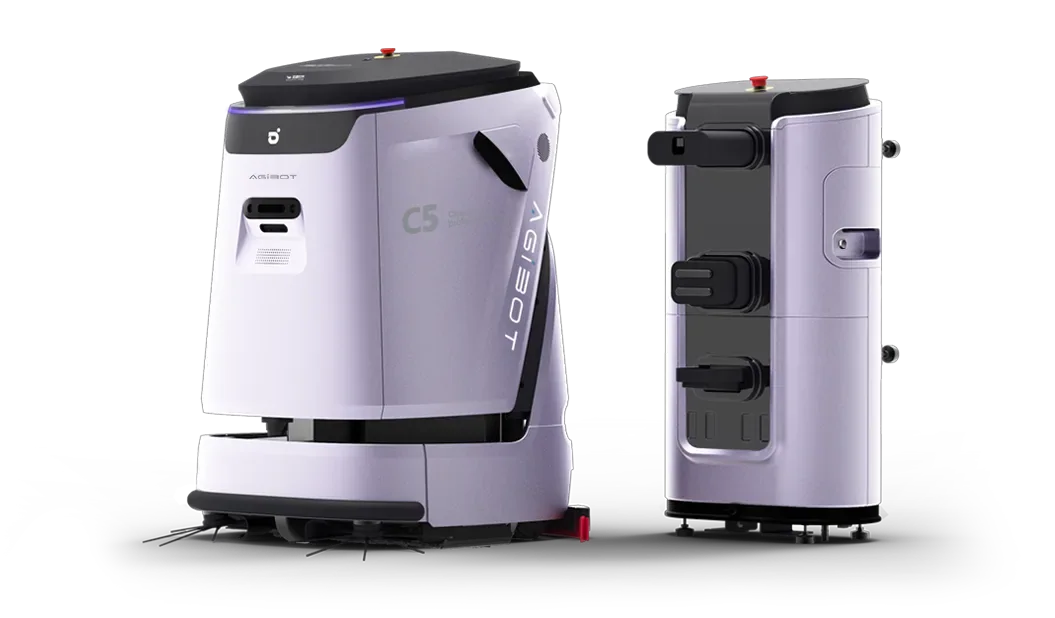
Does a cleaning robot refill itself? What the C5's dock actually does
"Self-cleaning" and "self-refilling" get used almost interchangeably in this category, and they are not the same claim. One is about the machine washing out its own sewage tank. The other is about whether a person still has to walk over with a bucket. For a buyer planning an unattended night shift, only the second question matters.
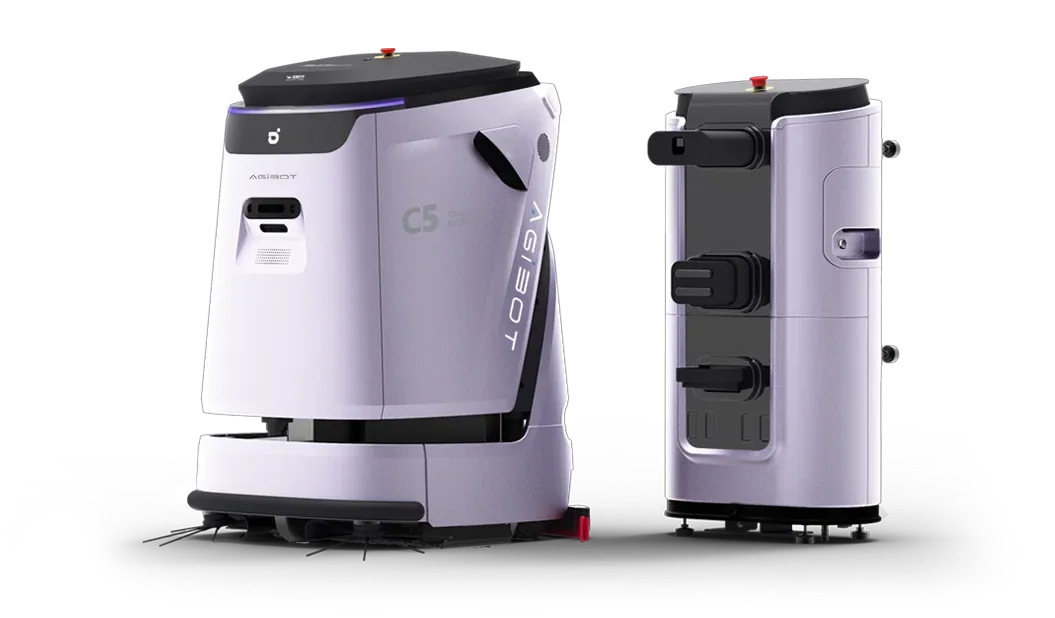
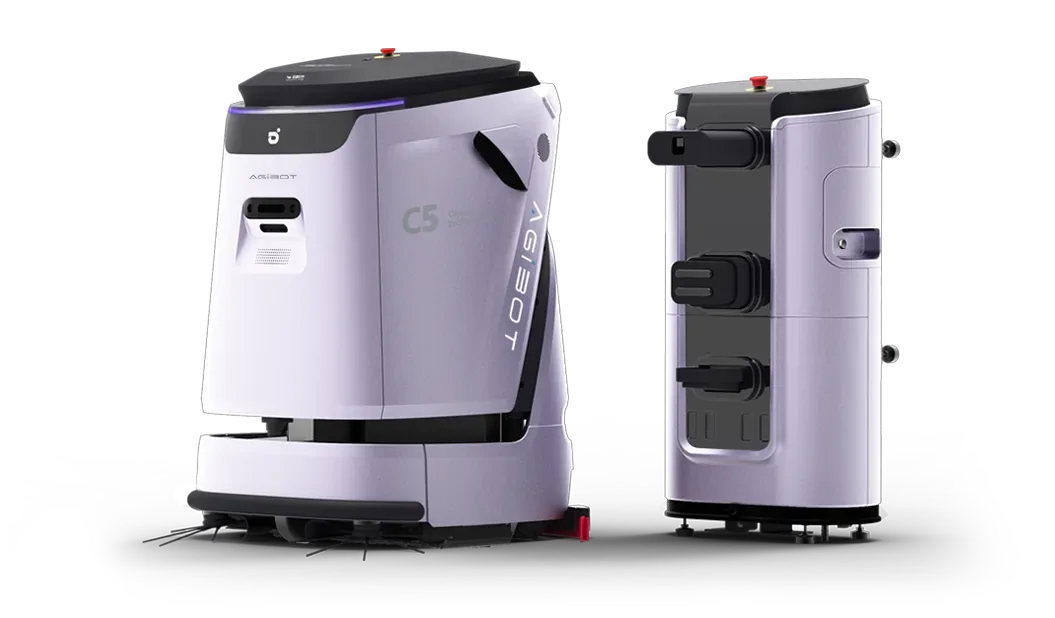
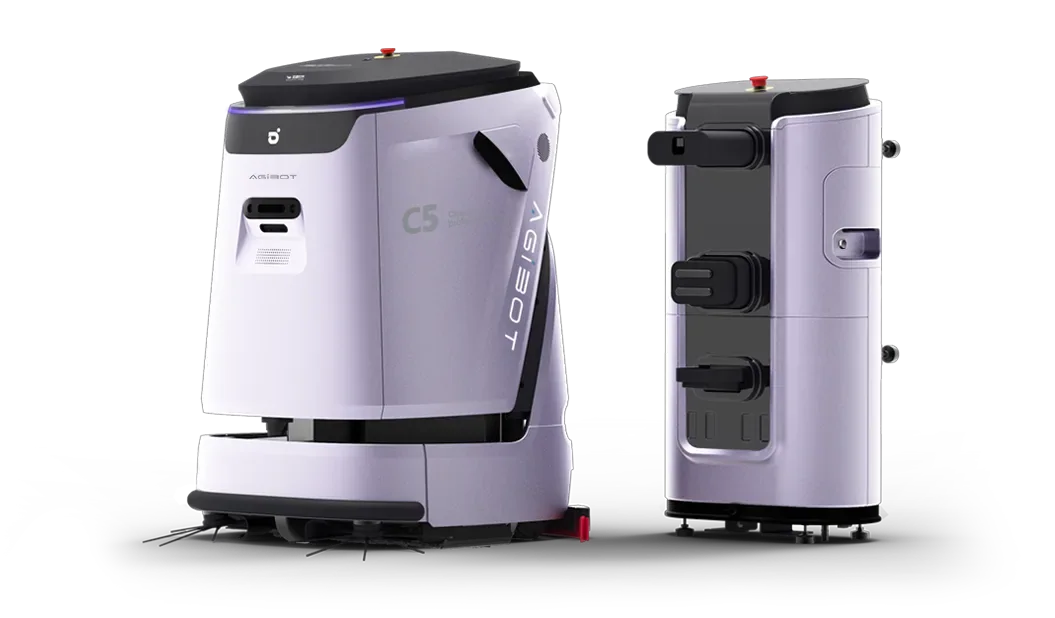
The C5 carries two tanks, 45 L of clean water and 45 L for sewage, 90 L total, and at its dock it can move water both ways: drain the dirty tank, refill the clean one. That is the part of "self-refilling" that is genuinely automatic. The robot does not need someone to carry a bucket to it at the end of a run, and it does not need someone to carry one away either.
- What the dock handles without anyone present.
- Sewage drain-down and clean water refill, so a robot that returns to base mid-shift with a full waste tank can empty it and leave with a full clean one, unattended, on the same visit. The self-clean cycle washes the inside of the sewage tank, not the brushes or the squeegee, and runs 4 minutes.
- What it does not handle.
- Detergent or chemical concentrate is not part of that tank swap. The clean tank fills with water; whatever cleaning agent goes into that water is a consumable a person still has to stock and pour in, on whatever schedule the site's chemical supplier and its own health and safety rules set. AGIBOT's manual for the C5 describes a cleaning solution box that is taken out and filled by hand, with the dilution ratio set in the software, and it describes no way for the dock to refill that box. If a spec sheet implies otherwise, that is the sentence to ask the distributor to justify before it reaches the floor plan. On the smaller C4, AGIBOT does list cleaning-solution refill among the station's functions, and self-cleaning of the roller brush and squeegee as well as the dirty-water tank. The C4 carries 25 L tanks to the C5's 45 L, and AGIBOT's brochure gives no figure for how much solution the station holds.
- Why the spray rate matters here, not the tank size.
- The C5's maximum spray rate is 800 mL/min. That number is not about how long a shift the machine can run unattended, it is about how fast the clean tank actually drains during active cleaning, which is the number that tells you the real interval between dock visits under your floor's dirt load, not the interval a 45 L tank suggests on paper. A site with heavy soiling and a high spray setting will see the robot dock far more often than the raw tank volume implies, and that is a scheduling fact worth having before a shift plan is written, not after.
- What "unattended" actually buys you.
- Not zero labour. It buys you labour that happens on a schedule you set, rather than labour that happens whenever a tank runs dry mid-aisle. A person still checks and refills the cleaning solution box, empties the dustbin and the sewage tank's filter basket, takes off and cleans the brushes and squeegee as AGIBOT's manual sets out, and is the one who owns the decision to stop the machine if something looks wrong. Docking automation removes the water-carrying trip. It does not remove the person from the building.
That is the useful way to read a "self-refilling" claim on any cleaning robot's spec sheet: ask which fluid it means, water or chemical, and ask whether the number quoted is a tank size or a flow rate, because those two numbers answer different questions about your floor plan.
If you are scoping a night-shift deployment, the sizing conversation worth having first is the spray rate against your square footage and soil load, not the tank capacity in isolation.