Teleoperation is not a fallback: what a VR session actually becomes
Teleoperation reads on a spec sheet like a workaround for what a robot cannot yet do on its own, and on the floor it is closer to the opposite: a way of generating exactly the data a robot needs to eventually do that task itself.
- The kit is a catalogue item, built for one platform, not a lab prototype.
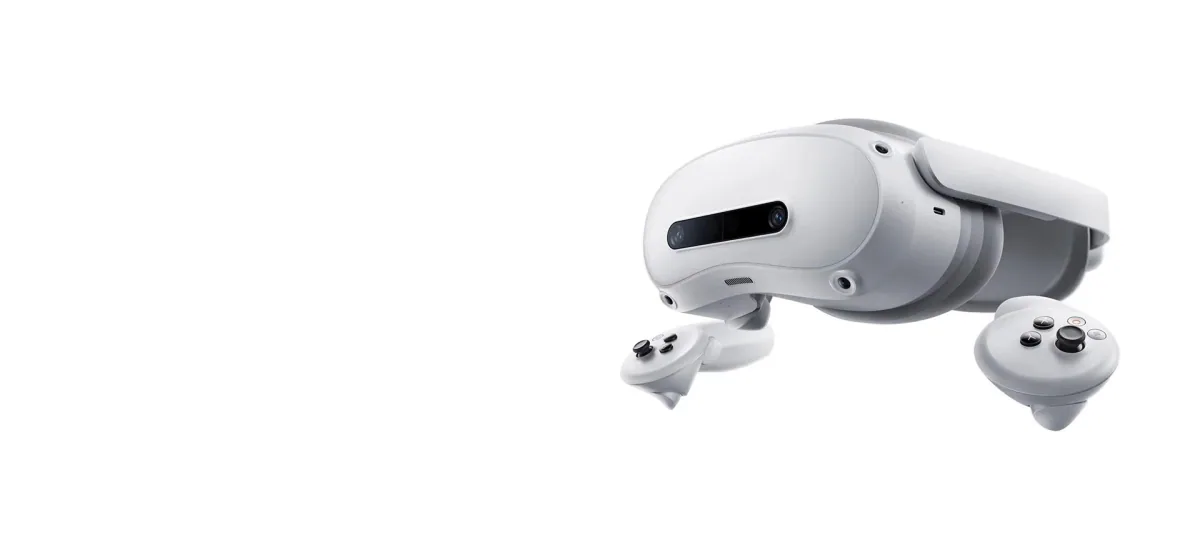
- AGIBOT's VR teleoperation kit fits the A2 Ultra and A2 Lite specifically, controlling the robot's arms through incremental control rather than a one-to-one position match, at 50 ms of latency over a wired connection. A 105-degree field of view and a headset with continuously adjustable interpupillary distance are built for an operator wearing it for a working session, not a five-minute demo.

Two OmniHand O12 dexterous hands in AGIBOT's own studio plate, the upper one holding a fine needle between its fingertips: this is the level of manipulation a teleoperated session is recording when the arm being driven ends in a hand rather than a simpler gripper.
- What matters is not that a person can drive the robot, it is what gets kept afterward.
- A teleoperated session is a recording of exactly how a human solved a manipulation problem, joint by joint, and that recording is what a platform's autonomy stack trains against. A task the robot cannot yet do unattended still produces useful data the moment someone operates it well through VR, which is the opposite of a stopgap: the demonstration is the product, not a placeholder until the real one arrives.
- The kit's own limits say what it is actually for.
- A 1 kg maximum endpoint load rules out heavy manipulation from the outset, and the wired connection's 50 ms latency roughly doubles over Wi-Fi. Neither limit matters for training data collection at a bench, where the operator is close to the robot and the task is within that payload. Both limits would matter for a remote, heavy-duty operation the kit was never built to do, and reading the spec sheet as a promise about the second use case is the mistake worth avoiding.
A VR kit rated at 50 ms and 105 degrees is not a rough approximation of autonomy. It is the mechanism that produces the data autonomy is built from, and the platform it fits is exactly as narrow as the spec sheet says.