
Robot dogs in theme parks: what a deployment needs
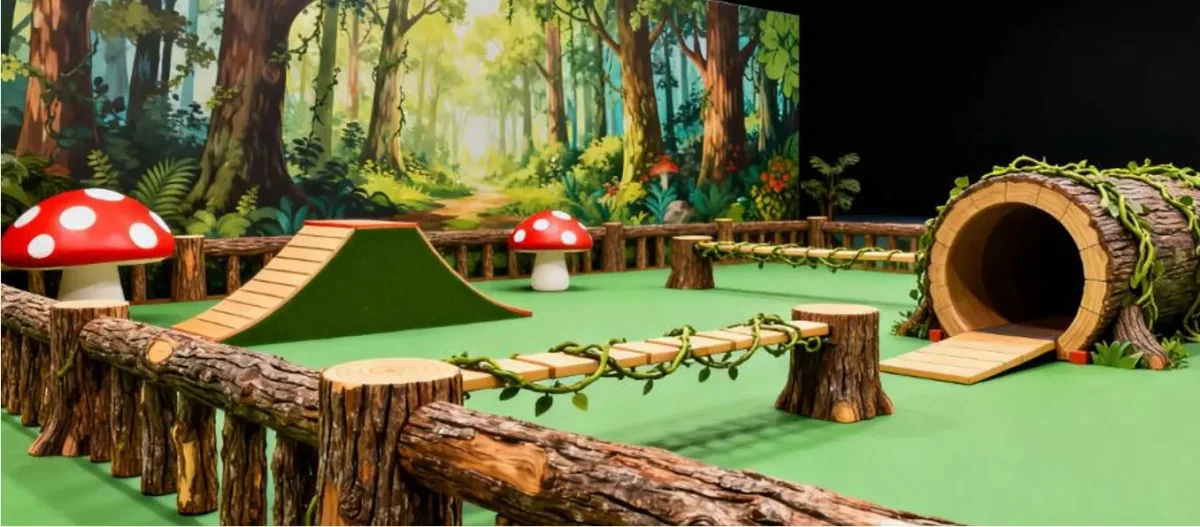
Theme parks are a hard environment for legged robots: crowded, noisy, unpredictable, and with almost no tolerance for anything that looks unsafe to a parent holding a child's hand.
That is what makes them a useful proving ground. The interaction and safety work a visitor-facing deployment needs transfers almost unchanged to a factory floor where robots share space with people, and the crowd there is thinner.
- What a visitor-facing deployment actually requires.
- The same three things a production cell does, in a harder order. A defined working area with a rule about who may enter it while the machine is moving. An agreed way to stop it that does not depend on the robot noticing anything. And a named person on site who owns the decision to switch it off. In a plant those are written into a risk assessment once. In a park they have to hold against several thousand people a day who have not read it.
- Failure behaviour is the product.
- A quadruped in a public space will be blocked, crowded, photographed constantly and asked to do things it cannot. What separates a deployment that runs a season from one that gets switched off in week two is what the machine does when it is not sure: a robot that stops cleanly and says so reads as competent, and one that keeps trying reads as broken. That behaviour is engineering work, not a setting.
- Why quadrupeds rather than humanoids for this.
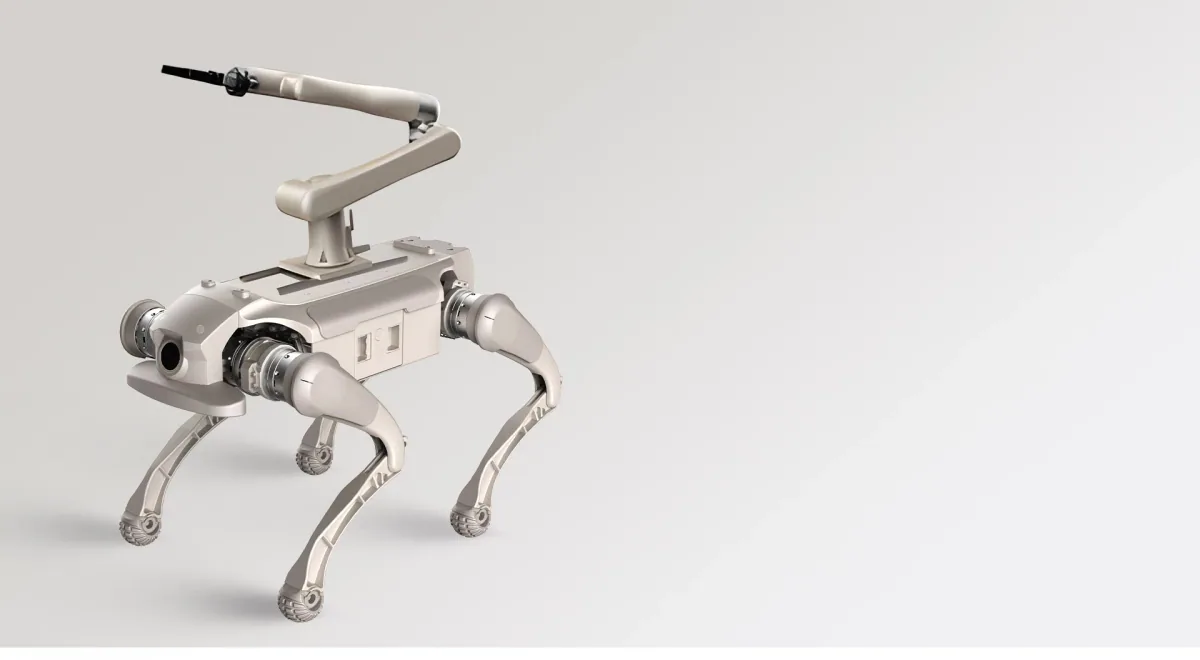
- Legs handle steps, kerbs, gravel and drainage grating that stop a wheeled platform, and a four-legged machine carries a sensor payload rather than doing work with hands. For a route that has to be walked the same way every time, past visitors, that is the right shape. Published ranges across the class run from about 6 km to 29 km on a charge and payloads from 5 kg to 50 kg, which is what decides whether one machine covers a park circuit or whether someone meets it halfway.
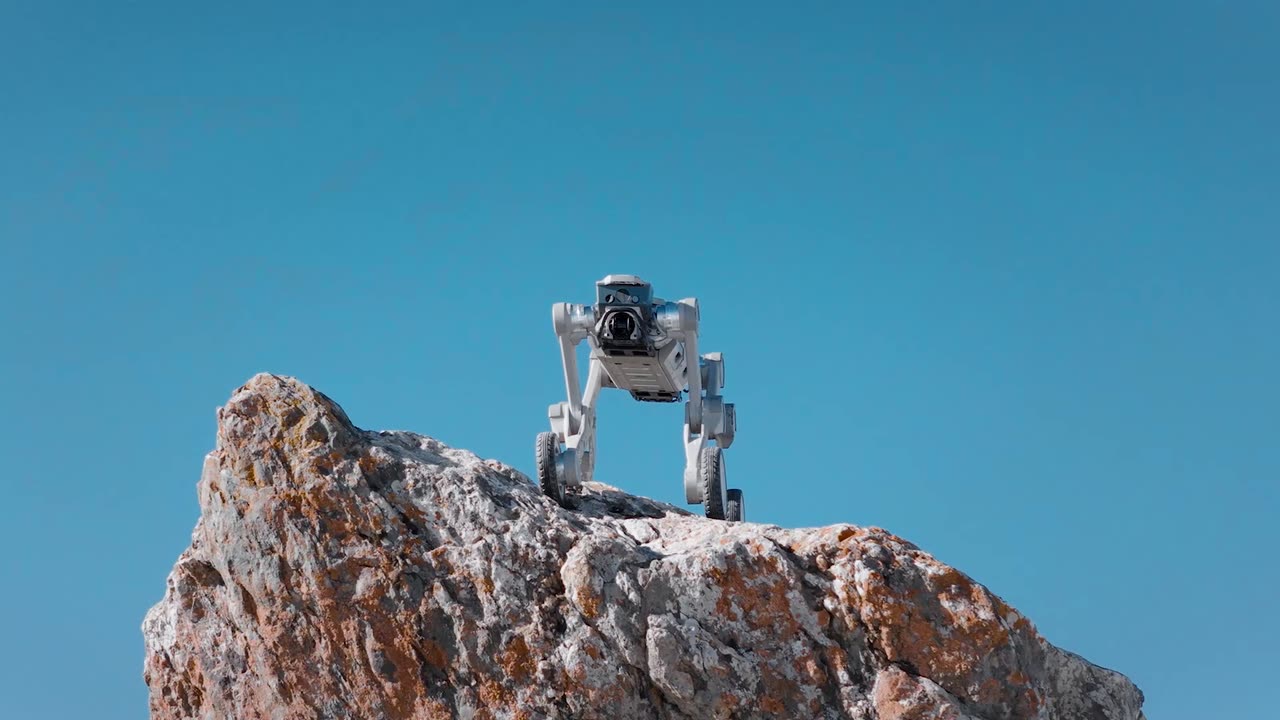
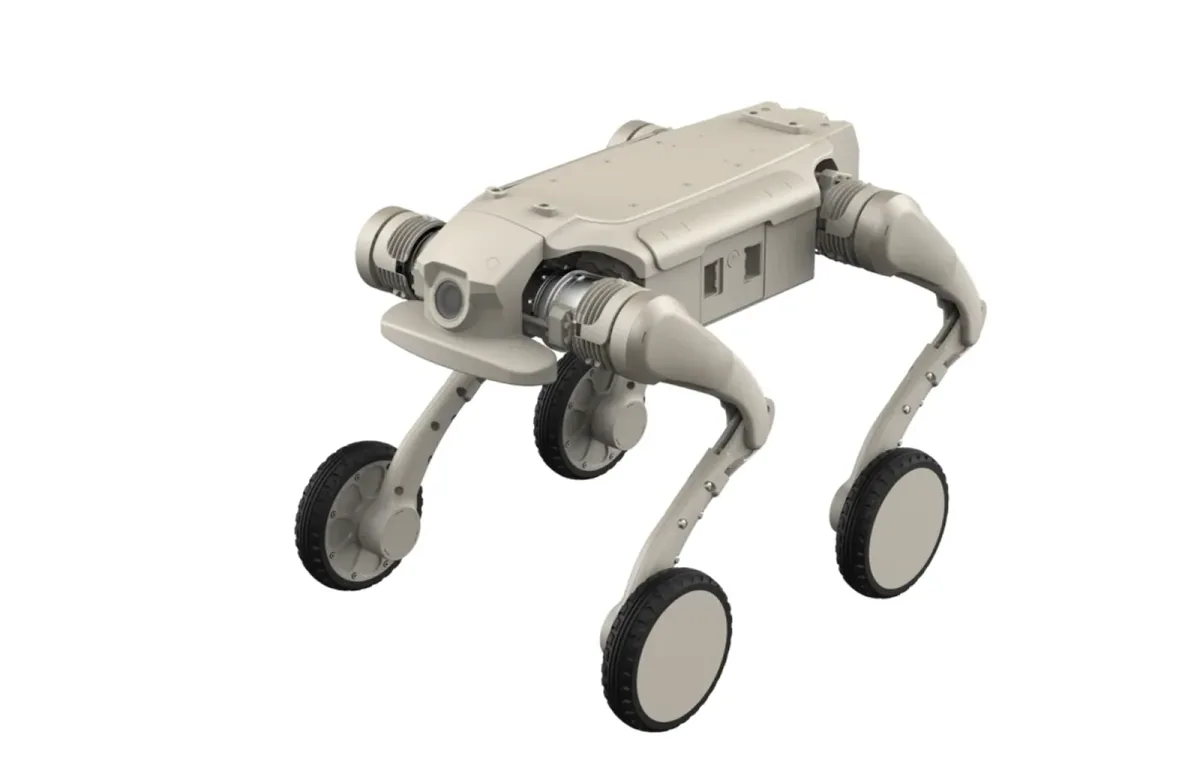
The D1 Max over a rock outcrop, then a narrow stone causeway with open water either side. Its wheels are on the ends of its legs, which is the point: the legs lift them over ground that stops a platform running on wheels alone, and that is easier to show than to describe. Manufacturer footage on terrain the manufacturer chose, so take it as what the legs can do rather than as a park circuit.
- The transferable part.
- Everything above is also true of a machine sharing a warehouse aisle with a picker, except that the picker has been trained and the visitor has not. Which is why entertainment deployments are a genuinely useful place to learn: they impose the strictest version of a requirement that industrial sites impose loosely, and the lessons move in the direction you want.
If you are looking at a visitor-facing deployment, the questions worth settling first are the safety boundary, the failure behaviour and who owns the stop decision. We are happy to walk through those before anything is specified.