

The numbers to agree before pick-and-place engineering starts
A pick-and-place cell that looks finished in a demo and a cell that is actually specified are separated by a handful of numbers agreed before the engineering starts, not after.
- Cycle time has to be measured end to end, not just for the moment the arm is moving.
- A figure that only counts motion time and excludes approach, grip, verification and retreat looks better on paper than the cell performs on the floor, and the gap between the two is exactly where a project starts to feel like it is running behind a schedule nobody actually agreed to.
- A success rate is not one number until the failure modes are separated out.
- A part dropped mid-transfer, a part picked but misidentified, and a part the gripper never engaged at all are three different failures with three different fixes, and a single blended success-rate figure hides which of them is actually happening. Agreeing the rate without agreeing how failures are categorised settles nothing, because the same rate can describe a cell that is nearly finished or one that is fundamentally miscounting.
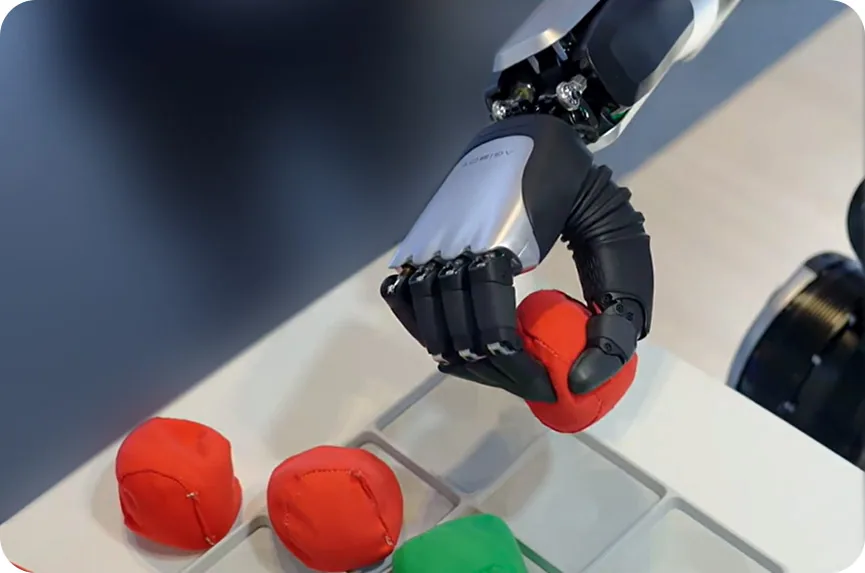
The dexterous hand closing on a soft demonstration object in a controlled test: what a grasp like this can prove, and what a heavier or less predictable part in production still has to prove separately.
- Payload margin and positional tolerance are the two numbers a demo rarely tests honestly.
- A demonstration part chosen for its predictable weight and position is not evidence about the heaviest or most awkwardly placed part the cell will actually see in production, and the acceptance figure needs to be checked against that real range, not the demo's best case.
- The number that closes the list is the one nobody wants to name first: what result ends the acceptance test and starts the negotiation.
- Agreeing the pass threshold before the test runs, rather than after seeing the result, is what keeps a borderline outcome from becoming an argument about what acceptance was supposed to mean.
None of these numbers is hard to agree in principle. What makes them worth settling before engineering starts, rather than after, is that every one of them is far cheaper to negotiate on paper than to renegotiate against a cell that is already built.