
A two-finger gripper or a dexterous hand: what the part actually decides
A dexterous hand looks like the more capable choice on a showroom floor, and for a huge share of pick-and-place work a simple two-finger gripper is the one that actually earns its keep.
- Force range is the first filter, and the two AGIBOT pickers sit at genuinely different ends of it.
- The Swift Picker adjusts from 10 to 95 N and opens or closes in 0.25 seconds; the Titan Picker adjusts from 40 to 140 N, built for a heavier, slower cycle rather than speed. Both are rated for up to 2 million cycles, so the choice between them is not about durability, it is about whether the part needs a light, fast, adjustable grip or a stronger, steadier one.
- Stroke is the second filter, and it decides what actually fits between the fingers.
- The Swift Picker's 90 mm stroke sets a hard ceiling on part size before anything else about force or speed matters: a part that does not fit inside 90 mm needs a different gripper regardless of how well the force range would otherwise suit it. Reading the force figures before checking the stroke against the part's actual dimensions is the easiest way to spec the wrong gripper.
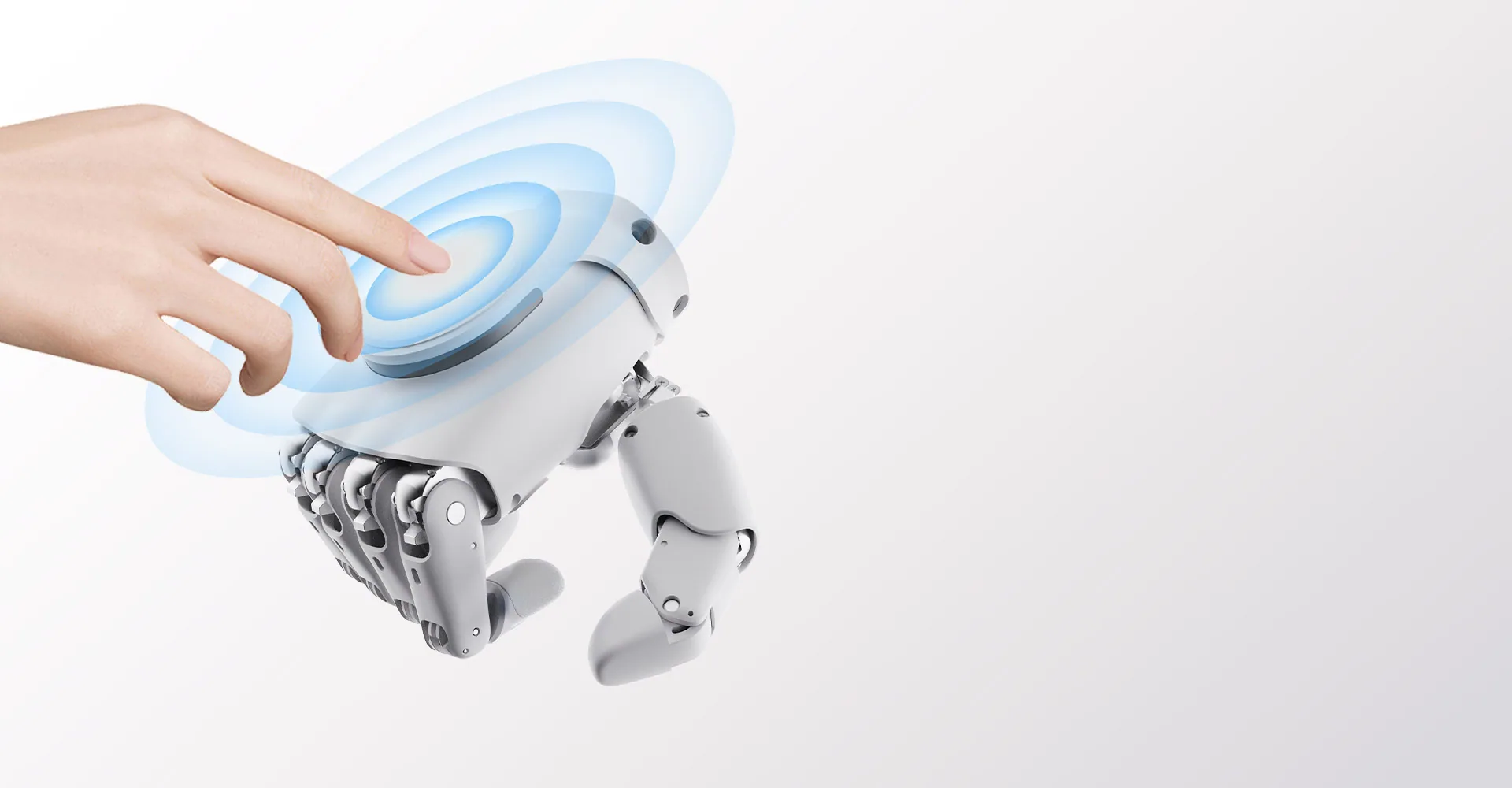
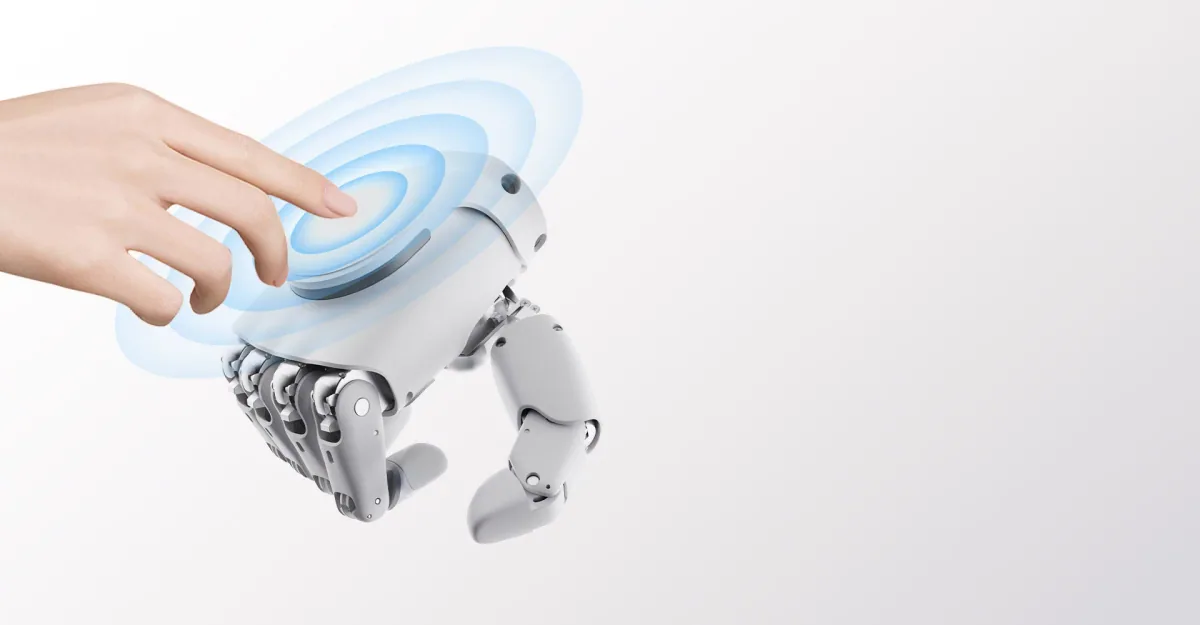
A fingertip presses into the OmniHand O10's palm: the tactile sensing a two-finger gripper has no equivalent for, and part of what a dexterous hand's added cost is actually paying for.
- A dexterous hand earns its place only when the part itself requires it.
- A two-finger gripper does one motion well, repeatably and fast, which is exactly what most bins-to-tray picking needs. A dexterous hand is worth its added cost and complexity when a part has to be reoriented in the grip, handled by a variable or irregular shape, or manipulated rather than simply moved, none of which a two-finger gripper can do regardless of how its force is tuned.
The question worth asking before comparing force ratings is what the part actually requires the end effector to do: hold it, or handle it. A gripper answers the first question well and the second one not at all.