What "the D1 Max clears 80 cm" actually means for a site survey
A single obstacle figure on a spec sheet answers a narrower question than a route does, and the D1 Max publishes enough separate figures to answer the real one.
- Obstacle height and crossing height under load are two different numbers on this platform.
- AGIBOT states the D1 Max's maximum obstacle height at 80 cm, and lists a separate payload crossing height of 50 cm. The 80 cm figure is the platform's ceiling; the 50 cm one is what a laden route should be held against. Treating 80 cm as a single all-purpose obstacle rating misses that the same kerb becomes a different question once the payload is on.
- Overhead clearance is a separate question, and the D1 Max answers it by lowering itself.
- The platform stands 930 x 480 x 585 mm, and AGIBOT publishes a crawling height of 34 ± 0.5 cm, with forward and backward movement at an adjustable crawl height. That is the number to check against a pipe rack, a low beam or a vehicle underside the route passes beneath, not the standing height on the general spec sheet.
- Width is the constraint a site survey usually forgets to measure, and here the spec sheet leaves it to you.
- AGIBOT's parameter sheet for the D1 Max gives no minimum passage width, only its 480 mm standing width and the note that it turns on the spot. Its SDK development guide does list one, so read that figure before the survey. A corridor, a gap between stored pallets or a gate still has to be measured, against that figure and against the body itself, with margin either side. A route planned from the obstacle figure alone can fail entirely on a passage that is never climbed, only squeezed through.
- Stair height, separately again, is 25 cm continuous.
- That is the platform's own published figure for a repeated stepped surface, such as a staircase or a loading-dock kerb repeated down a route, distinct from the one-off 80 cm obstacle. A route with one tall obstacle and a route with a run of smaller repeated steps are tested against two different numbers on the same spec sheet.
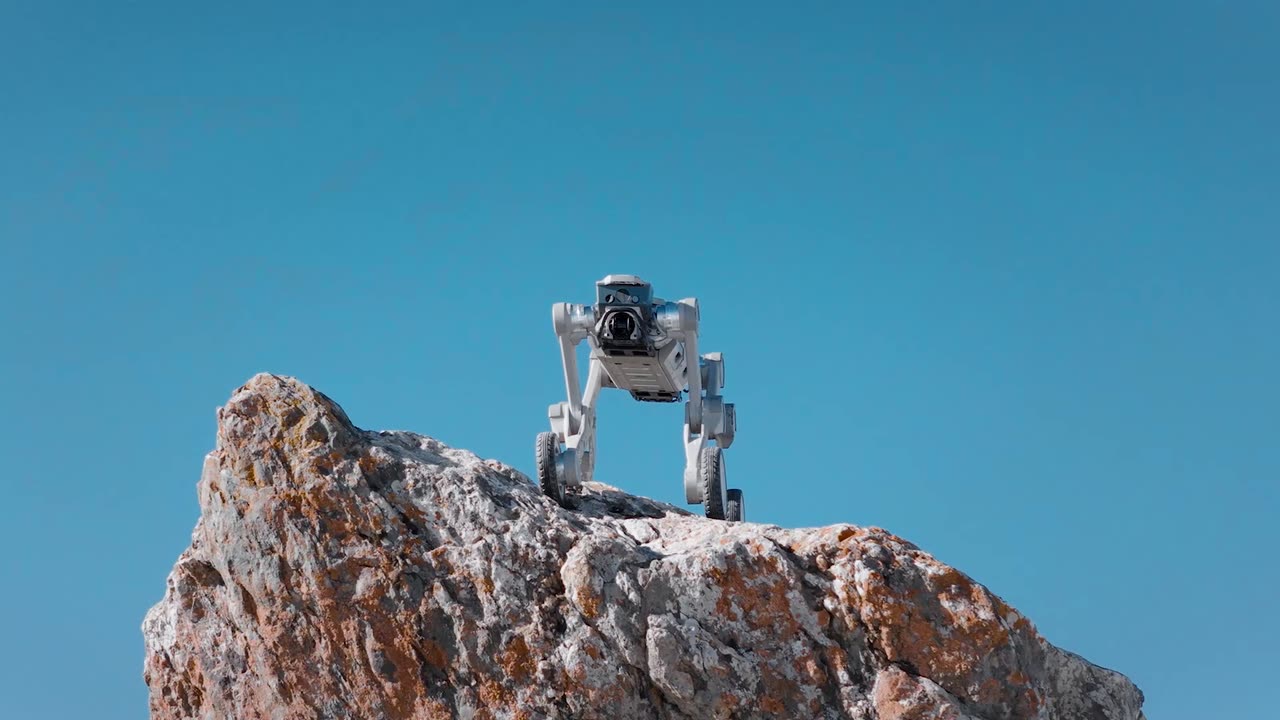
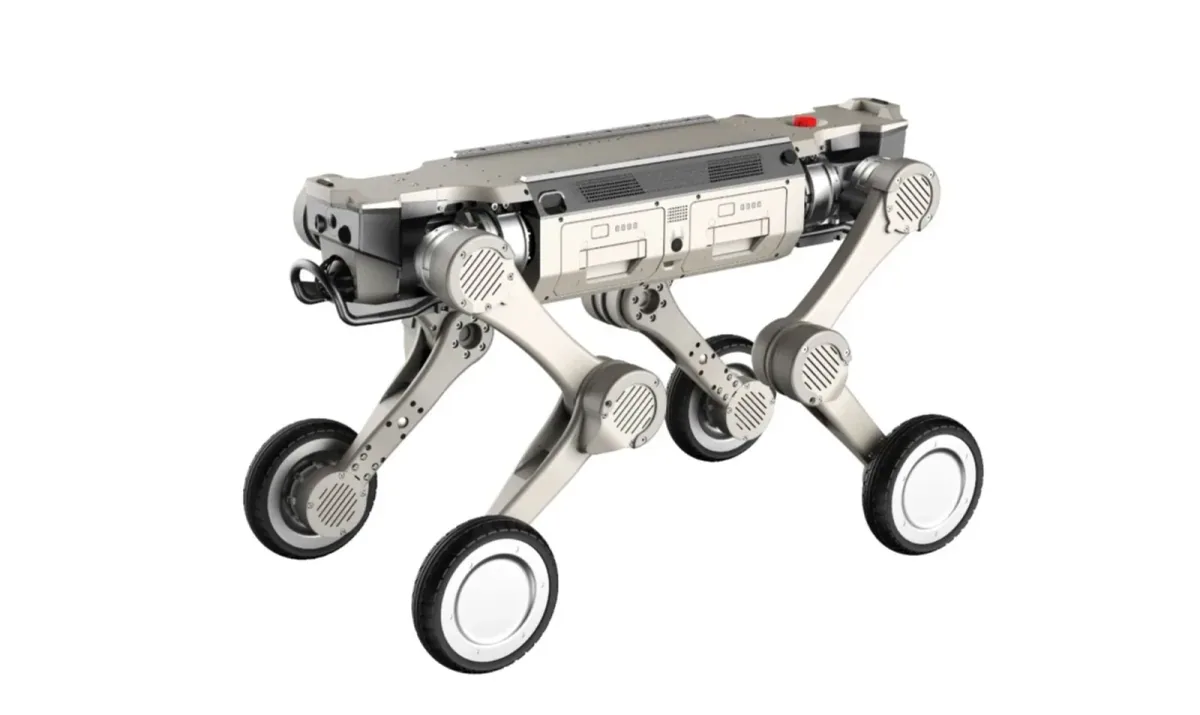
The D1 Max, a wheel-legged quadruped with a wheel at the end of each leg, crossing a rock outcrop and then a narrow stone causeway over open water: the kind of route a single "80 cm" spec-sheet figure cannot describe on its own.
None of these figures substitutes for the others, and a route survey needs each of them measured against the platform's own numbers, not against a single 80 cm headline. A corridor 55 cm wide passes the obstacle test and still leaves little margin beside a 480 mm body; a pipe rack at 55 cm sits below the standing height and is passable only in the crawl posture. Measure the narrowest point, the lowest overhead clearance and the tallest single obstacle on the actual route before assuming one published number covers the route. Every figure here is the bare D1 Max's. The D1 Max Patrol, the same machine with AGIBOT's patrol kit fitted, measures 920 × 480 × 930 mm, and its draft specification gives a stair climbing height of 20 cm in autonomous mode and no obstacle or crawling height. Survey a Patrol route against those.