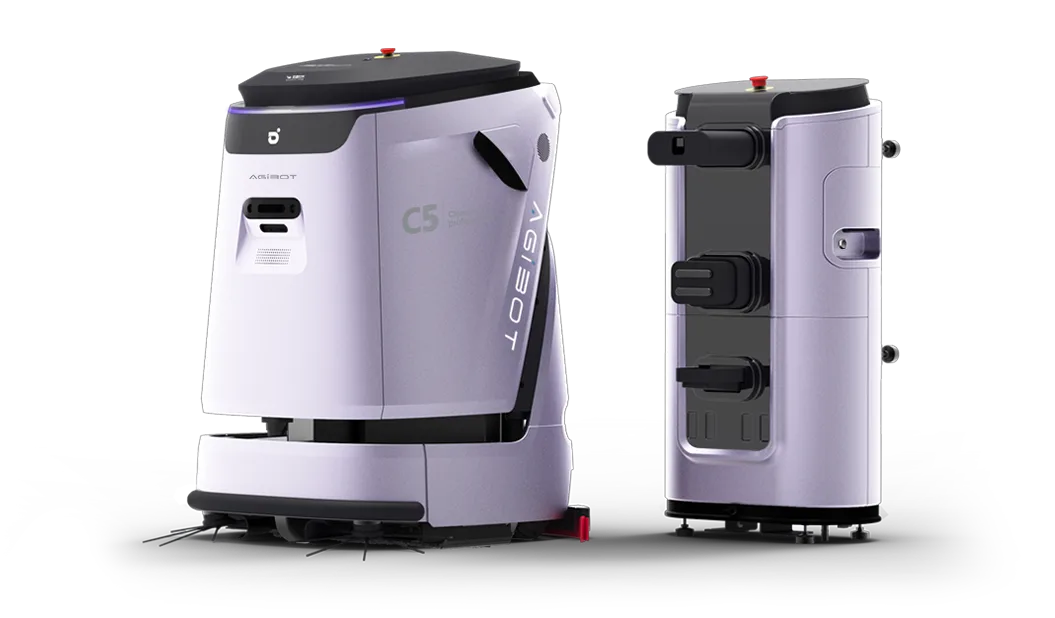
AGIBOT C5: what the cleaning robot is for, and what it is not
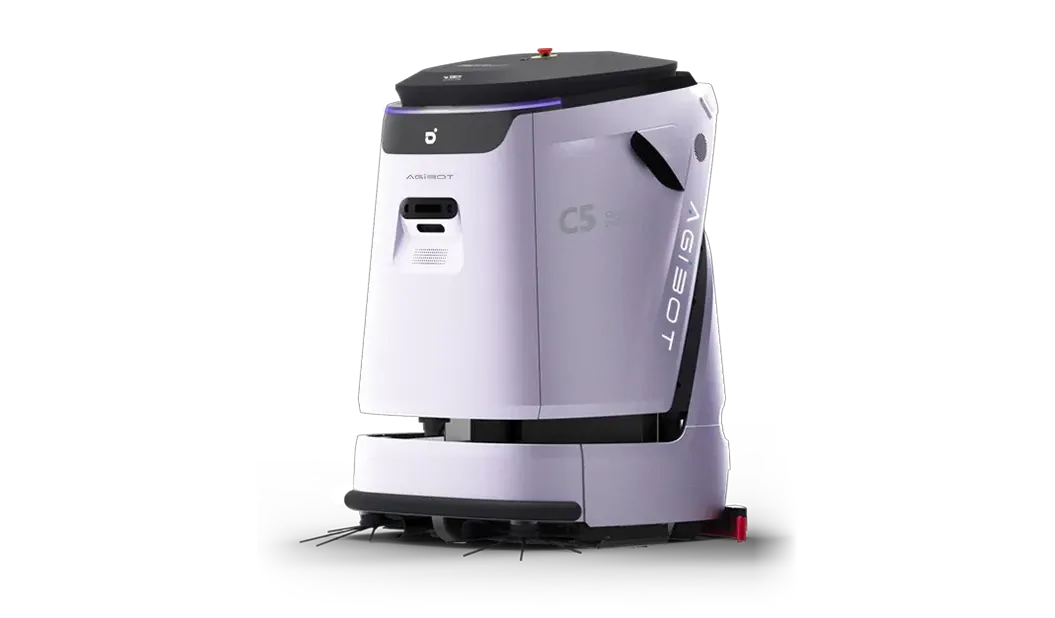
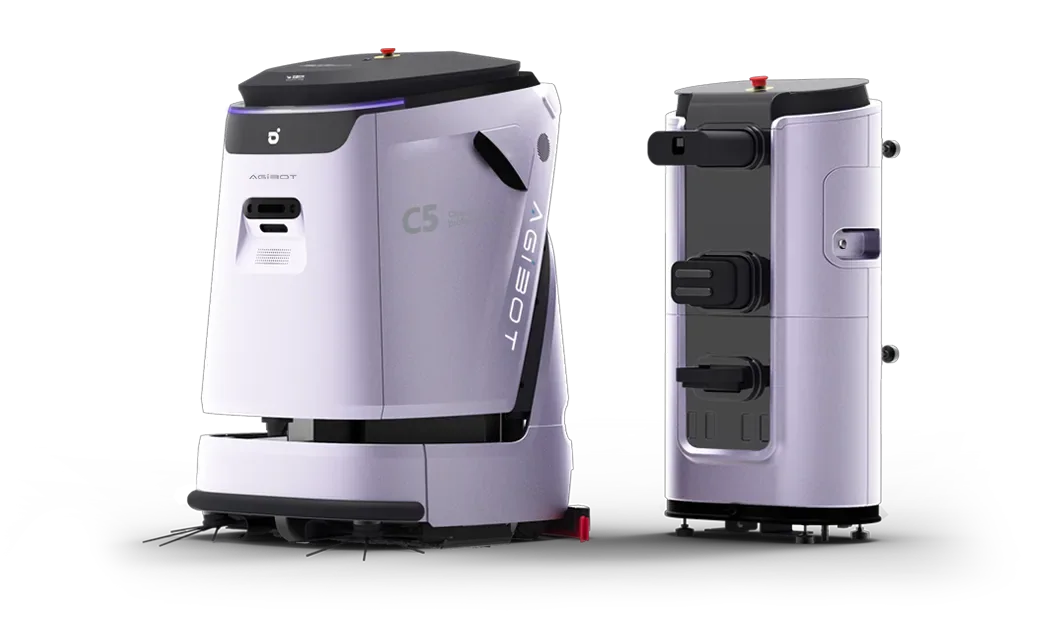
The AGIBOT C5 is an autonomous floor-cleaning robot for large indoor commercial floors: it sweeps, wet-scrubs and dry dust-mops in a single machine, then returns to a docking station to charge, refill and drain without anyone attending it. AGIBOT calls it a cleaning expert for medium and large scenes, and the job it takes on is the nightly or early-morning pass over a big hard floor that would otherwise need several machines or several staff passes. Whether it suits your building is decided by the floor surface, the narrowest passage and the lifts, and the manual says more about all three than the marketing page does.
- What the job looks like.
- The manual names industrial premises, rail stations, airports, logistics warehouses, office buildings, commercial complexes, hospitals, schools, pavilions and supermarkets as intended sites. The common feature is area: a floor large enough that cleaning it is a scheduled task with a cost line, not a chore. The C5's published figure is up to 1,920 m² an hour, a ceiling that AGIBOT's parameter table ties to neither of the two widths it lists, 550 mm when scrubbing and 840 mm with the side brush. Corridors, turns and fixtures decide how much of it you see. A charge gives 3 hours of scrubbing or 8 hours of dry-mopping and recharging takes 1.5 hours. The two tanks hold 45 L of clean water and 45 L of sewage. The docking station, where fitted, charges the robot, refills and drains it and washes the sewage tank in 4 minutes.
- What the manual rules out.
- This is the section to read before ordering, because the C5 is narrower than its list of venues suggests. It is for indoor use only, at 0 °C to 40 °C, with a protection level of IPX3: the manual forbids pouring water on the machine or flushing it. It is for hard floors, and the surfaces named are ceramic tile, epoxy, marble, emery, cement, terrazzo and PVC. Carpet is on no list, and carpet areas are drawn on the map as no-go zones. It is not for slopes: the climbing angle is 2% or less, and the manual warns against use on a slope at all. It needs an 800 mm passage and it is not for uneven or soft floors, or floors with a lot of debris on them. It weighs 215 kg gross, fully loaded, so a lift on the route is a question for the building as well as the robot. Its debris box holds 1.8 L and is emptied by hand.
- What AGIBOT does not publish.
- No payload figure, since it is not marketed as a carrying machine. No list price on this site: the C5 is sold on quotation, and it can be rented on request without a fixed weekly rate, so ask for the availability date in writing. AGIBOT's brochure and manual also differ slightly on noise and on the efficiency ceiling. We use the manual's figures, 70 dB(A) at most, and suggest asking for a measurement on your floor. AGIBOT names no sensor model or count for its navigation, which it describes only as LiDAR and vision fusion.
- What to do before you ask for a quote.
- Walk the route with a tape measure and write down four things: the surface in each room, the narrowest point as it is on a working day, whether the route needs a lift or a secured door, and where power, a water supply and a drain are within reach of the station. The C5 integrates with building lifts and access control, but that is site work, agreed with whoever runs the doors and the lift contractor, and it is the part of the price that varies most from one building to the next. Then decide who owns the edges, stairs and corners the robot does not reach, and who is called when it stops at night.
If the floor is hard, level, indoors and bigger than a compact machine suits, a trial on your own route settles it better than any brochure. Send us the floor area, the number of floors and whether the route uses lifts.