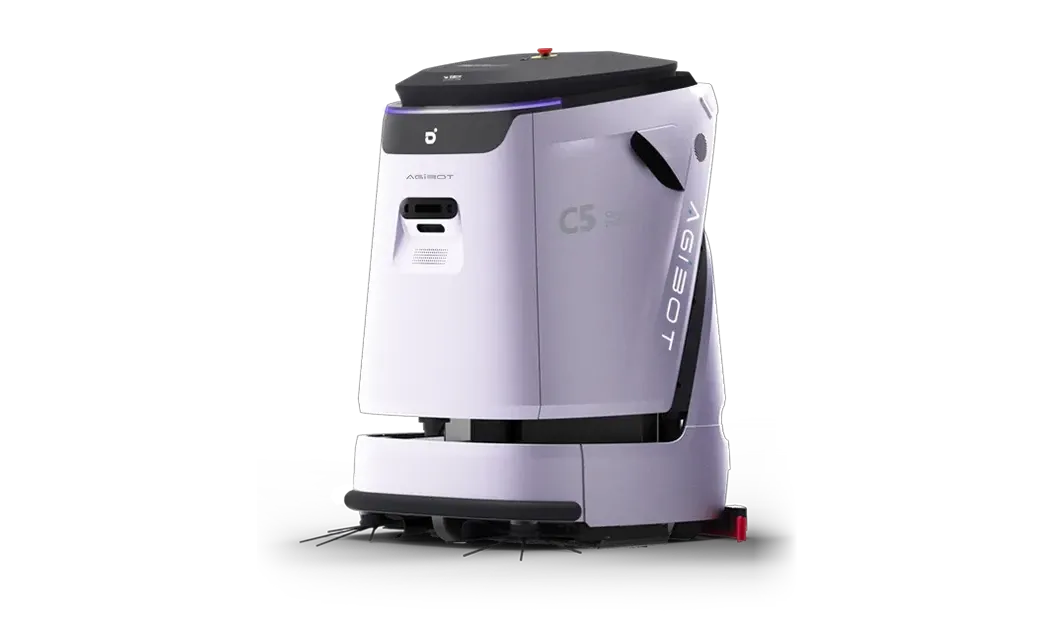
Cleaning robot for a hotel: where it works and when
A hotel sells the look of its floors, and it has more hard floor than a guest notices: the lobby, the conference foyer, the breakfast room and the service corridors. They are walked on all day and have to look the same at seven every morning. That routine is what an autonomous cleaning robot takes over. The rooms, the carpets and whatever a guest spilled an hour ago stay with housekeeping.
- Hard floors only, and say so early.
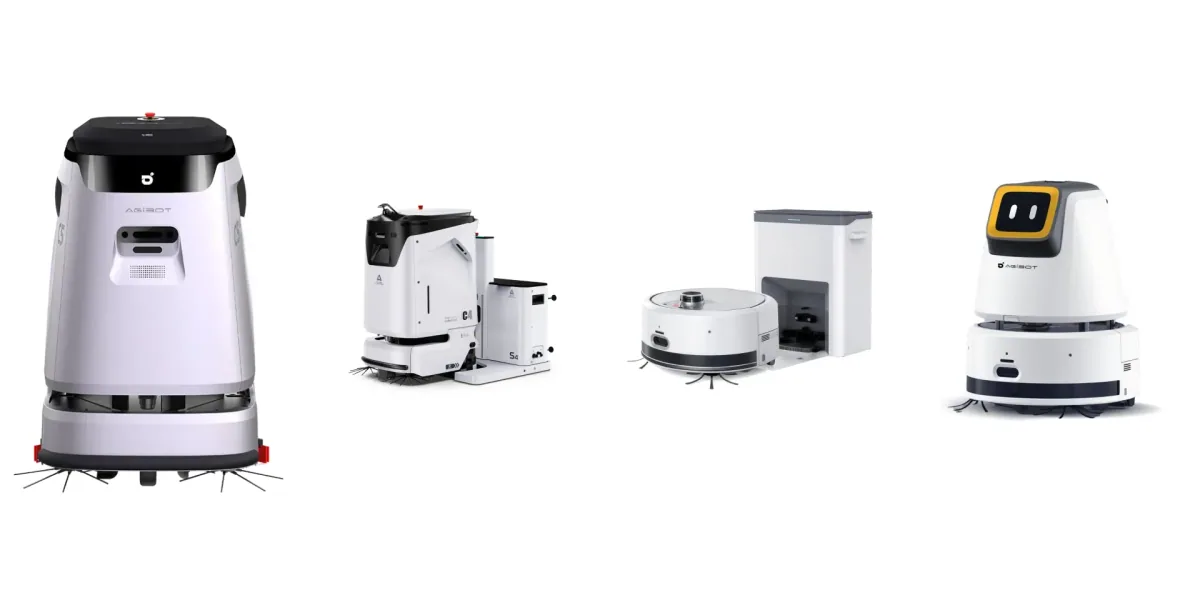
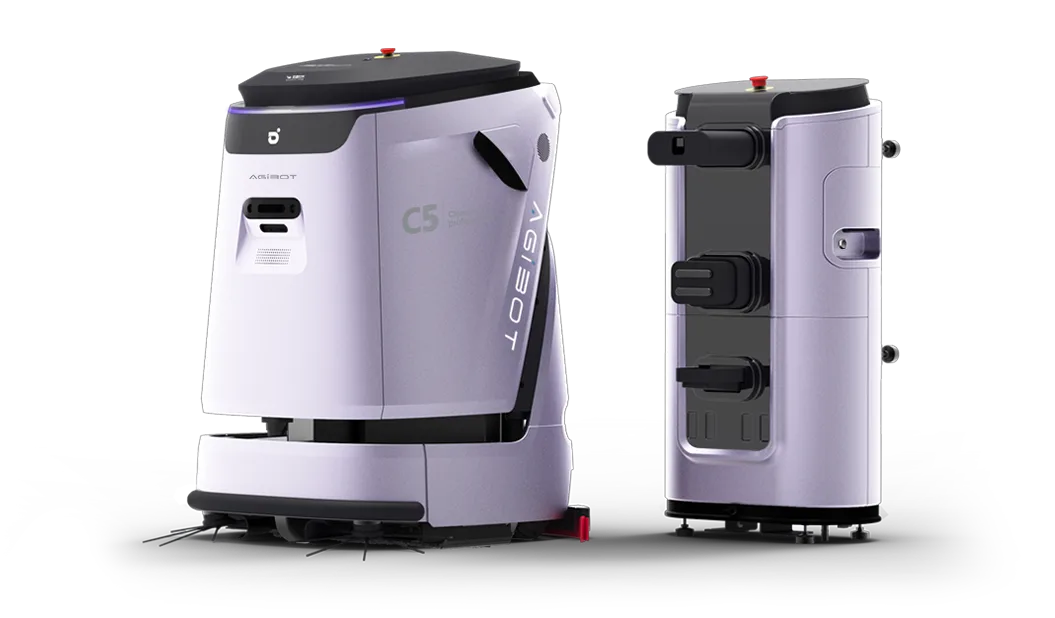
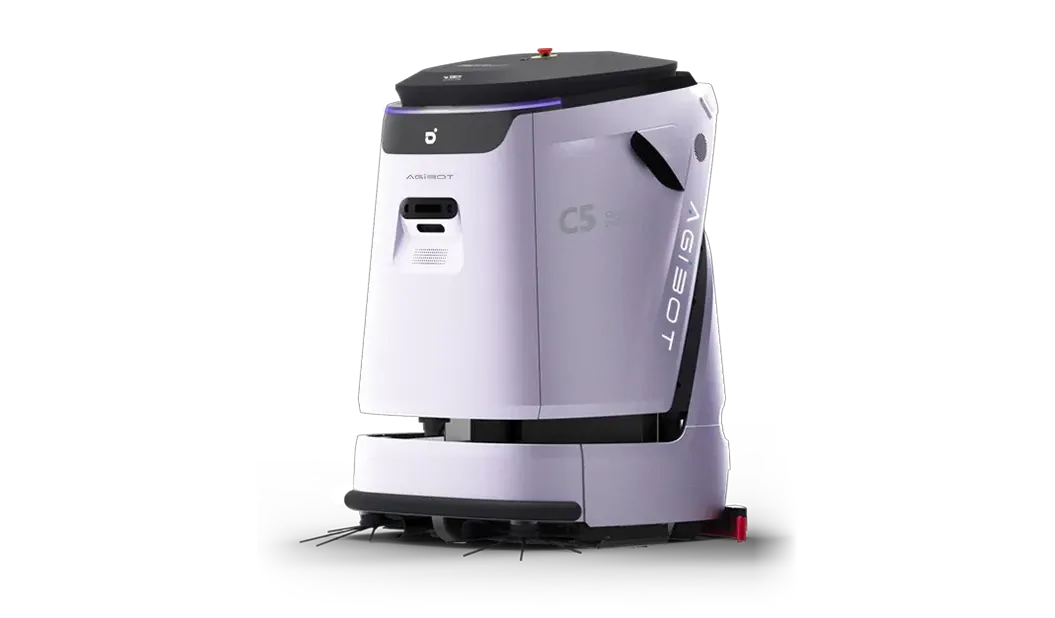
- The AGIBOT C5 sweeps, wet-scrubs and dry-mops. AGIBOT's manual describes it as a machine for hard floors and has carpeted areas marked off on its map, so carpeted guest corridors are not its ground. AGIBOT's brochure lists carpet for the compact C2. It rates that machine at 300 to 700 m² an hour and gives it no noise figure. In a city hotel with carpeted corridors, the C5's ground may be only the lobby and the back of house.
- Night is when the floor is free, and noise decides where.
- The C5 is rated at 70 dB(A) or less and moves at up to 1.0 m/s. The catalogue does not say at what distance that level was measured, so read it as the class of machine: one to try in a lobby after midnight, listening from the nearest occupied room, and to keep away from bedroom doors, which is a second reason to keep it off the room floors. On a charge the robot dry-mops for about 8 hours and scrubs for about 3. The dry pass is the one to run shortly before breakfast. A freshly scrubbed floor is one to keep guests off until it is dry, so scrubbing belongs in the dead hours.
- Lifts and doors are a coordination job.
- The C5 supports integration with lifts and access control, which is what lets one machine clean the lobby, then the conference floor, then the service level without being carried. That integration is agreed per building with the lift contractor and whoever runs the door system, so raise it with them before you plan a multi-floor round. On the floor itself, measure three things: the 800 mm minimum pass width against service doors and narrow passages, the 1,720 mm turning radius against the tightest corridor end, and the 15 mm obstacle clearance against door thresholds, mat wells and the metal strip where tile meets carpet. Where a passage is narrower, the smaller C4 needs 600 mm, and AGIBOT names hotels among its sites too.
- The dock needs a home behind the scenes.
- Between runs the robot returns to its dock to recharge in 1.5 hours, refill and drain, and wash out its sewage tank in 4 minutes. The dock needs power, a water supply and a drain, which in a hotel usually means a housekeeping store or a service corridor. The robot weighs 215 kg gross, so check the route from the dock to the lobby as well: the lift car has to take that load, and the way should be level, because AGIBOT's manual warns against using the C5 on slopes and gives a climbing limit of 2% or less.
- What stays with people.
- A robot does the same floor the same way every night. It is not the answer to a spill at the bar at nine in the evening, to the floor under furniture nobody moved, or to stairs. So any saving is in hours of routine floor care, and what it frees is time for rooms, details and the things guests actually complain about. Two limits belong in the plan. The manual calls the C5 an indoor machine with a protection level of IPX3 and forbids washing it down, so the terrace, the pool surround and the entrance in the rain are not its job. And AGIBOT publishes no list price, so the C5 is sold on quotation.
AGIBOT names hotels among the venues the C5 is built for, and it can be rented on request, which suits a property that wants to see real nights first. Bring the floor plan with the hard floors marked, the quiet hours for each area, and the name of your lift contractor.