What an autonomous safety-monitoring route actually watches for, and why it isn't a catalogue item
An autonomous EHS-monitoring package sounds like a finished product, and it is deliberately not one: it is a research project, billed and built that way for a specific reason.
- It is not a safety function, and that is the most important line on this page.
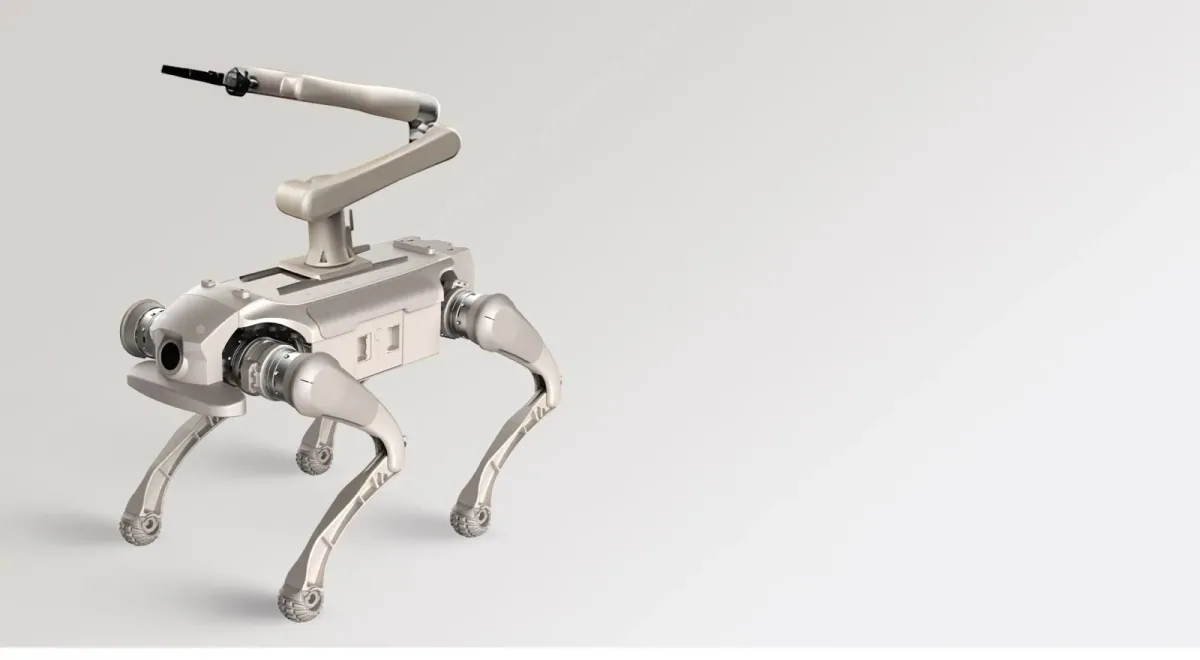
- The robot moves through a production area, forms a view about whether what it sees looks safe or unsafe, and reports what it finds to an EHS officer. It does not stop a machine and it does not gate an interlock, and nobody's protection is meant to depend on it having been right. Robotoplus turns down work where a person's safety rests on a robot behaving correctly rather than on a guard or an interlock, and this offering is built to the same principle: it only ever writes a report.
- It is billed by the engineering day because the problem has no known answer until someone has looked at the actual data.
- That is the commercial arrangement, not a disclaimer added for caution. A fixed price for a fixed result on this class of work means either the job is simpler than it sounds, or the supplier is absorbing a risk they haven't mentioned. 825 EUR per engineering day is the rate, the same one that prices the site's other research-project and consulting work.
- The language model behind it is the customer's, not Robotoplus's.
- The account, whether that is a cloud provider or a local deployment such as Ollama on the customer's own hardware, is billed directly to the customer, with no margin taken on tokens. For a monitoring system specifically, that choice matters more than it sounds: a model running locally means footage of a production floor never leaves the building, which for a system whose whole job is watching people work is often what decides whether it can be deployed at all.
- Three things have to come from the customer before the work can start.
- The data itself, in the state it is actually in rather than an idealised sample. A written definition of what counts as unsafe, agreed by someone who will still stand behind it in six months. And a named person who owns the output, because a report nobody reads is the most expensive kind of automation there is.
The honest description of this offering is a research project with a specific safety boundary, not a finished safety product, and both halves of that description are the point rather than a hedge.